Lenovo Delivers Record Fiscal Q1 as AI Infrastructure, PCs and Services Drive 43% YoY Revenue Growth
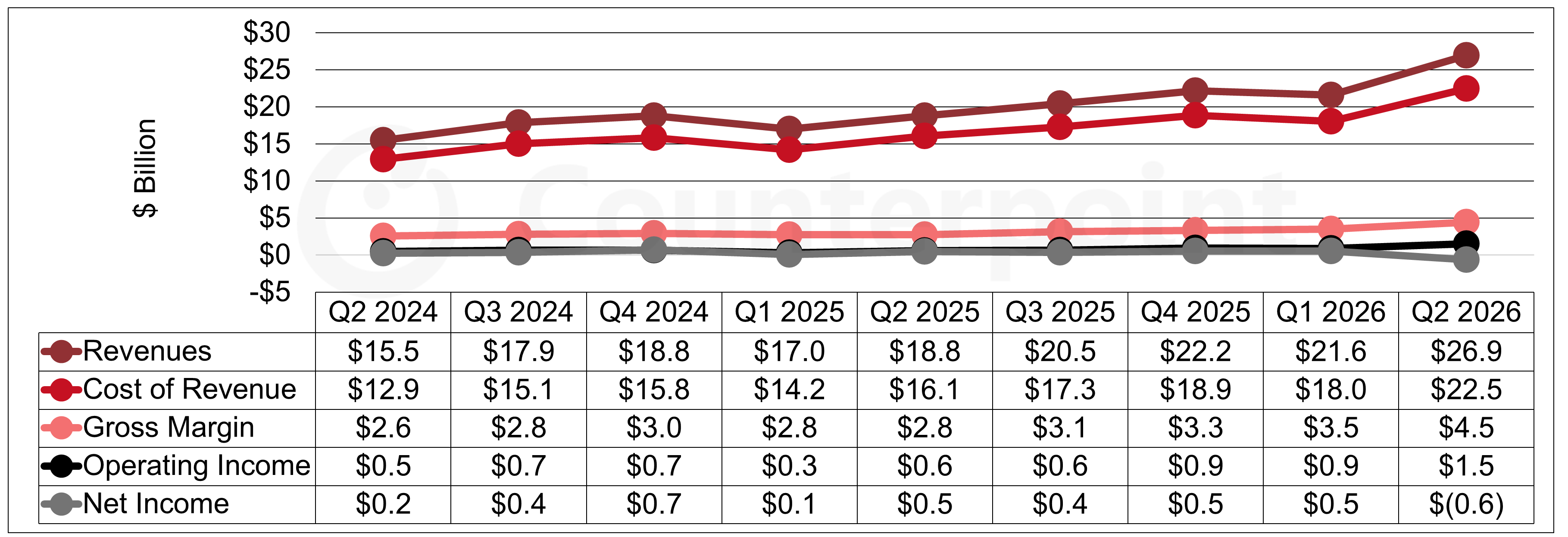
Lenovo Group reported strong fiscal Q1 2027 (calendar Q2 2026) results, with revenue reaching $26.9 billion, up 25% QoQ and 43% YoY, marking the highest quarterly revenue growth in the past five years and the strongest quarter in the group’s history. AI-related revenues grew 60% YoY and now represent 35% of group revenues.
Reported net income was a loss of $609 million, primarily reflecting a $1.7 billion non-cash fair-value loss related to warrant revaluation following Lenovo’s strong share-price performance, along with $30 million of notional interest associated with convertible bonds. Excluding these non-cash and non-operating items provides a clearer indication of the underlying improvement in Lenovo’s operating performance.
Chairman and CEO Yuanqing Yang noted: “Following Lenovo's best year in history, we have now delivered our strongest quarter ever – with growth accelerating, profitability further improving, and AI emerging as a clear growth engine across every business group. Building on our leadership in PCs and Smart Devices, we are proud of our rapid emergence as a global leader in AI and Infrastructure – a clear validation of our strategic foresight. Powered by our Hybrid AI strategy, operational excellence, and relentless innovation, Lenovo is not only navigating market cycles but also seizing initiatives to win. We are confident in our ability to drive sustainable, long-term growth and deliver greater value for our shareholders.”
Lenovo maintained balanced geographic exposure across its operations in 180 markets, with Asia-Pacific, China, EMEA and the Americas contributing 18%-37% of consolidated revenue.
- Asia-Pacific (excluding China): Revenue increased 28% YoY. In the Intelligent Devices Group (IDG), Lenovo maintained its number one position in the region’s PC market. Motorola achieved double-digit YoY revenue growth and outperformed the broader market, supported by strong performances in Japan and Greater Asia-Pacific. The Infrastructure Solutions Group (ISG) also recorded enterprise customer wins with AI-ready liquid-cooled infrastructure offerings.
- China: Revenue grew 25% YoY. IDG maintained its number one PC market position and achieved strong revenue growth in both commercial and consumer segments. ISG continued to improve profitability, while its Enterprise & SMB business delivered record first fiscal quarter revenue in China. The Solutions and Services Group (SSG) delivered double-digit YoY revenue growth, with manufacturing remaining a leading solutions vertical.
- EMEA: Revenue increased by 53% YoY. The Group maintained its number one position in the region’s PC market for the 17th consecutive quarter.
- Americas: Revenue grew 58% YoY. In Latin America, Motorola delivered strong double-digit YoY revenue growth, while premium smartphone shipments increased by several folds.
IDG extends PC leadership
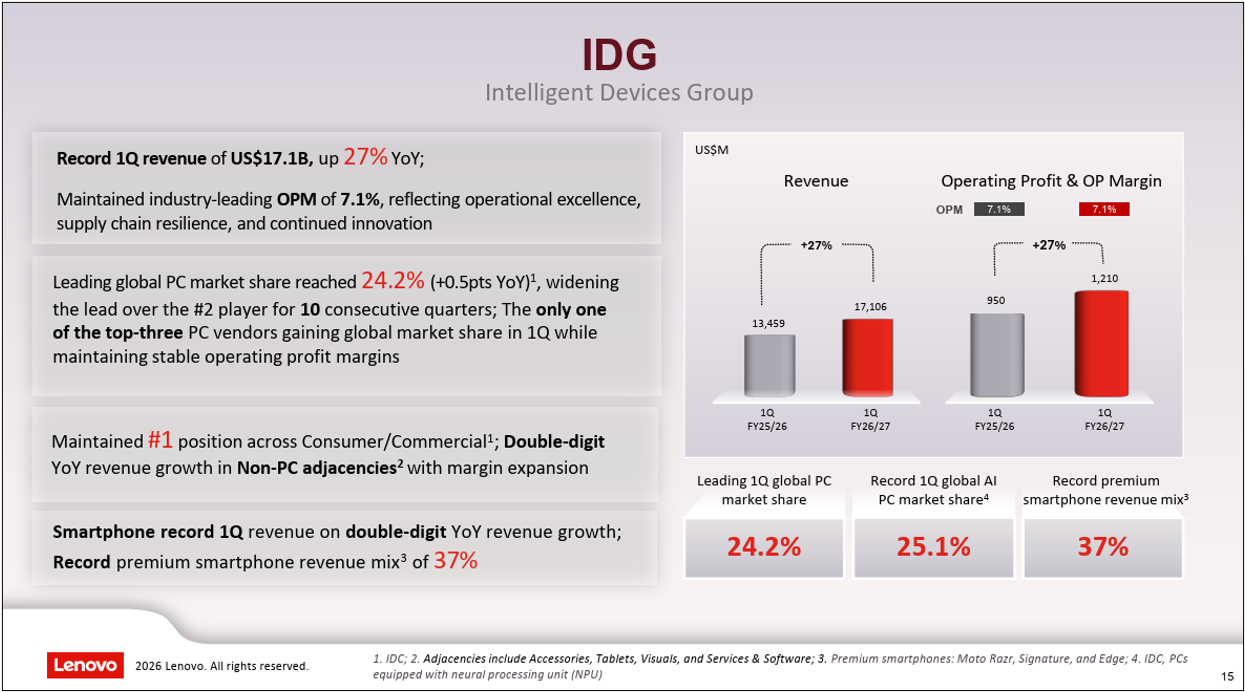
- Global PC market share reached 24.2%, and Lenovo widened its lead over the number two vendor for the 10th consecutive quarter. Lenovo also achieved a record fiscal Q1 AI PC market share of 25.1%.
- The company indicated that it was the only one of the top three global PC vendors to gain share during the quarter while maintaining stable profitability.
- Commercial and consumer PCs both contributed to growth, while tablet revenue increased more than 18% YoY. Motorola also achieved its strongest fiscal Q1 revenue ever, increasing 15% YoY.
Memory inflation creates pressure and an opportunity
Memory pricing remains one of the biggest uncertainties facing the PC and smartphone industries.
Lenovo expects strong AI demand to keep memory supply constrained through at least the end of calendar 2027. The company, however, believes that its scale and supply-chain structure provide an advantage relative to smaller competitors.
Lenovo highlighted three major strengths:
- Scale: Lenovo operates across PCs, smartphones, tablets, servers and AI infrastructure, making it one of the largest customers of major semiconductor and component suppliers.
- Global sourcing: Its global-local manufacturing model and diversified supplier relationships across China, US, South Korea and other markets provide greater flexibility in sourcing and component availability.
- End-to-end operations: Lenovo controls a substantial portion of its value chain, including product design, R&D, procurement, manufacturing, demand forecasting, sales and service. Its combination of internal manufacturing and its ODM+ model allows the company to respond rapidly to changes in component pricing and availability.
This operating structure also enables Lenovo to adjust pricing and product configurations relatively quickly when material costs increase.
PC market expected to weaken in H2
- Lenovo indicated that PC demand during fiscal Q1 was stronger than expected, supported by healthy underlying demand, AI PC adoption and some purchases being pulled forward ahead of anticipated component-cost increases.
- The outlook becomes considerably more challenging during the second half of Lenovo’s fiscal year.
- Management expects the PC market to contract approximately 15% YoY in unit terms during fiscal H2, although performance will vary by market and segment. Commercial PCs are expected to remain more resilient than consumer PCs.
- Despite the industry decline, Lenovo intends to continue outperforming the market and gaining share.
- Higher ASPs, greater premium-product exposure and an increasing mix of AI PCs are expected to help offset declining unit volumes. Procurement scale, design-to-cost initiatives and product innovation should also help Lenovo protect its industry-leading PC profitability.
Smartphone market faces similar pressure
- Lenovo expects the global smartphone market to face even greater pressure from component inflation, forecasting industry shipments could decline around 20%.
- Motorola nevertheless enters this environment with momentum after delivering double-digit revenue growth during the quarter.
- Lenovo expects higher ASPs and an improving premium-device mix to offset much of the pressure from lower industry volumes while maintaining Motorola's current margin profile.
- North America and Latin America remain Motorola's foundational markets, while Lenovo sees Asia-Pacific and EMEA as the largest opportunities for profitable expansion.
- The company also plans to further strengthen Motorola's premium product mix during late 2026 and throughout 2027.
Lenovo Income Statement Highlights, Q2 2024-Q2 2026
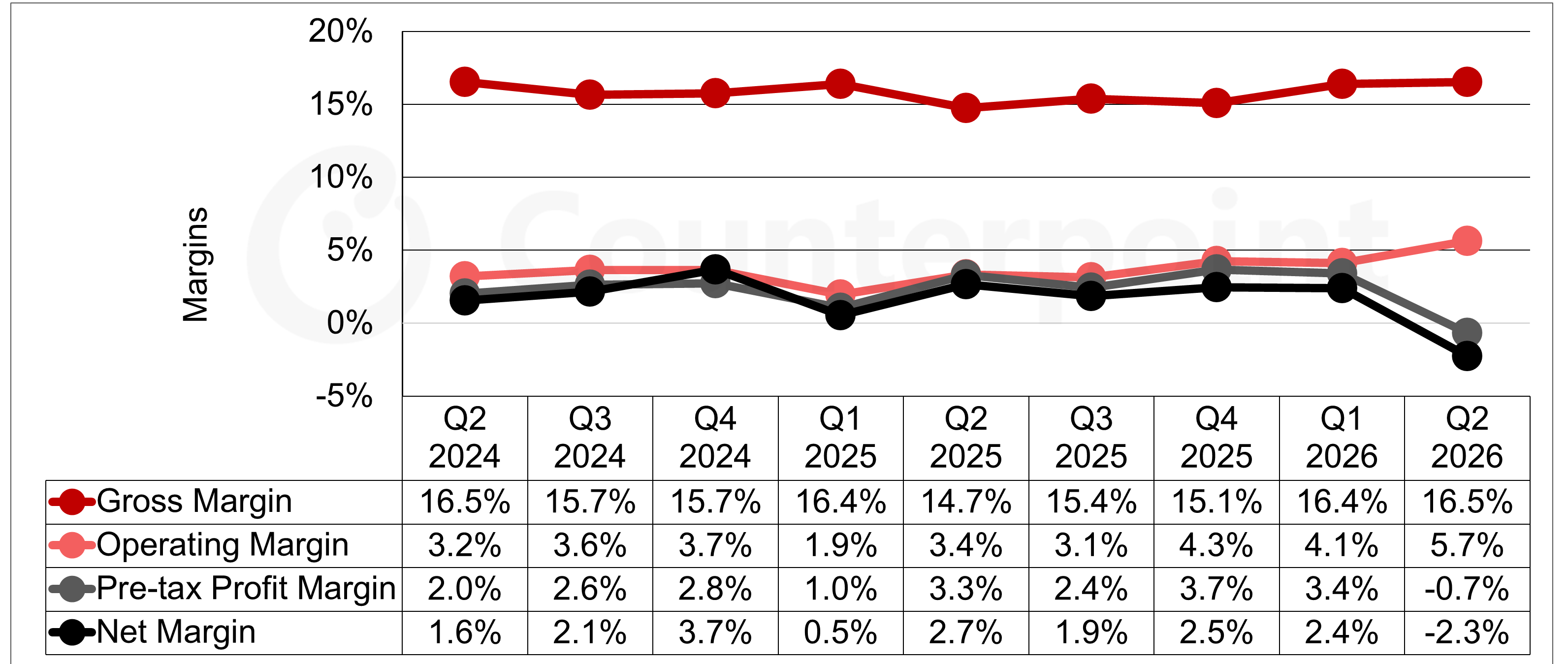
Lenovo Gross, Operating, Pre-Tax and Net Margins, Q2 2024-Q2 2026
For FY Q1 2027 by business segment:
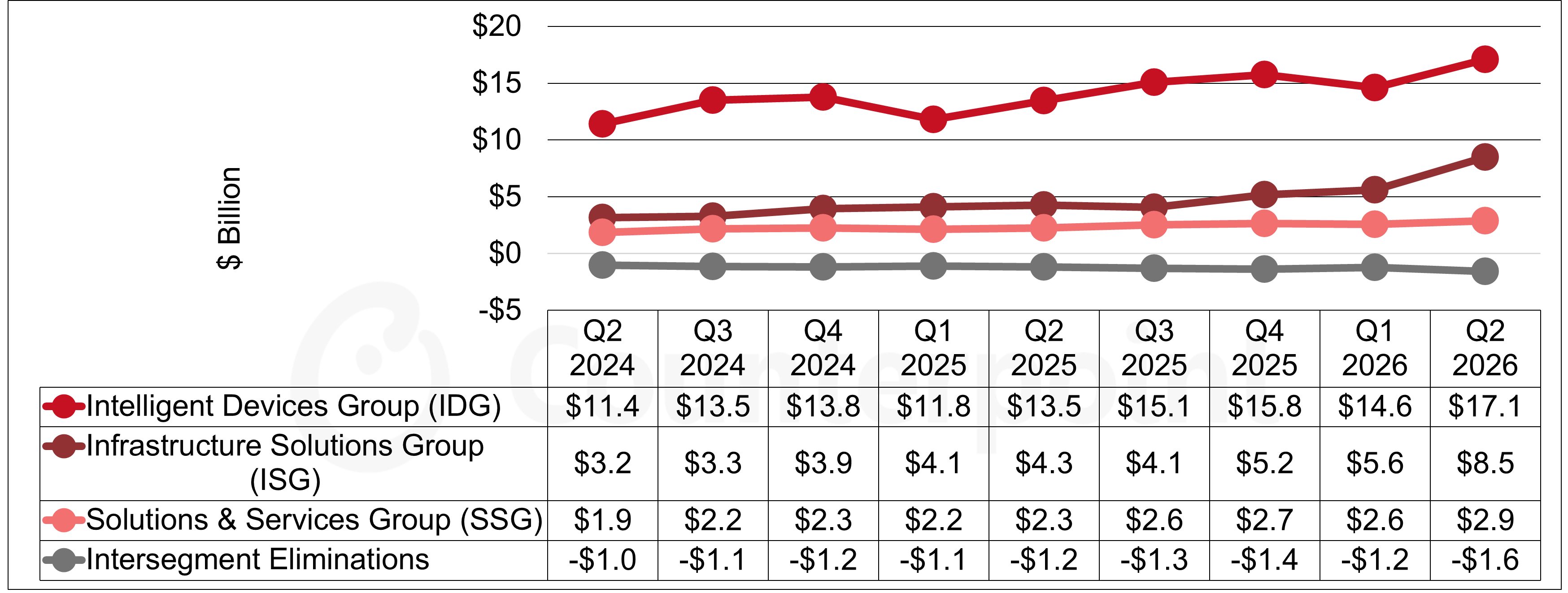
- IDG delivered a record first fiscal quarter revenue of $17.1 billion, up 27% YoY. Operating profit also increased 27% YoY to $1.2 billion, while maintaining an industry-leading operating margin of 7.1%, reflecting its operational excellence, supply chain resilience and continued innovation.
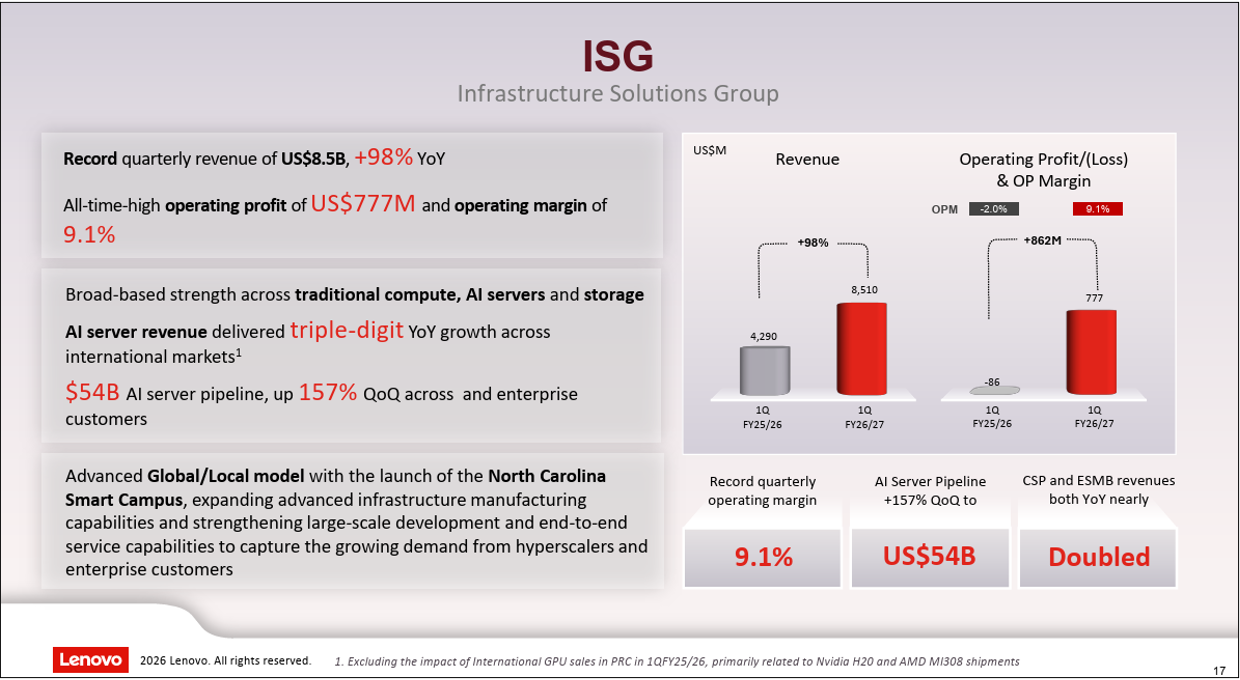
- ISG revenue increased to a record $8.5 billion, up 98% YoY. Operating profit reached a record $777 million, driving operating margin to an all-time high of 9.1%. As demonstrated by its strong revenue growth and expanding profitability over the past several quarters, Lenovo is confident in its ability to lead the global AI infrastructure industry through a differentiated ODM+ strategy and a unique end-to-end operating model, providing sustainable competitive strength.
- SSG delivered record quarterly revenue of $2.9 billion, up 28% YoY, with operating profit increasing 39% YoY to $697 million and operating margin expanding to a record 24.2%. AI services revenue grew at triple-digit YoY, driven by accelerating customer adoption and higher returns from AI investments. Revenue mix from managed services and project and solutions expanded to a record 62.4% of SSG revenue.
Lenovo Net Revenue by Business Segment, Q2 2024-Q2 2026
Lenovo notes that with its global scale, operational excellence and innovation leadership, it is converting growth into higher shareholder returns. Lenovo remains confident in its ability to sustain this momentum and deliver durable, profitable growth with even greater resilience and executional strength. It is confident in its ability to deliver the $100-billion revenue target in the near term and is on a strong path toward achieving a net income margin of over 5%.
Analyst takeaways
- Lenovo's fiscal Q1 results highlight its transformation from the world's largest PC vendor to a broader company focused on AI devices, infrastructure and services.
- The most notable development is the rapid growth of ISG. Infrastructure revenue nearly doubled YoY and operating margin reached a record 9.1%. This indicates Lenovo is converting AI server demand into sustained profitability, rather than relying solely on revenue growth.
- Lenovo's PC business continues to outperform. With a 24.2% global PC share and 25.1% AI PC share, Lenovo is leveraging its scale and supply chain to strengthen its market position despite challenging component costs.
- Memory inflation is the most significant near-term risk. Lenovo anticipates a 15% decline in PC industry units and a 20% contraction in smartphones in the second half of its fiscal year. However, these pressures may accelerate market-share consolidation among larger OEMs that can secure supply, manage costs and guide customers toward higher-priced configurations.
- AI is now a measurable component of Lenovo's financial results. AI-related businesses account for 35% of group revenue and are growing 60% YoY, making AI a significant driver of Lenovo's growth and business mix.
Bottom line
Lenovo achieved record fiscal Q1 results, with 43% YoY revenue growth driven by expansion into AI infrastructure and services beyond PCs. ISG reported 98% revenue growth, SSG achieved record profitability, and Lenovo continued to gain PC market share, highlighting the success of its diversification strategy.
While memory inflation and declining PC and smartphone volumes present risks for the second half, Lenovo's scale, procurement strength, global manufacturing, and growing premium and AI product mix position it to gain market share even as overall markets contract. With AI-related revenue now accounting for 35% of total revenue, Lenovo is well positioned to pursue its near-term $100-billion revenue target and its longer-term goal of exceeding a 5% net income margin.
Category
Industry
Consumer Electronics, Smartphone, AI
Service
Standard
Report Type
Report
Time Period
Other
Receive our insightful weekly newsletter and stay ahead of the competition.
Author
David Naranjo
David Naranjo joined Counterpoint Research as part of its acquisition of DSCC, where he was Senior Director. David has more than 20 years’ experience in the consumer and commercial electronics industry. David’s professional background includes a wide range of responsibilities in product development, product planning, product management, product marketing, data analytics, and executive /operational management. Prior experience includes working in the consumer and commercial electronics industry as Director of Business Line Management at ViewSonic, Director of Product Planning at Samsung Electronics, Director of Connected Products at Kenmore, Director of Product Management at Mitsubishi Digital Electronics and Group Manager at Panasonic. David has a Bachelor of Electrical Engineering and an MBA in Finance and Marketing.