

- Competitive pricing, greater flexibility, prior experience with Samsung and capacity constraints at TSMC are likely the key factors behind Tesla’s decision to ink a $16.5-billion supply deal with Samsung.
- Amid geopolitical tensions and a push for supply chain control, partnering with Samsung Foundry helps Tesla diversify chip sources and secure a key link – wafer fabrication.
- Still, Samsung faces a major execution risk – its 2nm GAA process remains unproven at scale, and any delay could jeopardize delivery timelines and customer trust.
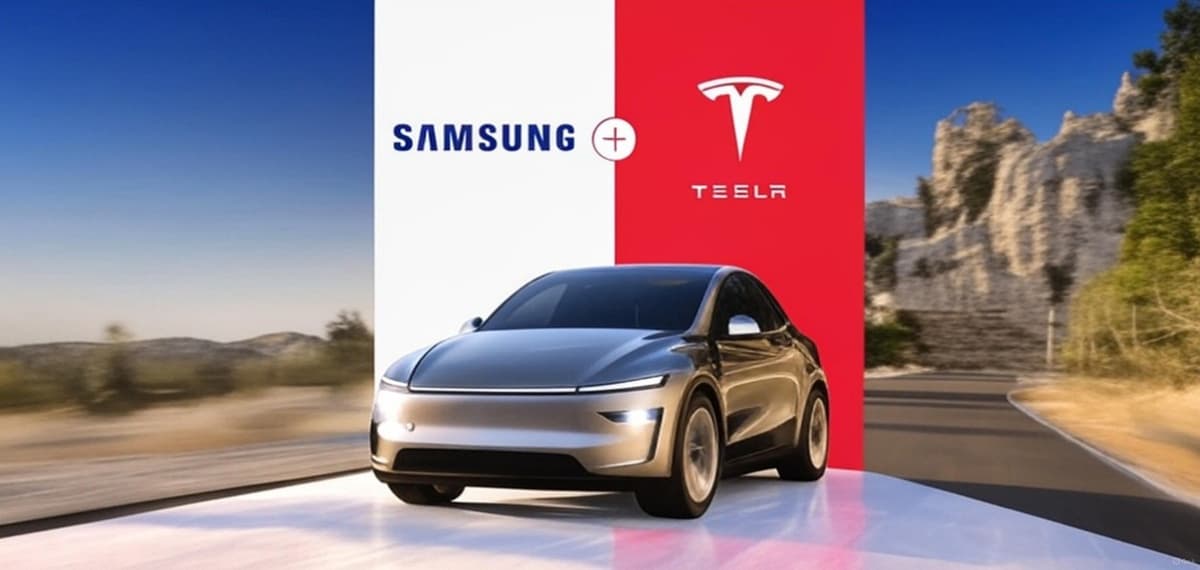
On July 28, 2025, Samsung Electronics announced it had secured a $16.5-billion contract for supplng chips to a prominent global company. Later that same day, Tesla CEO Elon Musk confirmed the news, and additional details of the contract were revealed. Samsung will produce Tesla’s next-generation AI6 chip at the 2nm GAA node (SF2) at its new fab in Texas, with the contract extending through the end of 2033.
Amid competition from TSMC, which controls two-thirds of the global pure-play and one-third of the overall (IDMs included) foundry market, this is a significant win for the advanced node of Samsung, which remains a distant second in the market with 11% and 6% share, respectively.

We believe several factors may have contributed to this success:
Competitive pricing
As semiconductor technology advances and process complexity increases, TSMC’s pricing for its 2nm node is projected to reach $30,000 per wafer or higher, according to our Global Foundry Wafer Capacity by Node Tracker. Due to supply constraints and strong demand for the 2nm node, TSMC commands significant pricing power to offer discounts. On the other hand, Samsung has been facing challenges in securing major clients. We believe Samsung Foundry has led with a special and highly competitive pricing, sacrificing some margins to secure some scale and expand its client roster to gain customer confidence for its advanced node to kick off. The hands-on experience to be gained from producing advanced chips is especially imperative in the foundry market to drive the company’s future growth and competitiveness.
Greater flexibility
As mentioned earlier, TSMC’s 2nm node is one of the most sought-after advanced process technologies, but it has higher capex and thus higher production cost, which means TSMC will gradually ramp up its capacity. In contrast, Samsung is offering greater flexibility, appealing to clients who require a higher degree of involvement, like Elon Musk, who has expressed interest in personally overseeing production, a level of client engagement that is less feasible at TSMC.
Prior experience
Samsung builds upon a strong foundation and experience in making Tesla’s Autopilot 3.0 and Autopilot 4.0 chips at 14nm and 7nm, respectively. Therefore, Samsung has successfully demonstrated its technical capabilities, positioning the company as the ideal choice for the next-generation AI6 chip while helping Tesla not to start from scratch at a new foundry.
Tesla, a strategic customer:
As the AI and autonomous booms continue, Samsung Foundry sees Tesla as a strategic customer to potentially expand from chips for advanced self-driving automotive systems to Musk’s other businesses like Grok AI servers, Optimus Humanoids and SpaceX Starship applications.
Mitigation for geopolitical risk:
Tesla is recognized for its software expertise and flexible supply chain for automotive hardware, with manufacturing facilities in Germany, North America and China. A key component for Full Self-Driving (FSD) technology, semiconductor chips are primarily supplied by Asian companies. TSMC in Taiwan manufactures the D1/D2(Dojo) chip for AI data training, and the AI5 chip, while Samsung in South Korea produces the Autopilot 3.0 and Autopilot 4.0 chips.
The global supply chain faces potential risks due to changing geopolitical circumstances, particularly given Tesla’s significant market and manufacturing presence in China and the possibility of disruptions during periods of tension. Therefore, this is a relevant business consideration for Tesla.
To reduce the impact of geopolitical uncertainties on its supply chain, Tesla has taken steps to diversify its suppliers in different regions. But it continues to encounter difficulties in identifying alternatives to TSMC’s advanced manufacturing processes. Collaborating with Samsung at its Texas fabrication facility is being considered as one option to address these challenges.
Wrapping up:
Although the project presents potential benefits for both Samsung and Tesla with limited downside, Samsung confronts significant execution risks, particularly as its 2nm GAA process has yet to be validated at scale. This challenge is critical for Samsung Foundry to address in order to prevent mass-production delays or margin erosion.
Any production delays or yield concerns could compromise delivery timelines and erode customer confidence. There exists a risk that, in such a scenario, the project could even revert to TSMC. Such an outcome would not only disrupt Tesla’s schedule but also hinder Samsung’s efforts to attract clients seeking stable and reliable technology solutions.
Conversely, successful execution would establish Samsung as a credible alternative to TSMC and enhance its appeal to other major clients, thereby reducing industry reliance on a single supplier. Furthermore, with expected equity dilution and increased localization at the US plant, it is essential for Samsung to maintain a competitive advantage over TSMC and emerging Chinese foundries to secure its long-term prospects.