Ford’s Long Beach EV Development Center Highlights its Approach to Accelerating Design and Development
- Ford provided an inside look at the facility and teams designing the automaker’s Universal EV Platform (UEP) and mid-size pickup truck based on this model.
- The tour showed how Ford is adopting a new approach to vehicle development, with departments co-located and able to rapidly iterate on designs.
- The automaker is also designing more of the hardware and software in its UEP, with teams focused on developing optimized, multi-function components.
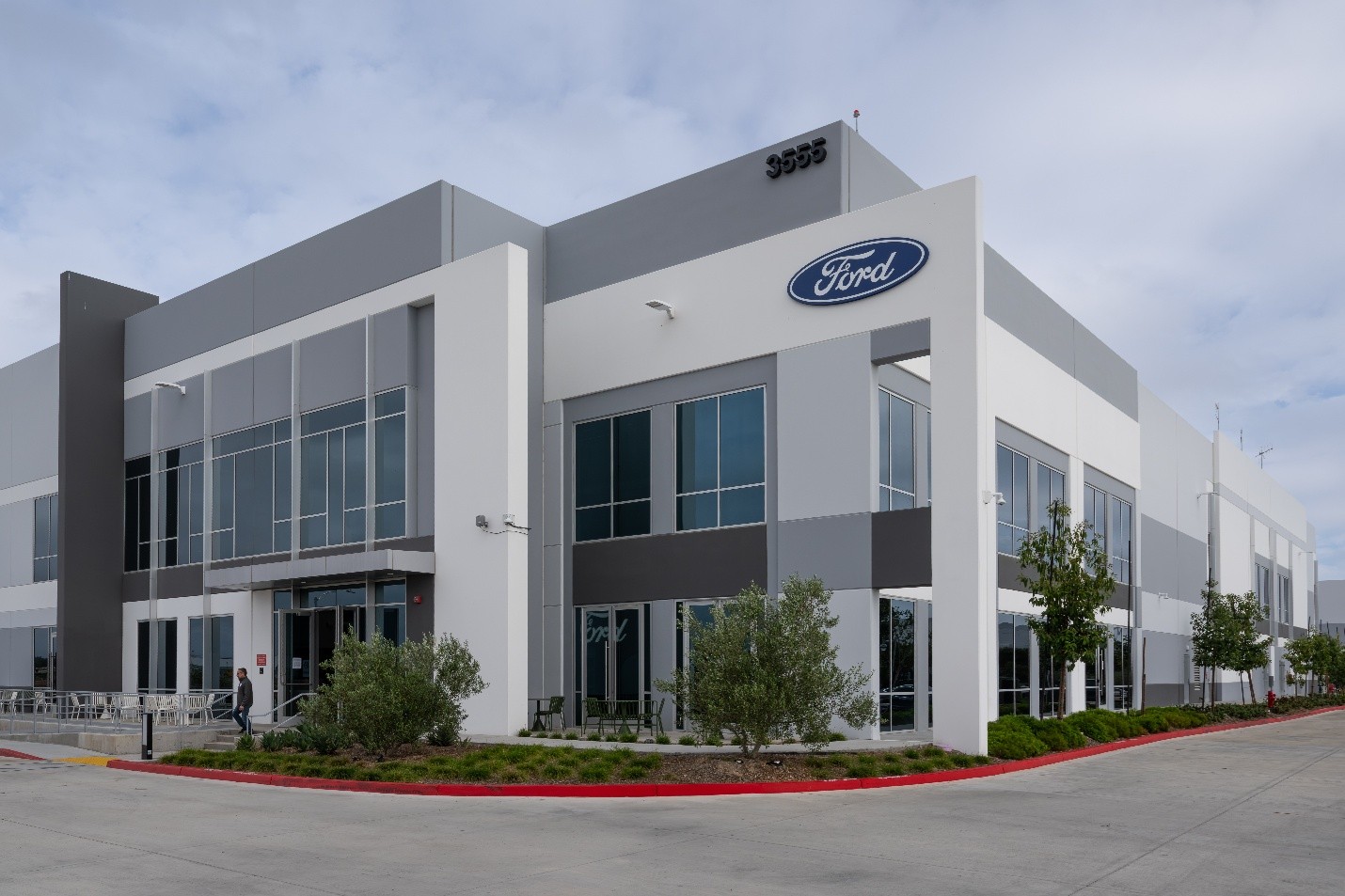
On April 30, 2026, Ford provided a tour of its EV Development Center (EVDC) facility in Long Beach, California, focusing on how the company is changing its approach to vehicle development for its new Universal EV Platform (UEP). Just a few minutes into the tour, it was apparent that what initially seemed to be a straightforward tour of the two main buildings, with information about the automaker’s UEP, was actually a detailed overview of the new way Ford is iteratively designing, developing, and testing next-generation vehicles.
Many of the changes at the automaker’s EVDC facility in Long Beach are beginning to ripple throughout the organization. However, based on comments from Ford representatives working at EVDC, these changes are bi-directional, with the Long Beach team members working closely with their colleagues in Palo Alto, California, and Dearborn, Michigan, on the UEP program to scale it up in advance of the 2027 production target for the first planned vehicle, a mid-size battery electric pickup truck. This vehicle will be assembled at Ford’s Louisville, Kentucky, plant using the automaker’s new Ford Universal EV Production System. The automaker has stated the new system will reduce assembly times by 40% compared with other vehicles built at this location.
The design philosophy for Ford’s UEP program can be summarized with the saying – “The best part is no part, and if a part is necessary, then it should perform multiple functions.” This was evident from the range of components that serve multiple functions, from a zonal ECU that not only runs systems in the rear of the vehicle (such as lighting) but incorporates the charging port. Importantly, this part, along with several others, such as the E-box which combines charging hardware and power control in a single unit, an inverter, and a zonal ECU were all designed in-house by Ford.
This change also highlights the company’s new approach to working with automotive suppliers. Ford is taking on much of the hardware and software design for its UEP program, insourcing those responsibilities. Teams at EVDC explained how they had designed specific ECUs and related software. The EVDC team has created a digital twin of the vehicle they are developing. This cloud-based approach enables the team to develop, test and iterate on software in advance of having development hardware.
In general, the tour highlighted the automaker’s collaborative approach to design and development and its laser focus on speed of development while simultaneously managing costs. Another clear signal from Ford was its commitment to take on design and development of components that would have previously been left to suppliers. For Ford, controlling component, system, and software design enables the OEM to rapidly iterate on designs across teams while simultaneously driving down costs.
The Tour Highlights Ford’s Approach to Collaboration
Ford made major changes to its product roadmap in late December 2025, announcing it would change its product mix so that 50% of models produced would be hybrids, extended-range EVs and electric vehicles by 2030, as compared with 17% in 2025. This was a change to its vehicle production roadmap, moving away from a pure focus on EVs to a mix of powertrains. Ford is not alone in the auto industry, as several other automakers, such as General Motors, Honda, Porsche, and Stellantis, have also changed their EV roadmaps.
This updated plan will leverage Ford’s UEP and the production of the OEM’s announced mid-size four-door electric pickup will begin in 2027. Related to this, Ford’s production plans for UEP platform models will net an estimated 15% improvement in speed of assembly.
Ford established its EVDC program four years ago. The facility currently has 350 employees, with this team making up the majority of the larger UEP group, which has members in Palo Alto and Dearborn.
Evident from the Long Beach EVDC facility tour, Ford has focused on reducing development bottlenecks. Ford’s EVDC center has two buildings that have all the different departments and related equipment needed to design a vehicle and ultimately build a production version of a model. The company has several rooms in each of the two EVDC buildings that enable the automaker to rapidly develop designs and systems for a new vehicle, test their designs and systems, and iterate on them holistically as they move toward Ford’s start of production (SOP) date for its first UEP platform model.
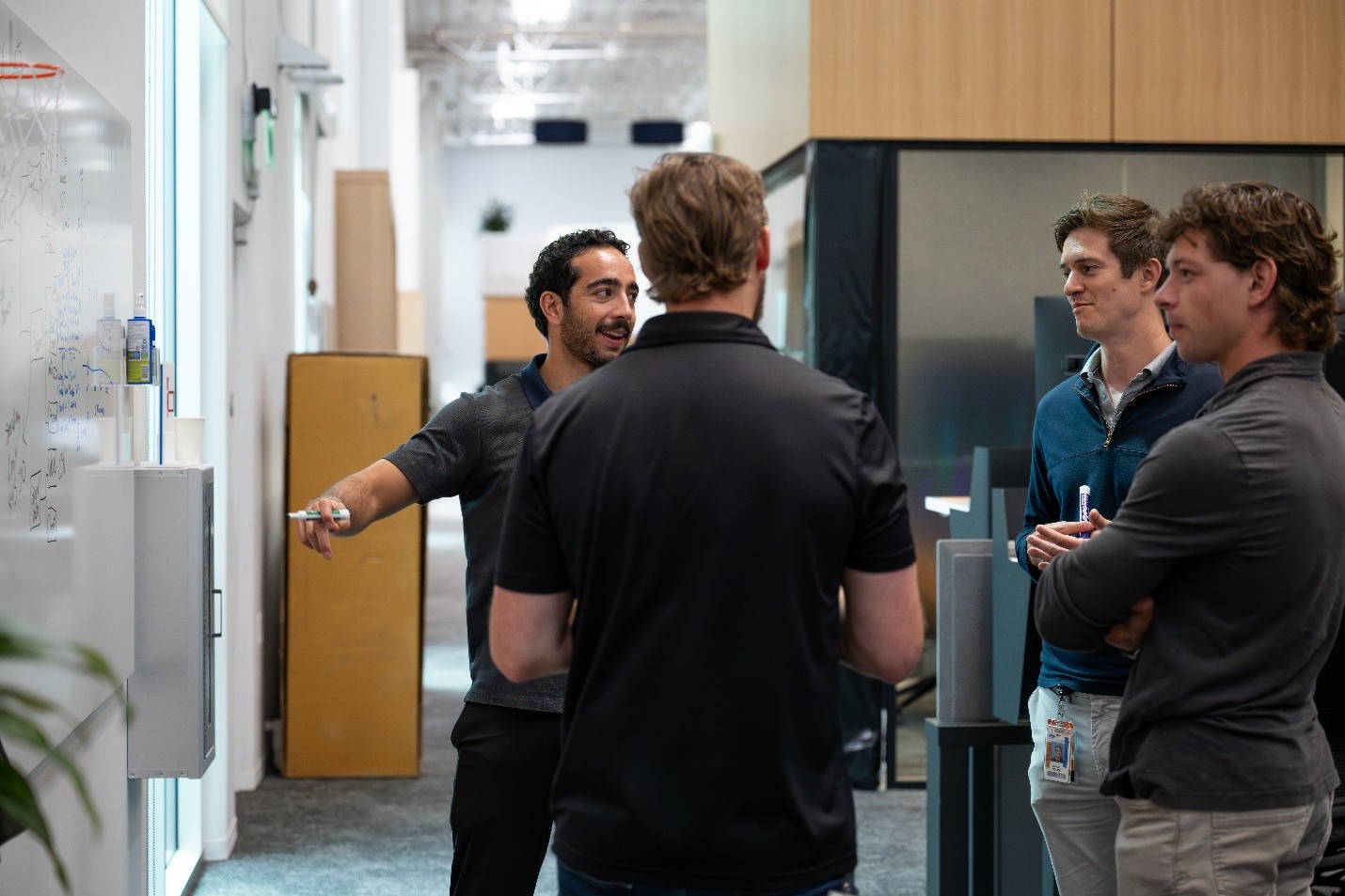
EVDC is not an isolated group and is key to Ford’s longer-term goal of speeding up vehicle design and production processes. The larger Ford organization is working closely with the Ford EVDC team in Long Beach as well as with the company’s group in Palo Alto, California, and Dearborn, Michigan.
For example, departments at Ford’s EVDC Center include its design studio, chassis engineering, seating, fabrication, low and high-voltage testing, battery testing, a dyno room with a climate testing chamber (which simulates sun, rain, heat, humidity, etc.), a visualization room (for viewing other large vehicle systems, castings, and mock-ups), thermal and EMI testing, metrology, a wiring harness lab, its “LabCar” E/E architecture testing department, and its fleet garage (for managing vehicles entering, being stored, and leaving the facility).
Ford is in the process of building out its battery testing department at the EVDC center, though it is important to note this department at EVDC will complement its Ion Park facility in Michigan. The UEP platform will feature prismatic lithium iron phosphate LFP batteries (Ford is licensing the technology from CATL).
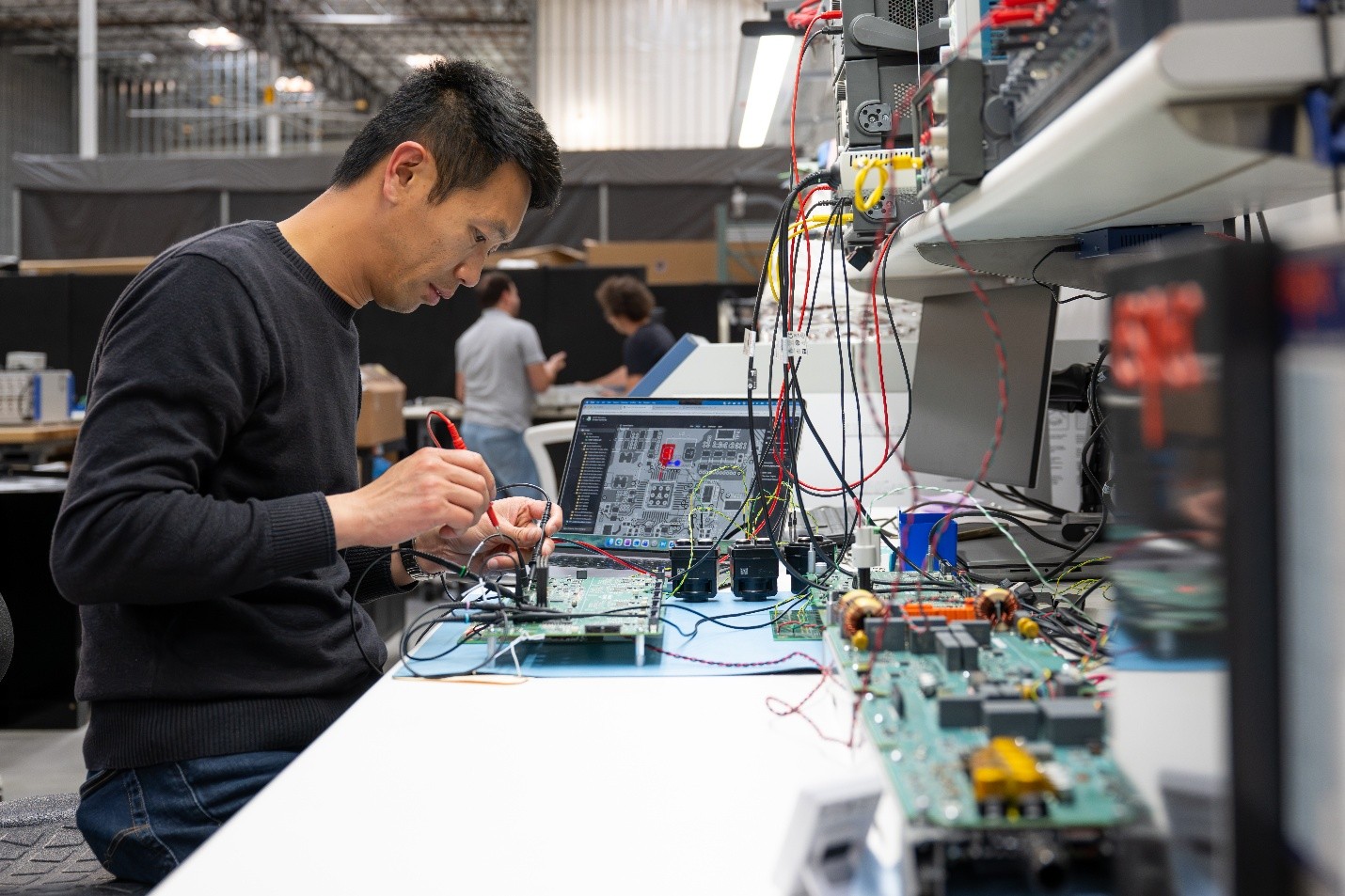
The facility also has a fabrication plant where Ford engineers can quickly fabricate components, testing changes to component designs with other departments in the same building rather than sending a request to a supplier and then waiting months to get a component back. Additionally, this ensures that the design and development teams are working together when iterating, ensuring that vehicle components and systems work together during the development process rather than right before SOP.
Analyst Take
Despite the challenges Ford has faced with its EV programs over the last few years, shifting its product roadmap to focus more on hybrids and less on battery electric vehicles, the automaker’s EVDC effort demonstrates that the OEM is taking meaningful steps toward changing how it develops vehicles.
The team at EVDC are facing a challenging task, designing a next-generation EV with a sub-$30,000 price tag. Nevertheless, these constraints are fostering innovation as members of the EVDC team find ways to combine systems and functions, make vehicle parts easier to install on the assembly line, and still provide a solid customer experience.
An important question about this effort is how it will filter through the rest of the organization. The “skunkworks” approach Ford is taking at EVDC is great for a platform and related vehicle programs but ultimately a faster approach to development must spread across the organization in all markets. Ford representatives noted that information sharing is a two-way street between EVDC and teams across Ford’s organization. EVDC has a mix of employees from other automakers and markets, such as tech, and a smaller (but important) group of long-term Ford employees. The goal of this structure is to reshape Ford and how it develops vehicles, while at EVDC enabling the teams there to adapt their processes to work well at scale.
Regardless of how the company’s first UEP model sells in the market, Ford is approaching vehicle development with a renewed focus on speed and cost control, which is a good sign for the automaker as it adapts to a rapidly changing automotive industry...
Receive our insightful weekly newsletter and stay ahead of the competition.
Author
Greg Basich

As Associate Director at Counterpoint Research, Greg Basich focuses on the automotive industry. Prior to joining Counterpoint Research, Greg worked at TechInsights and Strategy Analytics for a combined 11 years, providing market intelligence and advisory services to companies in the automotive electronics market and related verticals. Prior to his career as an analyst, Greg was a business-to-business journalist at Bobit Business Media for 13 years, focused on automotive interiors, aftermarket electronics, and the fleet market. Greg holds a bachelor’s degree in economics from the University of California, San Diego.