MWC Shanghai 2026: China’s AI Race Is Shifting from Model Capability to Workflow Integration
- Chinese vendors increasingly appear willing to commercialize imperfect but usable AI experiences early, treating public deployment as part of the product development cycle.
- The most commercially relevant AI features are emerging not from grand assistant narratives, but from narrow, high-frequency scenarios where AI quietly improves existing user habits.
- Dedicated AI hardware is emerging as a way to capture workflows and deepen ecosystem lock-in, rather than to showcase novel intelligence.
MWC Shanghai 2026 suggested that China’s AI industry is moving into a phase where commercialization execution matters as much as frontier-model capability. Vendors across AI-powered devices and services—from wearables and smartphones to enterprise tools—were increasingly willing to showcase incomplete but usable AI experiences early, treating public deployment as part of the development cycle. Rather than positioning AI as a standalone chatbot, they focused on embedding AI into existing behaviors and workflows to reduce everyday friction. This shift suggests that China’s AI race increasingly hinges not just on model strength, but on how effectively AI is commercialized across consumer and enterprise workflows.
Huawei AI Glasses: AI Agents Still Depend on Structured Orchestration
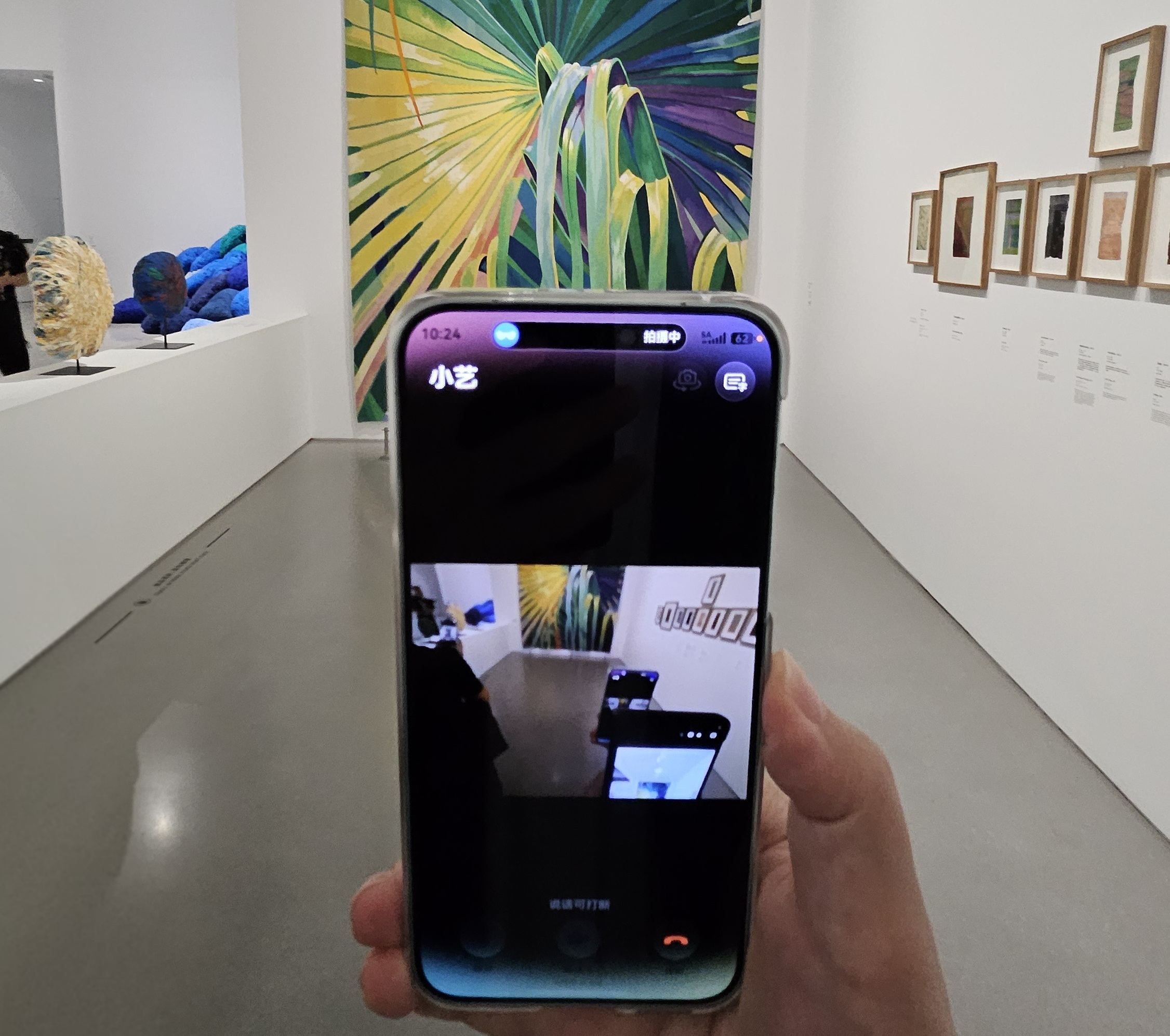
Huawei’s AI Glasses were among the clearest examples of how Chinese vendors are reframing AI as an always-available interface layer rather than a standalone application. The product combines first-person capture, visual question answering through Xiao Yi, translation, and HarmonyOS device control into a single wearable experience positioned around continuous user interaction.
First-person view of the exhibition from Huawei AI Glasses, mirrored on the paired Huawei smartphone
Xiao Yi responding to a question about its role during the Huawei AI Glasses demo
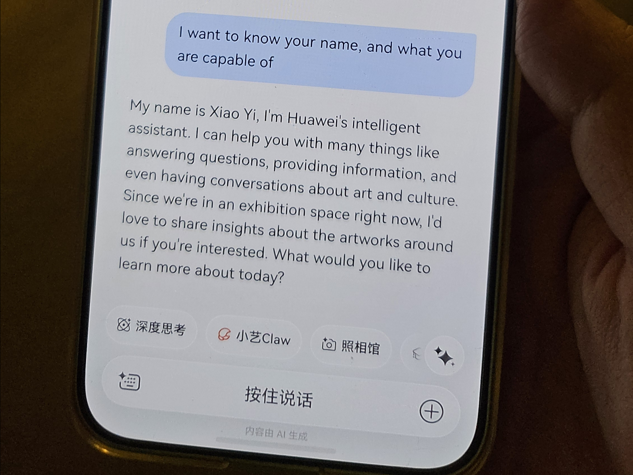
This experience illustrates a broader reality surrounding many current AI agent demonstrations. Despite increasingly aggressive agent branding, a large share of the value still comes from well-choreographed orchestration within narrow domains, tightly coupled to specific environments and ecosystems. In the near term, competitive advantage is likely to come less from delivering generalized autonomy and more from how many such domain-specific journeys vendors can deploy, refine and monetize across their proprietary platforms.
This commercialization-first approach also aligns with Counterpoint Research's long-term view of the Smart Glasses market. Our base forecast assumes the category will expand through increasingly diverse everyday use cases as AI becomes more deeply embedded into daily life. As the market matures, differentiation will increasingly depend not on AI capability alone, but on how effectively vendors translate AI into familiar user workflows and experiences.
While today's products remain relatively constrained, the direction of travel is becoming clearer. Rather than waiting for fully mature AI agents, vendors are beginning to establish user behaviors and ecosystem foundations first. This commercialization strategy underpins Counterpoint Research's long‑term outlook for the smart glasses market.
Global Smart Glasses Shipment Forecast, 2025–2031F

Source: Counterpoint Global Smart Glasses Market Forecast, June 2026 Update
Huawei Pura X Max: The Most Valuable AI Features Are Often the Least Ambitious
Huawei’s Pura X Max highlighted another important direction for AI devices: commercially meaningful AI experiences are emerging not from the most ambitious assistant concepts, but from highly practical micro-utilities embedded into familiar user behaviors. One of the most notable demonstrations was the device’s AI-powered pose coaching feature for smartphone photography.
The feature itself was not technologically groundbreaking. AI-generated pose recommendations were displayed directly on the device during photo demonstrations, guiding users through different shooting compositions and body positioning. From a technical perspective, the functionality was far less sophisticated than many of the broader AI agent narratives presented across the industry, but that gap in ambition is exactly what makes it commercially relevant.
Huawei Pura X Max displaying AI-generated pose guidance for smartphone photography
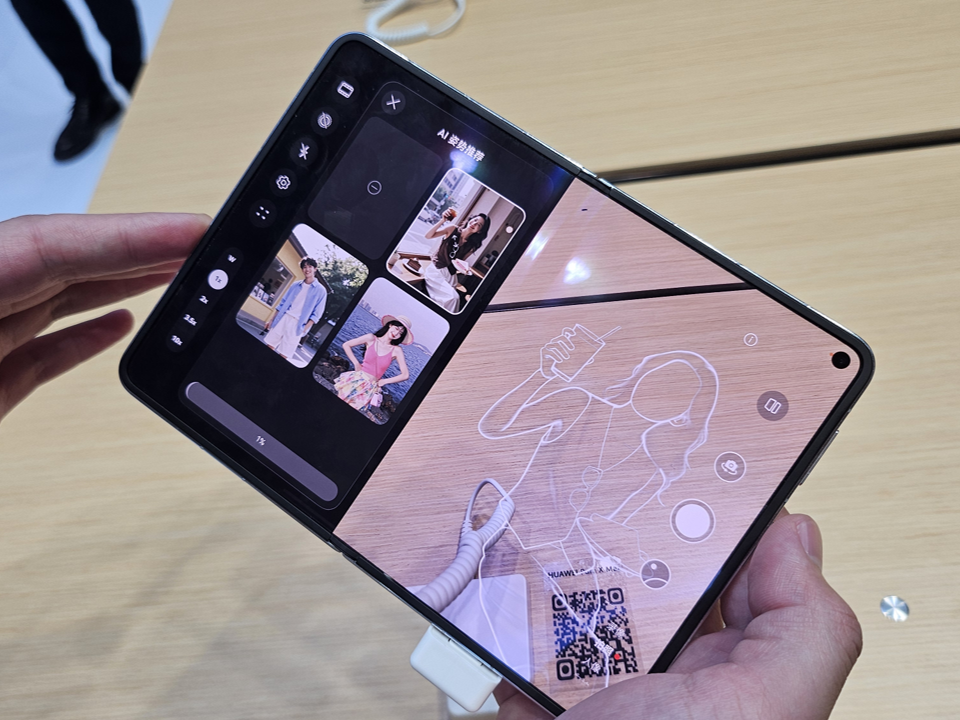
Rather than attempting to create entirely new AI-centric behaviors, the feature enhances an already frequent and emotionally relevant smartphone activity: allowing users to import social media photos and having Huawei’s AI extract and re-present poses as real-time shooting guidance. The commercial logic is therefore tied less to technological spectacle and more to usability reinforcement. In practice, features that improve everyday behavior in small but visible ways are likely to drive stronger long-term engagement than broader AI assistant positioning that remains conceptually impressive but behaviorally unclear.
As AI capabilities become increasingly widespread across smartphone tiers, differentiation is increasingly shifting away from simply adding more AI features. The more important question is whether AI can improve existing habits in ways that feel immediate, intuitive and repeatedly useful. In that sense, the most commercially durable AI experiences are unlikely to be the most technically ambitious ones, but rather the most practically useful.
DingTalk Q1: AI Hardware as a Workflow Capture Endpoint
Alibaba’s DingTalk Q1 raised a broader industry question surrounding the viability of dedicated AI hardware. At first glance, the product appears functionally redundant: smartphones already record meetings, transcribe conversations and generate summaries through either OS-level functionality or third-party applications. Physically, the device itself was also notably compact — roughly credit-card-sized — reinforcing the idea that Alibaba is positioning it less as a standalone computing device and more as a lightweight workflow capture endpoint.
Yet the more important question is not whether smartphones can technically replicate these functions, but whether dedicated AI hardware can create more persistent workflow integration around enterprise productivity. Technology markets do not evolve only through entirely new categories. In many cases, commercially successful products emerge by restructuring existing capabilities into workflows that feel more integrated, repeatable and operationally convenient.
DingTalk Q1, a compact AI meeting recorder designed as a workflow capture endpoint for DingTalk
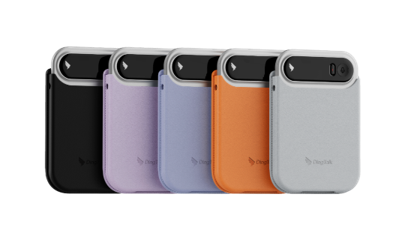
Source: DingTalk
In that sense, DingTalk Q1 appears less about introducing entirely new functionality and more about tightening the connection between AI-generated outputs and enterprise workflows. The device links recordings and summaries directly into calendars, task management systems and organizational communication structures within the DingTalk ecosystem. The broader implication is that Chinese vendors increasingly appear willing to test commercially uncertain AI hardware categories early, even before long-term demand is fully validated.
The Competitive Advantage Is Shifting from Intelligence to Integration
MWC Shanghai 2026 showed that Chinese vendors are increasingly treating commercialization as part of the development process rather than its endpoint. Instead of waiting for fully polished experiences, they are pushing imperfect but usable AI products into the field and using real-world deployment as a structured way to collect feedback, refine ecosystem integration and understand where monetization may actually emerge. In this model, rapid deployment becomes a competitive advantage in itself.
At the same time, the center of gravity is shifting from raw model capability to ecosystem fit. The most interesting demos on the show floor were not necessarily those that claimed the smartest models, but those that wired AI into existing communication flows, productivity systems and everyday behaviors in ways that reduced friction and increased usage. In this framing, intelligence is only one ingredient; the commercial objective is increasingly tied to habit formation, workflow capture and ecosystem retention rather than to standalone model performance itself.
Within this context, it is unsurprising that many products marketed as AI agents still function more like domain-specific orchestration engines, often dependent on structured environments, curated scenarios and tightly controlled flows. That gap between branding and reality reflects current technical limitations, but it also points to a commercially pragmatic strategy: vendors are optimizing for deployability and workflow integration rather than pure autonomy.
Taken together, these dynamics suggest that China’s AI competition will increasingly be defined by commercialization execution rather than pure model leadership. As foundational AI capabilities become more widely accessible across the industry, competitive advantage will increasingly belong to companies that successfully turn AI into habits, workflows and revenue across their ecosystems—not simply those with the most advanced standalone models.
Category
Industry
AI
Service
Standard
Report Type
Report
Time Period
Other
Receive our insightful weekly newsletter and stay ahead of the competition.
Author
Sanghoon Kim

Sanghoon Kim is a Research Analyst at Counterpoint Research based in Seoul, Korea. At Gallup Korea, he gained hands-on experience conducting primary research surveys, mainly for government and public sector clients. After three years of research experience, he joined Counterpoint to focus on expanding his expertise in the fast-evolving IT sector. He graduated from Yonsei University with a Bachelor of Arts in Political Science.