AGIBOT UK APC2026: Scaling Humanoid Robot Adoption
- For AGIBOT, deployment is becoming more important than demonstrations.
- The ecosystem may matter as much as the robot for robotics adoption.
- Although in its early stages, humanoid robotics may be entering the platform era.
- Universities could be an underappreciated early market.
AGIBOT hosted its first major partner conference in the UK and Europe this Tuesday. AGIBOT spoke less about emerging technology and shifted the conversation towards commercialization. The humanoid robotics industry appears to be moving beyond the question of "Can it work?" towards the much harder question "How do you scale adoption?"
A few observations stood out:
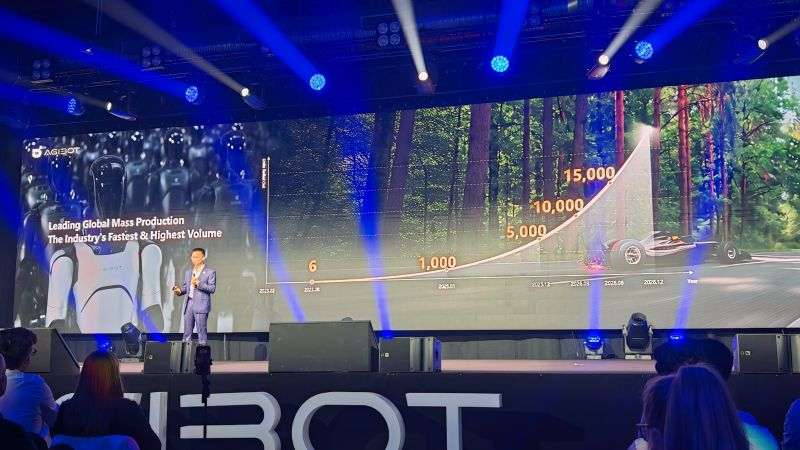
Deployment is becoming more important than demonstrations
Much of the discussion centered on installations, productivity gains, service models and real-world use cases rather than purely technical milestones. The emphasis felt increasingly focused on adoption at scale.
The ecosystem may matter as much as the robot
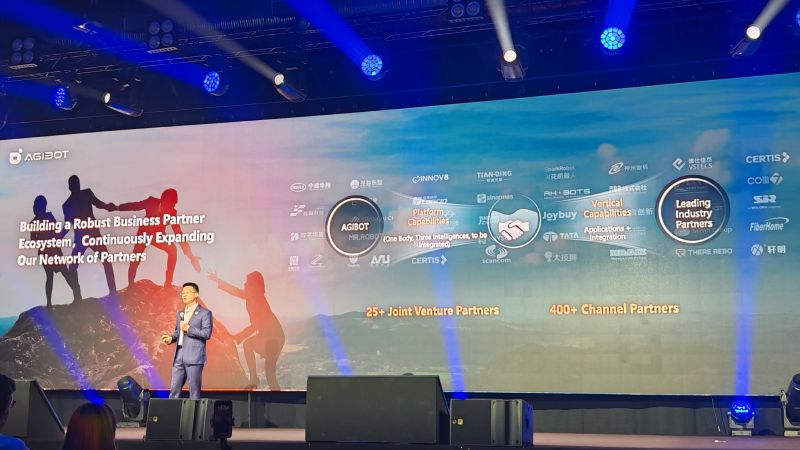
The introduction of local Robot-as-a-Service (RaaS) models, together with distributors, system integrators and service partners, reflects a recognition that robotics adoption is ultimately an ecosystem challenge rather than a hardware challenge.
Humanoid robotics may be entering its platform era
Humanoids entering the platform era was one of the strongest takeaways. Throughout the event, there were discussions around software platforms, embodied AI models, and enabling partners to build on top of existing robotics capabilities. This is immediately reminiscent of earlier technology transitions in smartphones and AI infrastructure.
iOS, Android and CUDA did not become dominant simply because of the hardware underneath them. They scaled because developers continuously expanded the value of the platform.
Humanoid robotics is still at a much earlier stage, but I increasingly suspect that long-term leadership may depend more on who builds the strongest ecosystem around developers, researchers, partners and customers.
Universities could be an underappreciated early market
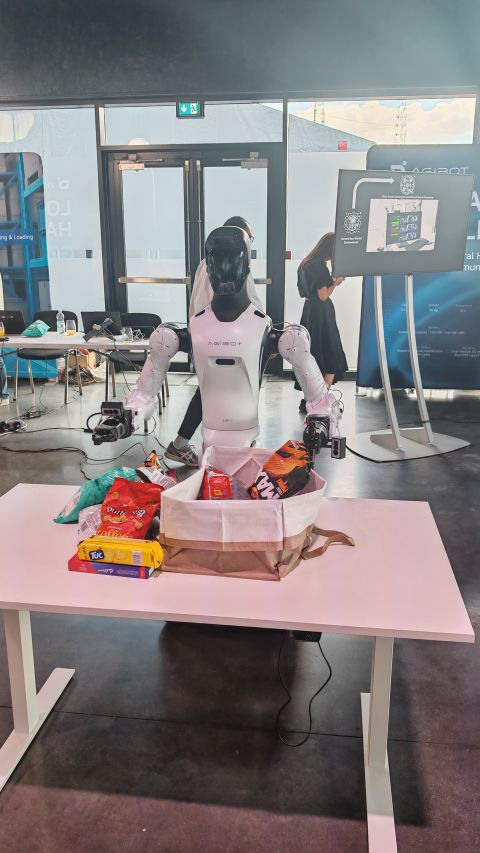
A surprising subject was the strong presence of universities and research institutions. Historically, research communities have often acted as early adopters for emerging technology platforms before broader commercial deployment follows.
The parallels between this and semiconductors and smartphones are striking. Many emerging sectors begin as a race for technical superiority. The sectors that eventually scale become a race for ecosystems, developers, partners and deployment.
Humanoid robotics still faces significant technical, economic and regulatory challenges. Nevertheless, the industry's leading players are increasingly talking about installations, productivity, business models and platforms rather than robot specifications alone. In my experience, that is often the point at which a technology starts transitioning from a research project into an industry.
Learn more about robotics adoption from our Humanoid Installation Tracker and Forecasts, Q2 2026
Humanoid robots are among the most emerging fields in the technology industry. Thanks to the remarkable advances in embodied intelligence, humanoid robots boast broad prospects as universal production and service tools. Counterpoint Research has conducted comprehensive research on topics that include but are not limited to humanoid robotic OEMs’ competitive landscape, application scenarios, value chain, manufacturing cost analysis, and embodied intelligence enablement. Counterpoint also made market forecast for 2026-2030 by application and region, as well as insightful industry analysis.
Further related research:
Receive our insightful weekly newsletter and stay ahead of the competition.
Author
Yang Wang


Yang is a Principal Analyst at Counterpoint Research, based out of London. Yang has 10 years of work experience with particular interest in mobile devices, ecosystems, Emerging Markets, supply chain and macro topics that affect the global technology industry. As a tech analyst he has been quoted extensively by leading financial and media outlets. Yang started his career as a management trainee at Jardine Matheson, worked in business development at a SaaS startup, and most recently held marketing and research roles at KaiOS Technologies. Yang holds a Master of Science in Management from London Business School, and a Master of Science in Psychology from the University College of London.