- Samsung launched three new foldables: Galaxy Z Fold8, Galaxy Z Fold8 Ultra and Galaxy Z Flip8.
- The company focuses on hardware innovation, with the Fold8, and AI enhancements as key differentiators – anchoring them in the super-premium pricing tier and turning away from FE variants as a path to broader appeal.
- The shorter, squarer Z Fold8 is an intriguing change to Samsung’s Fold model, as the company shifts dimensional gears after years of optimizing its larger foldable for thinness.
- As expected, pricing increases YoY thanks to rising memory costs. However, Samsung tries to offset sticker shock with promotional offers.
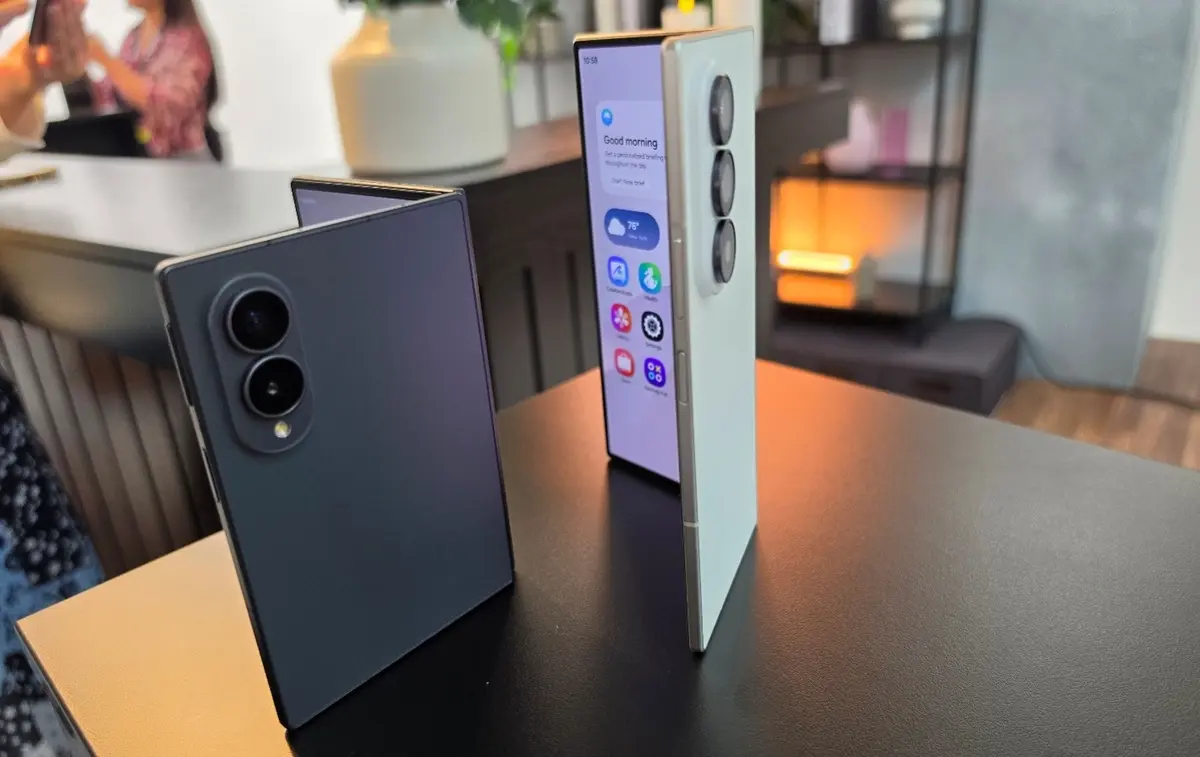
Samsung is switching up its foldable smartphone line-up, again. This year, the company launches a second book-type foldable (Z Fold8), along with its Z Flip8 and Z Fold8 Ultra, along with new smartwatches. While the Z Flip8 and Z Fold8 Ultra pack generation-to-generation upgrades to hardware and design, it is the new Z8 Fold which stands out with new display dimensions, geared at a user group hyper-focused on content consumption.
For the second year in a row, Samsung is positioning the Z series as flagships without compromise, signaling that the form factor has matured enough to provide a like-for-like experience, including durability, as candybar-type flagships enable. Keys to delivering on this promise are further enhancements to the camera set-up, increased battery capacity and faster charging speeds.
Counterpoint Research data shows that users prefer the book-type foldable globally. With this launch, Samsung is taking a significant step to broaden its flagship portfolio to create differentiated solutions for foldable users, refining how each form factor is targeted to its audience while enabling buyers to make a personalized choice aligned with how they anticipate using their device going forward.
Samsung continues to focus on evolving the capabilities of AI on its flagships. The company spent some time using its Now Brief and Now Nudge features as ways to highlight the agentic capabilities of its latest devices – including how it optimizes these features for the larger screens on the Fold models for AI features.

Hardware & Ecosystem Highlights
Galaxy Z Fold8 Ultra is the successor to last year’s Z Fold7. The device is the embodiment of what Samsung calls a “no-compromise flagship.” It retains its power-user persona, including top-of-the-line cameras (200MP main lens, 8K video with APV codec). The device is thin (4.1mm unfolded), similar to last year, and features minor physical changes designed to improve usability.
A key improvement is the 5,000mAh battery, and faster wired and wireless charging. All new Z series devices are powered by the Snapdragon 8 Elite Gen 5 for Galaxy SoC.
The new Galaxy Z Fold8 is designed for users focused on content consumption, in any form, thanks to its changed display aspect ratios vs. the existing Fold parameters. The 10:16 cover screen and a 4:3 main display (7.6-inch) give users a meaningfully differentiated experience when holding the device. For many, the form factor is a reminder of an e-reader and lends itself to text content. The new dimensions also allow for video content to be optimized on both screens. Especially long-form video content viewing will benefit, as the main screen is better utilized – reducing black bars on the screen.
Galaxy Z Flip8 remains as Samsung’s entry to the foldable segment, focused on style, content creation and quick interactions. The biggest changes vs previous generations are an upgraded 50MP main lens and a new approach to the cover screen. The FlexWindow has been redesigned to give users more direct access to apps and, more importantly, AI experiences.
FlexWindow now acts as a hub for Gemini Intelligence, including launching app automations. Features like Now Brief and Now Nudge allow users to complete tasks via voice or side-key activation without opening the phone. By heavily integrating Gemini into the cover screen, Samsung is reducing the friction of using a clamshell device, making it a smarter, standalone interface.
Pricing changes
Without an entry-level "FE" model in this announcement, Samsung is focusing on price differentiation between premium-level pricing, instead of reaching for lower price bands.
Model | Z8 Series Launch Price | Z7 Series Launch Price | Y-o-Y Change |
Galaxy Z Flip8 | $1,199.99 | $1,099.99 | +$100 |
Galaxy Z Fold8 | $1,899.99 | New | |
Galaxy Z Fold8 Ultra | $2,099.99 | $1899.99 | +$200 |
The Flip8 sees a notable $100 price bump up to $1,199.99. Samsung is betting that the inclusion of the 50MP ProVisual camera system and the Snapdragon 8 Elite Gen 5 justifies the hike, though it risks alienating buyers used to the psychological $999-$1,099 threshold.
Thanks to the introduction of the shorter Fold8 and the formal classification of the Fold7 successor as Fold8 Ultra, pricing shifts. The Fold8 launches at the same $1899.99 as last year’s Fold7. However, the Fold8 Ultra sees its price increase to $2099.99, up from $200 from last year’s model. At this price, the Fold8 Ultra establishes a new super-premium category, allowing Samsung to maintain high margins on early adopters without inflating the price of the base Fold8.
Initial Impressions
- Samsung’s latest foldables launch in challenging market conditions. The global memory crisis is driving up component costs, while macroeconomic headwinds have intensified in the first half of the year.
- Samsung recognizes that the premium segment in the smartphone market has been more resilient so far. The broadened foldable portfolio is designed to offer more diverse options for users.
- In key markets, like the US, Samsung is facing more competition in the foldable segment than before. Not only does Google offer a book-type foldable, but Motorola just launched its first razr Fold earlier this year. Counterpoint also expects Apple to release its first foldable, with similar dimensions, later this year. These competitive forces make this launch critical for Samsung in this market, and beyond.
- Last year, Samsung was successful with the Fold7 when the company significantly reduced the thickness of the devices. This year, the company hopes that it can re-create this success with the launch of the Fold8 and its new display aspect ratios – a significant change to what has been available before.
- In the US, carrier offers (including trade-in and other promotions) will be critical to drive demand for these devices.
For more research, check out our Global Foldable Smartphone Market Forecast
Global foldable smartphone shipments are expected to grow 21% YoY in 2026. Q1 and Q2 are both expected to remain below last year’s levels, but shipments should recover quickly in H2 as the launch cycle becomes much heavier. The biggest change in 2026 is the stronger shift toward book-type models, especially wider book-type designs. Book-type shipment share is expected to rise sharply to 76%, from 52% in 2025, while clamshell share is expected to fall to 24%. 2026 growth is less about all foldable formats expanding at the same pace and more about larger premium book-type models taking a bigger role. H2 will be especially important, with several premium launches expected to support the rebound. Apple’s expected entry, in particular, should bring more attention to the wide book-type category.


