- Caterpillar leveraging NVIDIA’s accelerated computing platform
- Synopsys showcases AI-centric, software-defined approach to automotive engineering
- Siemens and NVIDIA outline roadmap for real-time, AI-enabled factories
- MediaTek unveils Filogic 8000 to pioneer Wi-Fi 8 ecosystem
- LG brings agentic AI to TVs and home appliances under ‘AI in Action’
- Samsung pushing Gemini AI at massive scale
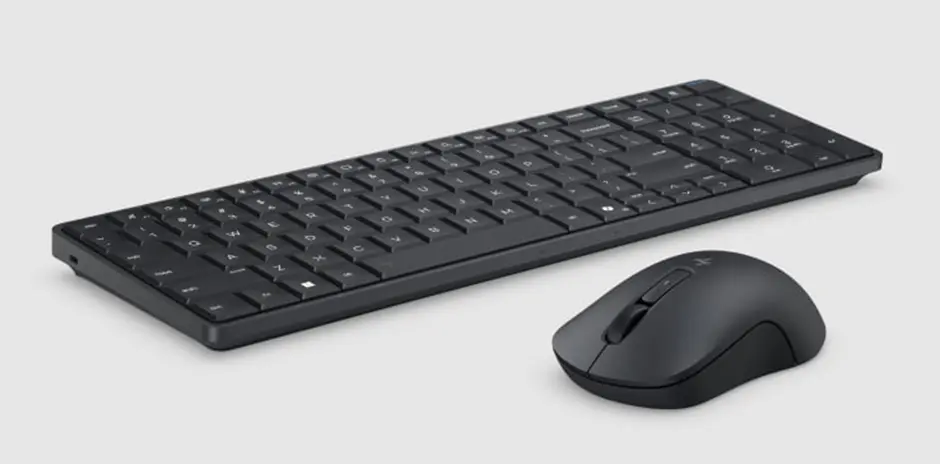
- HP pushes new AI PC form factor with keyboard-integrated EliteBoard G1a
- GIGABYTE’s strategic pillars for global AI deployment
- Samsung and SK hynix debut LPDDR6: New bandwidth lifeline for edge AI amid shortages
Day 2 at CES 2026 reinforced a clear industry shift toward AI execution at scale, with semiconductors increasingly acting as the central enabler across industries. From NVIDIA-backed accelerated computing platforms powering industrial and automotive workflows to MediaTek’s AI-driven connectivity and LG and Samsung’s agentic AI in consumer devices, silicon vendors demonstrated how AI is moving from experimentation to deployment. Announcements from Synopsys, Siemens, NVIDIA, MediaTek, LG, Samsung and Caterpillar highlighted a common theme – the growing importance of compute efficiency, networking and software-defined silicon platforms in driving the next phase of AI-led growth.
Caterpillar leveraging NVIDIA’s accelerated computing platform
Caterpillar is moving AI and autonomy from the cloud directly into the end machinery at the edge to solve the bottlenecks of remote areas that lack cloud connectivity. For this, it has partnered with NVIDIA’s accelerated computing platform and the new Thor AI robotics platform.
Caterpillar has further highlighted AI and cloud platform Helios, a unified, cloud-native digital foundation that manages over 1.5 million connected assets globally. It is setting a steered defined vision for the construction industry. The company also introduced CAT AI Assistant, a new AI platform designed to support customers everywhere they work. It is a multimodal assistant (speech, text, images, video) that acts as a proactive partner.
Key highlights:
- Physical AI: The industry is moving beyond digital chatbots. Industrial AI now performs “physical reasoning”, where machines perceive, plan and act autonomously in harsh, real-world environments to increase safety and productivity.
- Autonomy is scaling to the masses: Autonomy, which was earlier reserved for massive, isolated mines, is now moving into cities, whether in construction or landfills.
- AI is being used to bridge the massive labor and skill gap by using AI agents, which can drive experience from Day 1.

Synopsys showcases AI-centric, software-defined approach to automotive engineering
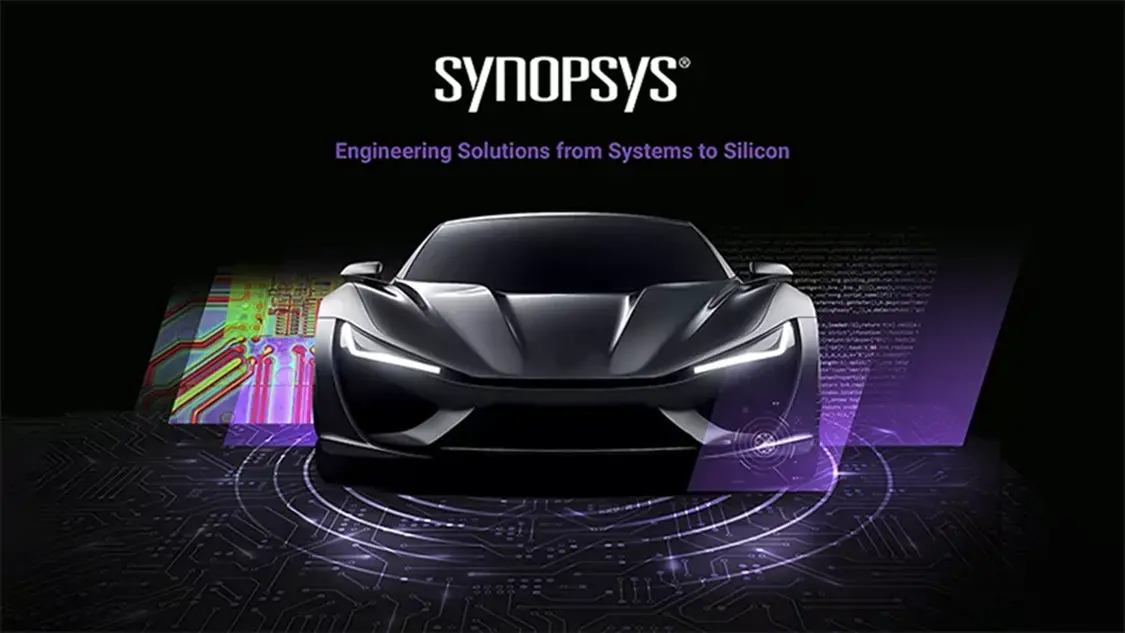
Synopsys highlighted the role of AI and software-first engineering in transforming automotive development as vehicles evolve into software-defined platforms from hardware-centric, underscoring tools, and partnerships that accelerate innovation across the automotive value chain.
Synopsys showcased collaborations that strengthen the automotive engineering stack:
- Arm: New Virtualizer Development Kit (VDK) for Arm Zena Compute Subsystems facilitates early development and integration on standardized, safety-capable automotive compute platforms.
- IPG Automotive: Joint demonstration of expanded multi-ECU simulation integrating IPG’s tools with Synopsys’ virtualization to speed up software testing and system validation.
- SiMa.ai: Announced the first integrated capability with Synopsys that accelerates architecture exploration and early virtual software development for AI-ready automotive SoCs, especially for ADAS and IVI systems.
- NXP and Texas Instruments: New VDKs support NXP’s S32N7 series and TI’s TDA5 family, enabling digital-twin capabilities that help engineers significantly accelerate time-to-market for SDVs.
The major theme of Synopsys was “shift-left” software development, which enables software teams to begin work using virtual SoC models well before actual silicon arrives, dramatically shrinking development cycles and reducing production delays.
Siemens and NVIDIA outline roadmap for real-time, AI-enabled factories
Siemens and NVIDIA announced an expansion of their partnership to develop an Industrial AI Operating System, positioned as a foundational platform for integrating AI across the full industrial lifecycle.
As part of the expanded partnership, NVIDIA will supply AI infrastructure, simulation libraries, models and frameworks, while Siemens will apply its industrial AI expertise across its hardware and software offerings.
A key element of the collaboration is the GPU acceleration of Siemens’ simulation portfolio, delivering faster, higher-accuracy simulations through tighter integration with NVIDIA CUDA-X and AI-driven physics models.
The partnership will address a critical bottleneck in the semiconductor value chain by bringing AI-accelerated digital twins into both chip design and manufacturing, materially reducing cycle time and execution risk.
By bringing together Siemens’ EDA and factory automation stack and NVIDIA’s GPU and Omniverse platforms, the collaboration will enable a more tightly integrated, data-driven semiconductor development model from design through high-volume manufacturing.

MediaTek unveils Filogic 8000 to pioneer Wi-Fi 8 ecosystem
At CES 2026, MediaTek unveiled the Filogic 8000 family, a next-generation platform designed to lead the emerging Wi-Fi 8 (IEEE 802.11bn) ecosystem for the AI era. By entering the Wi-Fi 8 cycle early, MediaTek is leveraging advanced multi-AP coordination and strong ecosystem partnerships to target premium, AI-driven use cases, positioning itself well as high-density networks scale.

Key highlights:
- The Filogic 8000 series underscores MediaTek’s leadership in wireless innovation, delivering ultra-high reliability, enhanced bandwidth, improved power efficiency and optimized connectivity across a wide range of products, from broadband gateways and enterprise access points to smartphones, laptops, smart TVs, IoT devices and other AI-driven applications.
- Wi‑Fi 8 is designed to address increasingly crowded wireless environments, offering low latency, robust connections and high performance for AI-centric and modern digital use cases. Features such as Coordinated Beamforming (Co-BF), Coordinated Spatial Reuse (Co-SR) and Multi-AP Scheduling (MAP) enable access points to work together intelligently, reducing interference and improving overall network efficiency.
- MediaTek is targeting a broad range of devices and scenarios with Wi-Fi 8, including broadband gateways, smartphones, laptops, TVs, streaming devices, tablets, IoT products and AI-driven applications like XR, cloud gaming, industrial automation and high-density networks.
- MediaTek is building a strong Wi‑Fi 8 ecosystem through collaborations with partners including Deutsche Telekom, Airties, SoftAtHome, Zyxel, RUCKUS Networks, Buffalo Inc, HP, ASUS, Acer, Korea Telecom (KT), Adtran, Arcadyan and Foxconn Industrial Internet, aiming to accelerate adoption across consumer, enterprise and telecom markets.
- he Filogic 8000 chipsets are expected to reach customers later in 2026, with mass production ramping up by year-end, driven by growing telecom demand for high-performance, AI-ready wireless networks.
LG brings agentic AI to TVs and home appliances under ‘AI in Action’
LG has unveiled its new AI strategy, “AI in Action”, marking a transition from its earlier “Affectionate Intelligence” approach. The strategy focuses on putting intelligence into action by integrating agentic AI into devices to make everyday life easier for users. Under this initiative, LG is embedding agentic AI services across its TVs, home appliances and automotive solutions.
Key highlights:
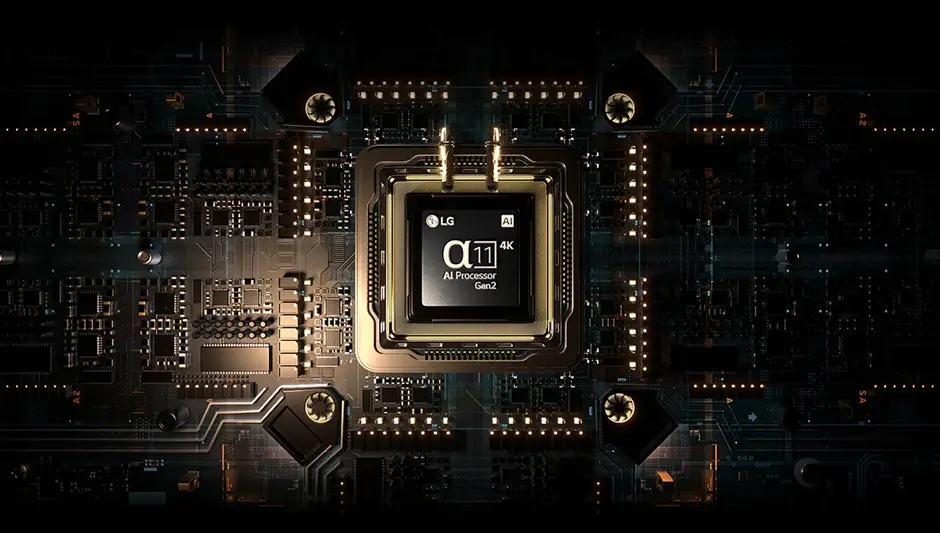
- LG TV solutions: LG has launched the Alpha 11 AI Processor Gen 2, reflecting its push toward on-device agentic AI applications to enable real-time AI upscaling, scene recognition, brightness optimization and adaptive audio processing to run locally with low latency. The newer Premium TV lineup will be powered by the Alpha 11 AI Processor Gen 2 and will leverage AI upscaling to enhance content to 4K resolution for more natural visuals. The processor also supports AI Brightness Control, allowing displays to adapt to ambient lighting, while AI Sound delivers up to 11.1.2-channel surround sound for a more immersive experience. LG has further enhanced webOS with new AI-driven features and improved voice command capabilities to enable more intuitive user interaction.
- LG home appliance solutions: LG is integrating AI-based capabilities across its home appliances to enable adaptive performance, improve energy efficiency and enhance connectivity, while allowing users to remotely monitor and manage devices through the LG ThinQ app.
Samsung pushing Gemini AI at massive scale
Samsung's partnership with Google is delivering results, with Samsung planning to double the number of devices running Galaxy AI, which is powered by Google, from 400 million to 800 million by the end of 2026. Both companies are playing to their strengths. Samsung drives its cutting-edge hardware to the masses while utilizing the world-class AI ecosystem from Google. On the other side, Google gets access to one of the largest device ecosystems in the world and its user base.
This is different from how NVIDIA is dominating the AI infrastructure race and driving AI training. But as the focus now shifts to Edge AI and inferencing, getting into the end-user ecosystem is the key. Google and Samsung are already pushing ahead into this, while players like OpenAI are lacking reach into end devices. Edge AI is going to be a key theme in 2026 and beyond as AI is becoming a primary differentiator in consumer electronics, not just a software add-on.
Key highlights:
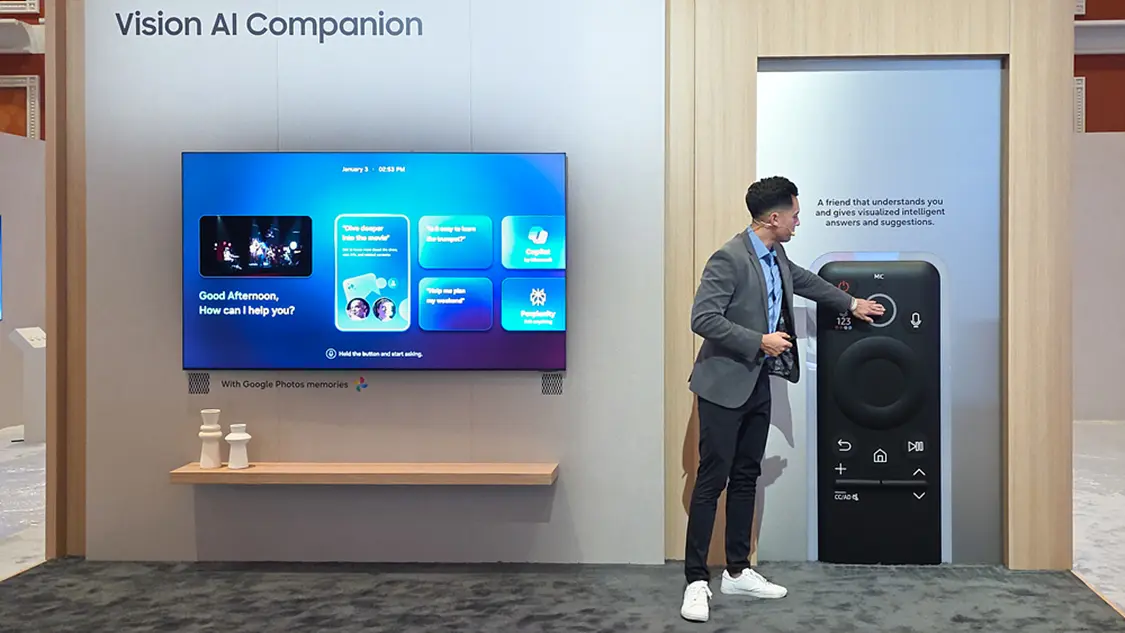
- Samsung showcased MicroRGB TVs, positioning the technology as the future of premium displays, but shifted focus quickly to software and AI experiences. TVs with Vision AI Companion understand on-screen context.
- The Family Hub refrigerator becomes a second “AI brain” of the house. Other home appliances are now being repositioned as autonomous assets, not dumb tools.
- There is a shift from the home automation strategy towards personal intelligence, which includes health.
- Samsung also showcased a foldable display with no crease, which looks excellent with an under-display camera. New foldable devices will now offer a richer experience, taking away the visible crease.
HP pushes new AI PC form factor with keyboard-integrated EliteBoard G1a
HP unveiled the EliteBoard G1a Next Gen AI PC at CES 2026, positioning it as the world’s first full AI PC built into a keyboard form factor. The G1a underscores how AI is driving new PC form factors, not just higher specs, with HP leveraging AMD’s Ryzen AI 300 series to deliver a compact, modular Copilot+ desktop alternative primarily targeted at enterprise and hybrid work use cases.
Key highlights:
- The EliteBoard G1a integrates the complete capabilities of a Copilot+ PC directly within the keyboard chassis. It measures 17 mm in thickness, weighs less than 750 gm and features dual microphones and stereo speakers.
- The EliteBoard G1a integrates a complete x86 PC inside a slim keyboard chassis that supports Copilot+ PC capabilities, redefining desktop design for hybrid work and flexible spaces.
- The keyboard is powered by AMD’s Ryzen AI 300 series processors and delivers up to 50 TOPS of AI performance. It also includes Radeon 800M graphics, DDR5 SODIMM RAM and M.2 NVMe SSD storage. One of the key highlights of the EliteBoard G1a is its modular design, allowing users to replace components in as little as 10 minutes.
- The EliteBoard G1a is available in three CPU configurations – Ryzen AI 7 350, Ryzen AI 5 340 and Ryzen AI 5 330 – and supports up to two 4K monitors. For connectivity, it offers two options – Wi-Fi 6E with Bluetooth 5.4 or Wi-Fi 7 with Bluetooth 6.0.
GIGABYTE’s strategic pillars for global AI deployment
1. AI factory: Enterprise-scale infrastructure with GIGAPOD solution
GIGABYTE redefines the data center as an “AI Factory” optimized for token production through its GIGAPOD turnkey solution.
- Modular ‘building-block’ design: GIGAPOD integrates high-performance servers, high-speed networking and GIGABYTE POD Manager (GPM) for rapid deployment and automated orchestration.
- Next-gen compute: The company featured G4L4/G4L3 Direct Liquid Cooling platforms, supporting Intel’s Xeon 6 with NVIDIA’s HGX B300 and AMD’s EPYC 9005/9004 and Instinct MI355X.
- Innovative management: GIGABYTE introduced a proprietary Rack Management Switch (N120-LS0), which allows a single 1U server to manage up to eight DLC racks with precise leak detection and multi-brand CDU protocol support.
- Flagship systems: The company showcased the NVIDIA GB300 NVL72, a liquid-cooled rack integrating 72 Blackwell Ultra GPUs and 36 Grace CPUs, delivering a 50x leap in inference performance over the Hopper generation.
2. Physical AI: Bringing intelligence to the edge
GIGABYTE is bridging the gap between AI training and real-world execution through rugged, high-performance embedded systems and IPCs
- Real-time reasoning: Systems like the GB-BRU7-355 (100 TOPS) and BRIX GB-BRR9-465 (50 TOPS) are designed for immediate on-site analysis and machine vision.
- Autonomous operations: The QB-N150A and QM-7433REA-A1 provide low-power, high-stability control hubs for AMR/AGV robotics and smart logistics.
- Connectivity: Devices like the QBiX-Pro-ARUA255H offer rich I/O and dual 2.5G LAN for precise industrial automation.
3. Agentic AI: Personalized AI agents for all
As AI moves toward the era of autonomous agents, GIGABYTE provides the hardware necessary for local, secure fine-tuning and inference.
- AI TOP series: A comprehensive line of “deskside supercomputers” (ATOM, 100 and 500 series) using server-grade components. This allows individuals and SMEs to perform RAG and LLM/LMM fine-tuning locally, ensuring data privacy.
- AI TOP utility: A software-hardware integrated platform that enables intuitive local model optimization without relying on the cloud.
- Consumer edge:
o GiMATE AI assistant: Embedded in GIGABYTE’s AI laptops to optimize user experience locally.
o AORUS RTX 5090 AI BOX: Utilizes Thunderbolt 5 to bring desktop-class Blackwell GPU performance to thin-and-light laptops.

Samsung and SK hynix debut LPDDR6: New bandwidth lifeline for edge AI amid shortages
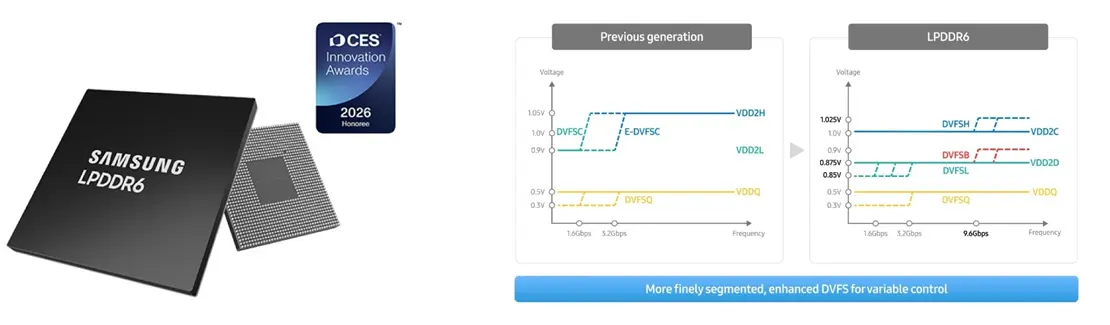
In a synchronized push to define the next generation of mobile and edge computing, semiconductor giants Samsung Electronics and SK hynix unveiled their LPDDR6 memory solutions at CES 2026. While HBM4 dominated the headlines for data centers, the debut of LPDDR6 represents a critical breakthrough for Physical AI and On-Device AI ecosystems, promising to resolve the memory bandwidth bottlenecks that currently throttle local LLM inference.
For AI agents to run locally on PCs, smartphones and automotive systems, rather than in the cloud, memory bandwidth is the primary constraint. LPDDR6 addresses this with a fundamental architectural redesign rather than a simple speed bump. Samsung Electronics is positioning this next-generation DRAM not merely as a mobile component, but as a cross-platform foundation for On-Device AI.
▪ Key stat: Offers a ~21% improvement in energy efficiency over the previous generation (LPDDR5X) while delivering data rates up to 10.7 Gbps.
▪ Significance: As AI workloads migrate from the cloud to the edge (AI PCs, smartphones, automotive), memory bandwidth and power efficiency have become the primary bottlenecks. LPDDR6 addresses this via a fundamental architectural redesign rather than simple node scaling.
1. Technical architecture: Beyond process shrinks
Samsung emphasizes that LPDDR6’s gains stem from a “fundamental redesign” of circuit architecture and power management, rather than solely from finer process nodes.
- Smart power management
o Proprietary smart PMIC: Samsung integrates a dedicated Power Management IC that manages internal and external power delivery with higher granularity.
o Dynamic efficiency mode: The memory dynamically adjusts power usage based on the workload (e.g. differentiating between heavy AI inferencing and standby modes).
o Enhanced DVFS: Advanced Dynamic Voltage and Frequency Scaling allows for real-time voltage adjustments, optimizing the power-performance curve.
- Performance metrics
o Speed: Baseline data rates of 10.7 Gbps
o Bandwidth: Features an expanded I/O count to maximize throughput, crucial for feeding large language models residing on local devices.
o Capacity: Supports up to 16 GB per package, addressing the memory density requirements of on-device Generative AI.
2. Strategic expansion: The ‘AI Everywhere’ memory
Samsung is aggressively expanding the total addressable market for LPDDR beyond smartphones.
- Automotive and industrial: LPDDR6 introduces enhanced hardware security features (integrity checks, authentication) to meet stringent safety requirements for autonomous driving and industrial IoT.
- AI PCs and edge servers: With thermal budgets and battery life being critical constraints in AI PCs (Copilot+ PCs), LPDDR6 offers the necessary bandwidth/watt performance that traditional DDR5/SO-DIMM cannot match.
3. Future roadmap and standards
- JEDEC leadership: Samsung highlighted its role in driving the LPDDR6 standardization process, claiming a first-mover advantage.
- Derivative technologies:
The LPDDR6 architecture will serve as the base for:
o SOCAMM: An AI-focused module solution
o LPDDR6-PIM (Processing-in-Memory): Integrating compute capabilities directly into the DRAM die to reduce data movement for AI workloads.