CES 2026 Automotive Announcements: Day 2 Recap
- Visteon puts AI compute at the center of software-defined cockpit
- Dolby Atmos adoption expands to 35+ automotive brands, enhanced by Dolby Vision and spatial audio
- Hesai selected by NVIDIA as lidar partner for NVIDIA DRIVE Hyperion 10 to enable Level 4 fleet deployment
- Valens Semi and Sakae Riken Kogyo unveil e-Mirror with order of magnitude more imaging data
- Mapbox unveils 3D Lanes for enhanced navigation and partners with Toyota for next-gen navigation system
- TIER IV demonstrates E2E AI for Level 4+ autonomy
- Telechips and FPT collaborate to introduce Smart AI Cabin
- Hyundai Mobis accelerates shift toward software-driven mobility and global OEM partnerships
- Ford’s strategy to make smart tech simple for everyone
- Foxconn highlights centralized computing as a cost-efficient path to software-defined vehicles
- Kodiak AI to scale autonomous trucking hardware and sensor solution in strategic pact with Bosch
- AT&T, iM Media Labs team up to build AI-powered, 5G in-car audio hub
- STRADVISION showcases SVNet FrontVision on Renesas' Gen 5 R-Car X5H Platform
Following the Media Days recap, which set the direction for software scale, and the Day 1 recap, which showcased the centralized compute and SDV foundations entering real-world vehicle programs, Day 2 at CES 2026 shifted the focus to productization. Announcements on January 7 highlighted how AI compute, cockpit platforms, sensing technologies, navigation systems and software stacks are being integrated into deployable, production-oriented solutions. The updates below capture the key Day 2 developments, spanning intelligent cockpits, autonomous sensing, navigation and software-driven mobility, as OEMs and suppliers continued to move from SDV intent to execution.
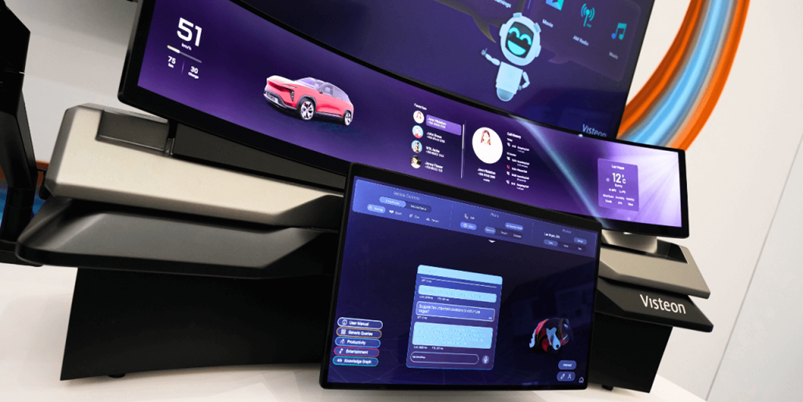
- Visteon puts AI compute at the center of software-defined cockpit
Showcasing its most comprehensive offering yet, Visteon positioned software-defined mobility as a core theme at CES 2026. The company demonstrated production-ready intelligent cockpit electronics, AI computing platforms, advanced displays, connectivity systems and electrification solutions on the show floor. Central highlights included the next-generation SmartCore HPC cockpit domain controller and a flexible AI-ADAS compute module that supports cockpit intelligence or ADAS functions, enabling OEMs to add high-performance AI without major architectural redesigns. Visteon also previewed entry-level cockpit tech, 5G telematics, multi-display innovations, and electrification platforms, underlining its end-to-end SDV strategy.
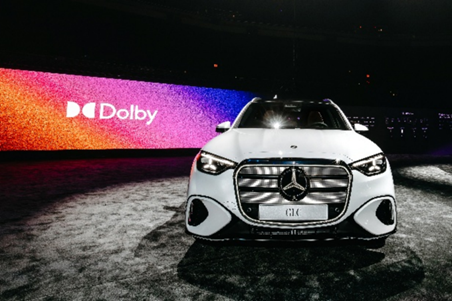
- Dolby Atmos adoption expands to 35+ automotive brands, enhanced by Dolby Vision and spatial audio
Dolby Atmos has reached over 150 models globally, from luxury vehicles to the entry-level segment. Dolby Vision has expanded further with integrations in models like the NIO ET9 and Mahindra XUV 7XO, which is India’s first vehicle to have Dolby Atmos and Dolby Vision support. At CES 2026, Dolby and Mercedes-Benz showcased the spatial audio feature with Dolby Atmos support in Apple CarPlay, which will further be included in all new EV versions of GLC, CLA and GLB. Pioneer’s SPHERA marks Dolby's first aftermarket partnership, enabling Dolby Atmos in existing vehicles via 4-channel audio configurations and broadening consumer access beyond new OEM purchases. Dolby's collaboration with Qualcomm's Gen 5 Snapdragon Automotive Platform demonstrates easy OEM integration of Dolby Vision, Atmos and AC-4 codecs, reducing audio data costs by up to 60% to accelerate adoption across lineups. Dolby’s adoption by global brands, advancing audio experience, aftermarket adoption, and cost-effective solutions project the company’s intention to slowly capture luxury to entry-level vehicles.
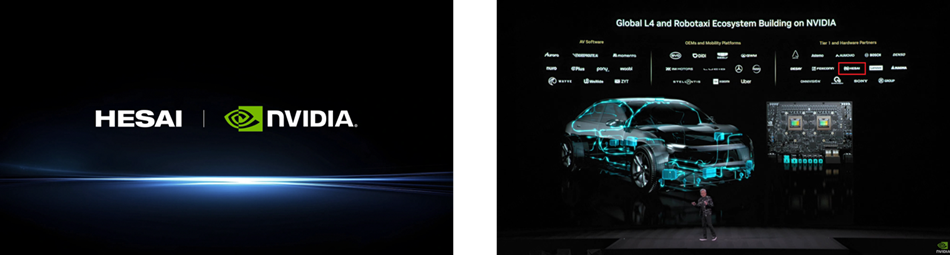
- Hesai selected by NVIDIA as lidar partner for NVIDIA DRIVE Hyperion 10 to enable Level 4 fleet deployment
Hesai Technology has been selected by NVIDIA as a lidar partner for the NVIDIA DRIVE AGX Hyperion 10 platform, a reference compute and sensor architecture designed to enable Level 4 autonomous fleet deployment for automakers and developers. As part of this collaboration, Hesai’s automotive-grade ETX ultra-long-range lidar, built on its fourth-generation technology, will be integrated into the Hyperion 10 sensor suite, which combines cameras, radar, lidar and ultrasonic sensors with real-time compute from dual NVIDIA DRIVE AGX Thor SoCs, delivering over 2,000 FP4 teraflops of processing power for full 360° perception. This partnership builds on a longstanding relationship between Hesai and NVIDIA (dating back to 2019) and strengthens Hesai’s position in the autonomous vehicle ecosystem as a trusted supplier of high-performance lidar solutions for Level 3 and Level 4 autonomy.
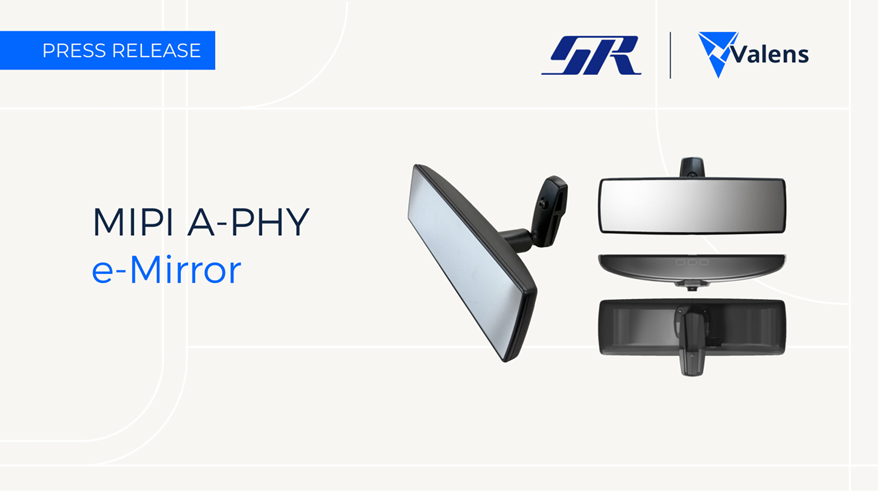
- Valens Semiconductor and Sakae Riken Kogyo unveil e-Mirror with order of magnitude more imaging data via MIPI A-PHY
Valens Semiconductor and Sakae Riken Kogyo have just levelled up automotive safety by unveiling a high-performance e-Mirror (electronic mirror) system. By using Valens’ MIPI A-PHY technology, they have managed to transmit an incredible amount of imaging data about ten times more than current standards with virtually zero delay. This means drivers get a crystal-clear, real-time view of what's behind them, even in challenging conditions, making the road a whole lot safer.
- Mapbox unveils 3D Lanes for enhanced navigation and partners with Toyota for next-gen navigation system
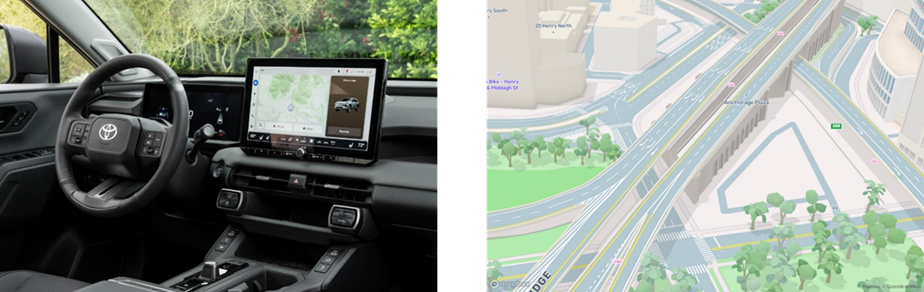
At CES 2026, Mapbox introduced 3D Lanes, a sophisticated navigation feature designed to eliminate the stress of complex interchanges and “expensive” missed turns. By integrating high-fidelity lane geometries, clear road markings, and realistic 3D models of overpasses and tunnels, the map view now directly mirrors what a driver sees through the windshield. Developed in close collaboration with the BMW Group, the feature is available through the Mapbox Navigation SDK for both in-car systems and mobile apps. Alongside, Toyota is elevating its in-car experience by partnering with Mapbox to power its next-generation navigation system, debuting in the 2026 RAV4. This new setup moves away from the static, dated maps of the past, offering a high-performance interface with 3D-style rendering, dynamic lighting and fluid animations. One of the most practical upgrades is the introduction of full-screen maps directly in the digital gauge cluster, putting turn-by-turn directions right behind the steering wheel. Because the system is cloud-first and built on Toyota's Arene platform, the automaker can now push over-the-air updates instantly, ensuring the maps and features stay as fresh and responsive as a smartphone.
- TIER IV demonstrates E2E AI for Level 4+ autonomy
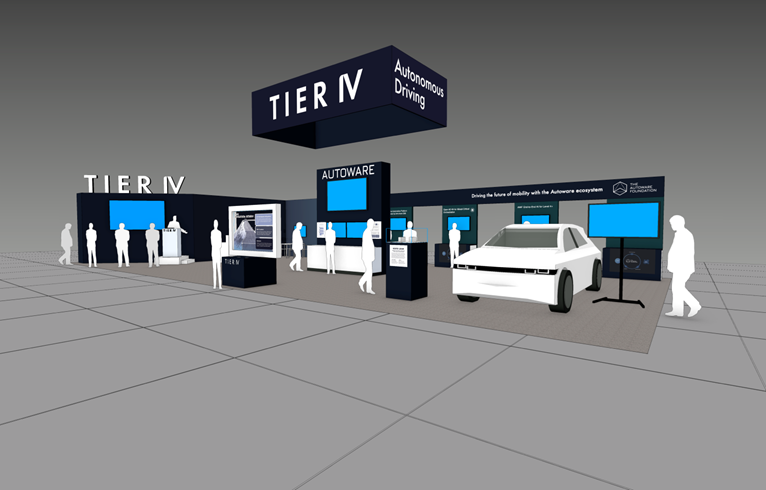
In its sixth CES appearance, TIER IV showcased its latest advancements in E2E AI architecture for Level 4+ autonomy, first unveiled in July 2025. The company performed live demos and displayed its Level 4+ testing vehicle equipped with E2E AI architecture. The demo featured the SOAFEE-enabled SDV platform and the Enhanced Autoware Open AD Kit. Besides, technical sessions were held with members of the Autoware Foundation (AWF), a global group dedicated to developing Autoware, an open-source autonomous driving software platform.
- Telechips and FPT collaborate to introduce Smart AI Cabin
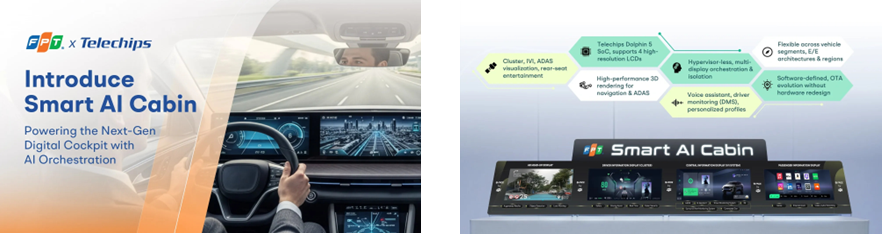
Telechips and FPT Software demonstrated an AI-powered intelligent cockpit platform delivering a fast, flexible and scalable plug-and-play, modular architecture for OEMs. The platform is powered by Telechips’ Dolphin 5 SoC, which supports four high-resolution screens. It combines real-time edge intelligence, hypervisor-less virtualization, and an OTA-ready software stack, which features an AI Orchestrator managing more than 30 modular agents to enable personalization, safety and domain consolidation. The Smart AI Cabin platform can automatically adjust displays, infotainment and cabin settings for individual drivers. Advanced HMI and multimodal interaction through voice and gesture is paired with next-generation 3D cockpit rendering and AR HUD support. Safety features integrate ADAS visualization, predictive vehicle health monitoring and digital key technologies. This will boost software-defined vehicles and OTA evolution with hardware redesign.
- Hyundai Mobis accelerates shift toward software-driven mobility and global OEM partnerships
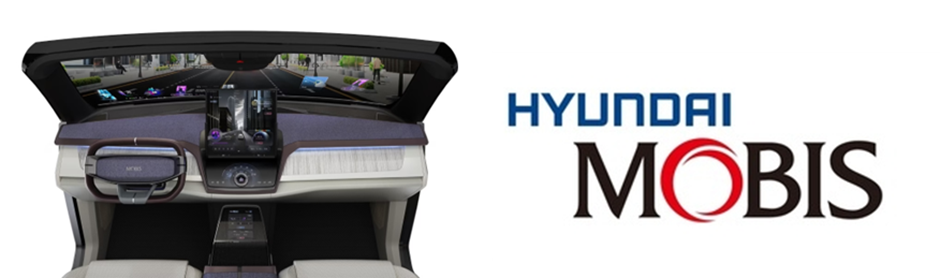
Hyundai Mobis exhibited more than 30 new mobility technologies while using the event to deepen engagement with global OEMs. The central highlight was the upgraded M.VICS 7.0 digital cockpit, which integrates a holographic windshield display beside a vertically expandable 18.1-inch screen, and a redesigned center console design that blends with intuitive controls. The company demonstrated another tech, X-by-Wire, which integrates a steering and braking system that offers optimized vehicle dynamics with built-in dual safety. Additional displays include AR-HUDs, low-power display solutions and cost-efficient EV drive systems, firmly establishing Mobis’ push toward SDV and EV platforms. The company adopted a private, invitation-only format, signalling a clear focus on commercial partnerships rather than consumer marketing.
- Ford’s strategy to make smart tech simple for everyone
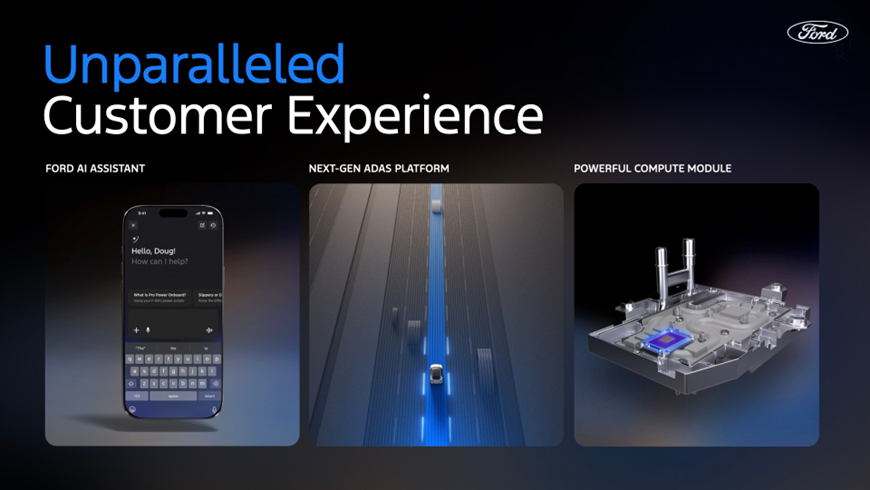
Ford took the center stage at CES 2026 to showcase its unified vehicle “brain”, consolidating infotainment, ADAS, audio and networking into a single high-performance computing module. This approach reduces complexity, improves reliability and enables continuous upgrades in a vehicle for life. Ford has already deployed this architecture across 35 million modules, providing a large real-world data advantage. Ford also introduced its AI Assistant, designed to work seamlessly across phones and vehicles by using Ford-specific vehicle data to solve practical, everyday problems. Rollout begins via Ford and Lincoln apps in early 2026, reaching up to 8 million users, with in-vehicle integration from 2027. On autonomy, Ford highlighted BlueCruise, now active in 1.2 million vehicles, as proof that hands-free driving can be scaled. Looking ahead, Ford plans new in-house ADAS hardware on its affordable Universal Electric Vehicle platform in 2027, with Level 3 eyes-off driving targeted for 2028.
Ford is outlining a clear technology strategy – advanced features should be accessible, not exclusive. Ford emphasized that autonomy, AI and digital experiences should not be locked behind luxury price tags. Instead of outsourcing critical systems, Ford is building its software, hardware and electronics in-house, allowing it to deliver advanced driver assistance at around 30% lower cost compared to supplier-based solutions.
- Foxconn highlights centralized computing as a cost-efficient path to software-defined vehicles
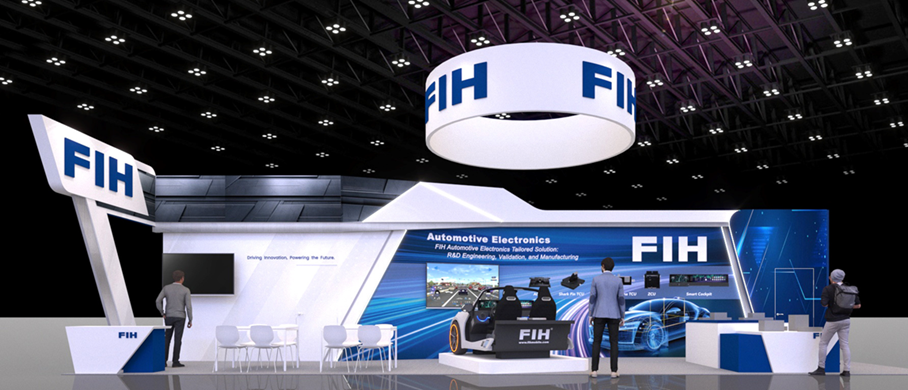
Foxconn showcased its automotive HPC platform, emphasizing its role in enabling SDV architectures. The centralized computing approach integrates IVI, ADAS and body control functions, such as windows, seats and lighting, into a single platform, helping OEMs reduce hardware complexity and optimize total system cost. By replacing traditional ECU-intensive designs with a zone-based E/E Architecture, the platform improves system coordination and reduces the use of wiring harnesses. Support for real-time, full-vehicle OTA updates further allows faster deployment of features and reduces long-term maintenance costs. This is expected to strengthen Foxconn’s value proposition for automakers transitioning to centralized, software-centric vehicle platforms.
- Kodiak AI to scale autonomous trucking hardware and sensor solution in strategic pact with Bosch
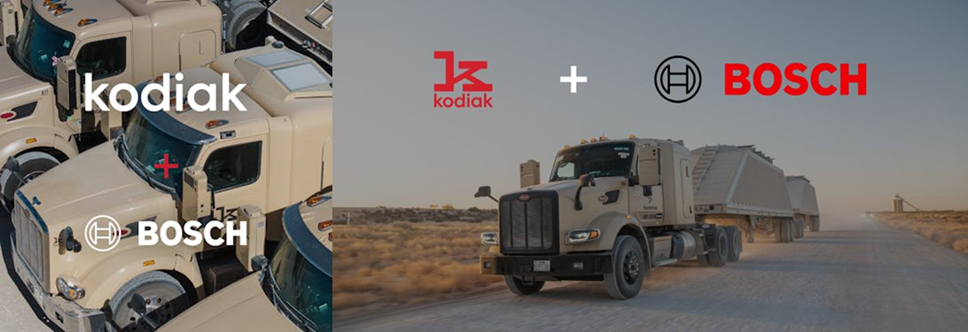
Kodiak AI has entered into an agreement with Bosch to collaborate on and scale the manufacturing of a production-grade, redundant autonomous platform. This platform contains the specialized hardware, firmware and software interfaces that enable Kodiak Driver, Kodiak’s AI-powered driver, to automate trucks, either on a vehicle production line or through an uplifter. Kodiak Driver combines advanced AI-driven software with modular, vehicle-agnostic hardware into a single, unified platform. Through this agreement, Bosch will support the development of a redundant autonomous platform that combines the integrated automotive-grade hardware, firmware and software interfaces. Bosch will supply Kodiak with a variety of hardware components, including sensors and vehicle actuation components, such as steering technologies.
- AT&T, iM Media Labs team up to build AI-powered, 5G in-car audio hub
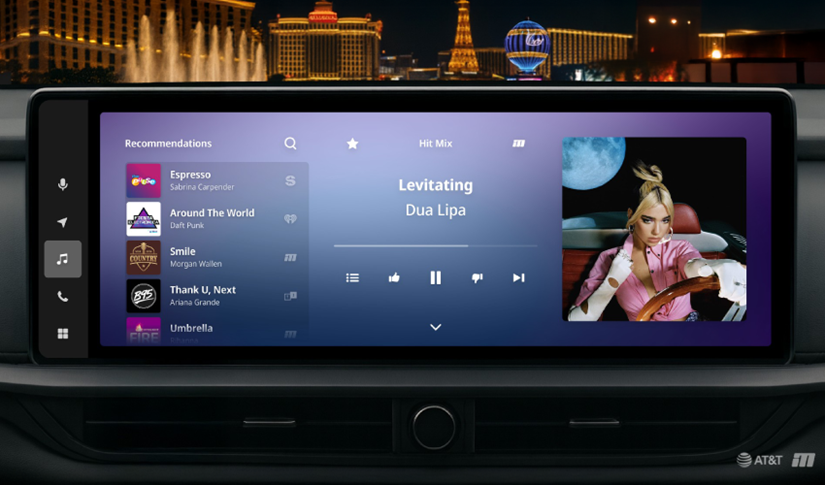
AT&T and iM Media Labs announced a strategic collaboration at CES 2026 to advance in-vehicle entertainment through AI-driven personalization and 5G connectivity. The initiative integrates iM Media Labs’ media platform with AT&T Connected Car capabilities to create a unified, OEM-customizable interface that consolidates music, podcasts and audio content, while enabling new revenue streams for manufacturers. The solution leverages agentic AI and near-real-time data to deliver personalized playlists, AI-DJs and contextual content, with voice and glance-based interaction optimized for driver safety. The platform aims to simplify UX and support scalable, brandable media experiences across vehicles.
- STRADVISION showcases SVNet FrontVision on Renesas’ Gen 5 R-Car X5H Platform
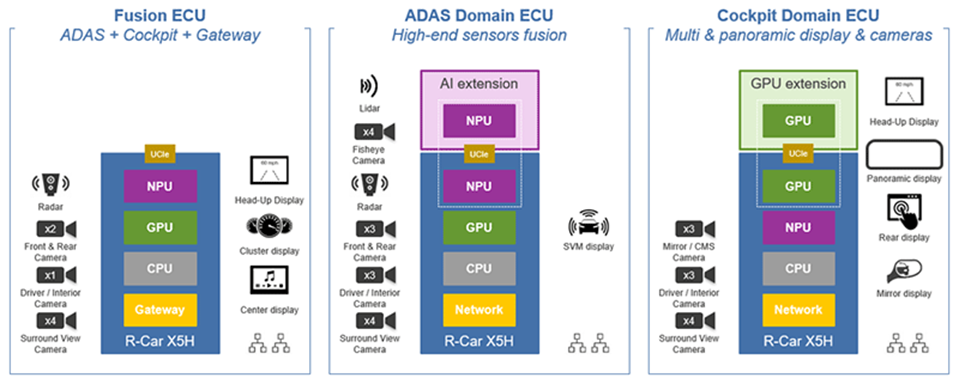
STRADVISION showcased its SVNet FrontVision camera-based perception software running on Renesas’ Gen 5 R-Car X5H automotive SoC. The SoC is a multi-domain chip based on advanced 3nm process technology and is designed to deliver high performance and energy efficiency while supporting simultaneous ADAS, infotainment and vehicle control workloads in software-defined vehicles. The live demo showcased real-time detection of vehicles, pedestrians, cyclists, lanes, traffic signs and road boundaries using a single front-facing camera, highlighting scalable, production-ready perception for next-generation vehicles.
Receive our insightful weekly newsletter and stay ahead of the competition.
Author
Abhilash Gupta


Dr. Abhilash Gupta is a Senior Research Analyst at Counterpoint Technology Market Research, specializing in the rapidly evolving automotive sector and its surrounding ecosystem. With over 9 years of experience spanning industry, research, and academia, he possesses deep expertise in market research, data analytics, and the integration of emerging technologies such as 5G and AI into the automotive industry. His extensive research background allows him to offer strategic insights that drive the future of connected vehicles and smart mobility solutions. Dr. Gupta holds a Ph.D. in Electrical Engineering from Malaviya National Institute of Technology Jaipur, a Master’s degree in Control Systems from the National Institute of Technology Patna, and a Bachelor’s degree in Electrical Engineering from Rajasthan Technical University.