· The Galaxy S25 Edge redefines the ultra-thin and light design without compromising on flagship experience and premium features.
· A slimmed-down, 200MP camera system delivers good photos and smooth videos, including LOG mode for creators.
· Galaxy AI, along with Google's Gemini AI integration, brings powerful agentic capabilities and intuitive user interactions for cross-app tasks.
The smartphone world is always chasing the next big thing, and every year we see a new trend emerge. From high-resolution cameras to high-refresh-rate screens, fast charging to foldables and AI – we have seen it all over the last few years. In 2025, slim phones with high-density batteries are emerging as a major trend. Samsung is pushing the boundaries for a sleek form factor for its flagships with the Galaxy S25 Edge. Although Motorola, OPPO, and vivo all played in this space nearly a decade ago with their slim phones, the Galaxy S25 Edge is a different breed today. Not only is the device thin and light, it also packs flagship hardware, which means no longer sacrificing on performance.
We have been using the Samsung Galaxy S25 Edge for a little over a month and are quite impressed. It does fall short in thermal management and leaves you craving for better battery life, but we still like the overall package and believe that current learnings will help iron out the shortcomings in future generations.
There are four key highlights of the S25 Edge: sleek form factor, flagship cameras, top-tier performance and Galaxy AI. Here is our in-depth analysis and a review of the Galaxy S25 Edge:
Thin and Lightweight Design You Would Not Want to Part With
The biggest highlight of the Galaxy S25 Edge is that it is just 5.8mm thin, and extremely light at just 163g. But it is not just about the numbers; you must hold the smartphone and use it to appreciate it. Compared to the iPhone 16 Pro, which weighs 199g and is 8.3mm thick, and Samsung’s flagship Galaxy S25 Ultra, which weighs 218g and is 8.2mm thick, switching to the Galaxy S25 Edge, the difference was instantly noticeable.
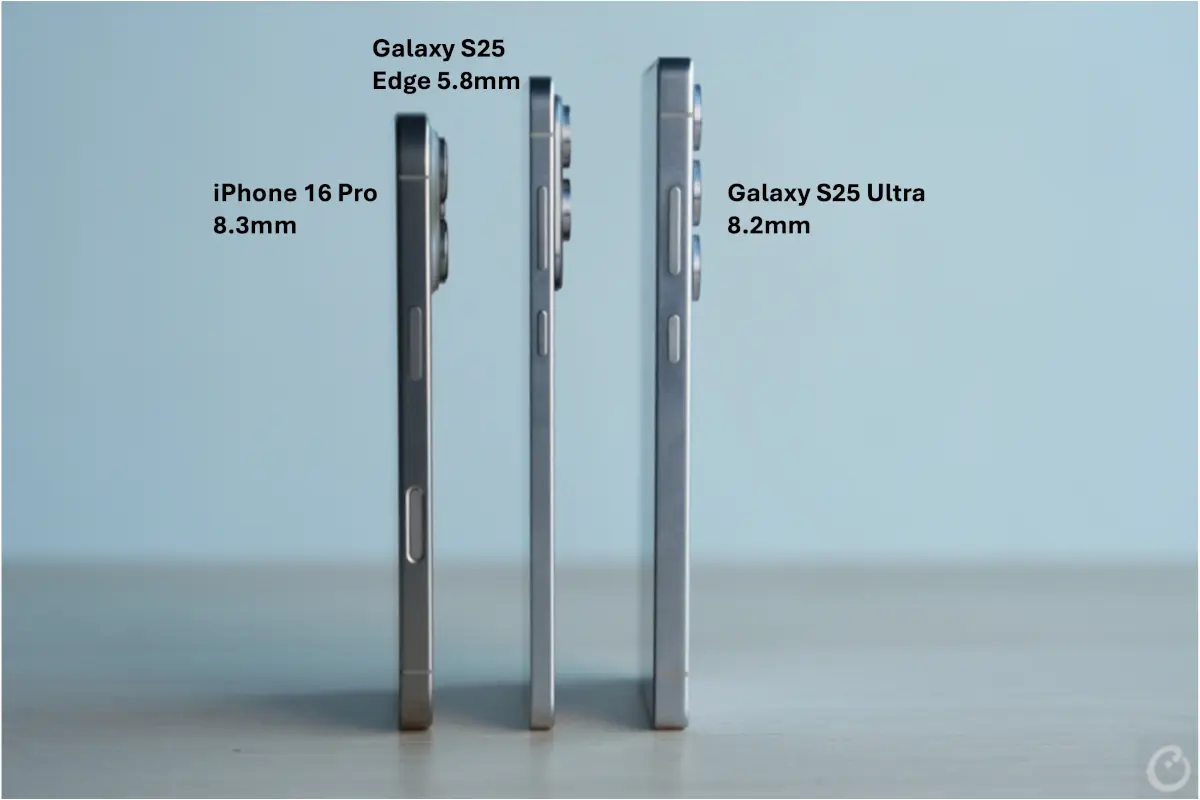
From holding it in your palm to endlessly scrolling through reels for an hour, to binge-watching something or even attending a video call for 20-odd minutes or so, the lightweight nature adds to its comfort and practicality. The big noticeable difference is that your jeans pocket feels light and does not bulge out, which is a disadvantage associated with other smartphones.
The titanium frame adds to its sturdiness without being heavy. And the smartphone’s curves and matte finish make it easy to hold and operate the device with one hand.
The sleek, lightweight design and premium titanium frame redefine comfort and practicality for everyday use.
The Samsung Galaxy S25 Edge’s thin and light characteristics do not compromise on flagship essentials. The device comes with a vivid 6.7-inch Dynamic AMOLED 2X display with QHD+ resolution 1440x3120 pixels, which deliver vibrant colors, deep blacks and sharp clarity. It is HDR10+ certified to deliver your content crisp, and as it is an LTPO panel, it also comes with an adaptive 1Hz-120Hz refresh rate, ensuring smooth gameplay, scrolling, and saving on battery life when viewing static content. Furthermore, with a peak brightness of 2600 nits, the display is bright and legible under direct sunlight. However, the anti-glare coating, which we have seen on the Galaxy S25 Ultra, is missing here.
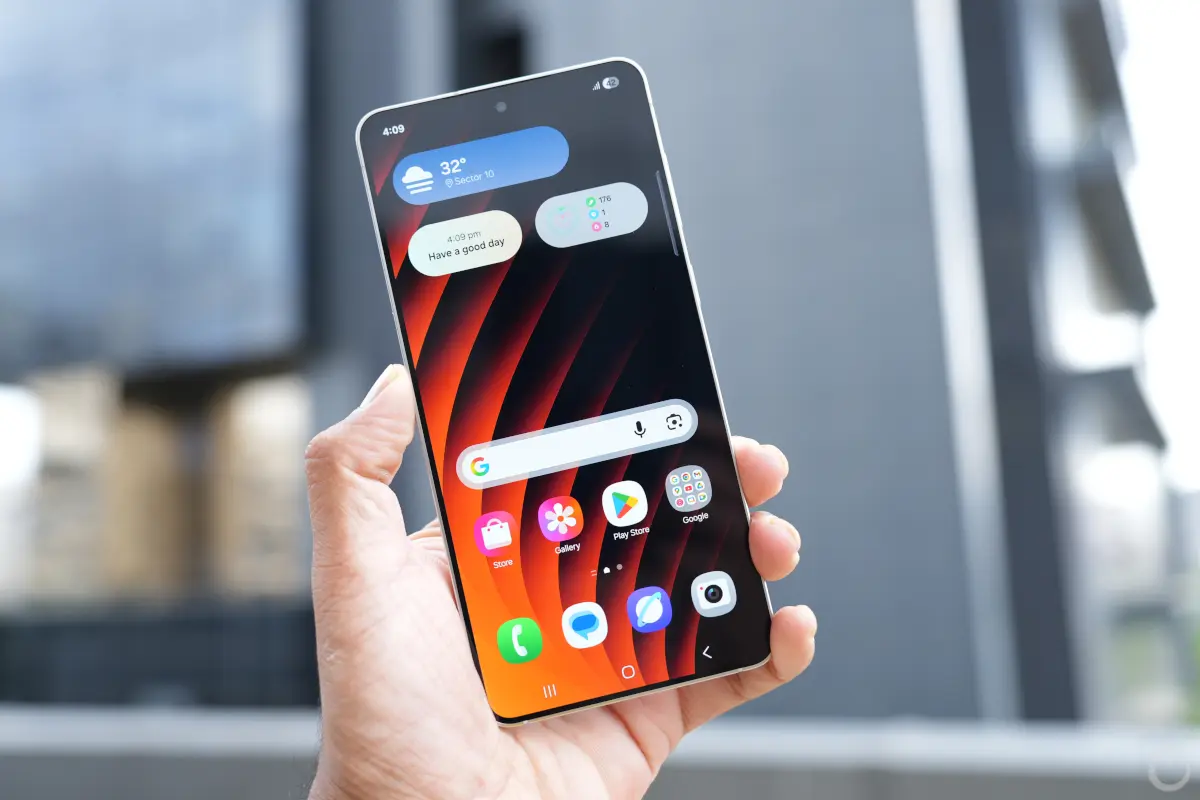
The bezels on the S25 Edge are equally narrow as on the S25 Ultra, making content pop on the screen and giving the device a modern face.
200MP Main Camera: Good Performance Across Stills, Videos and Varying Lighting Conditions
Samsung has always pushed the boundaries of mobile photography with its Galaxy S-series, and the same continues with the S25 Edge. However, this time, it was more challenging for the engineering team to fit a high-resolution lens into an ultra-thin frame. Engineers restructured the camera module to be slimmer and shorter, making it the smallest high-resolution camera ever made by Samsung. It is a 200MP ISOCELL HP2 Sensor with f/1.7 wide aperture, Optical Image Stabilization (OIS) and 2x optical quality lossless zoom.
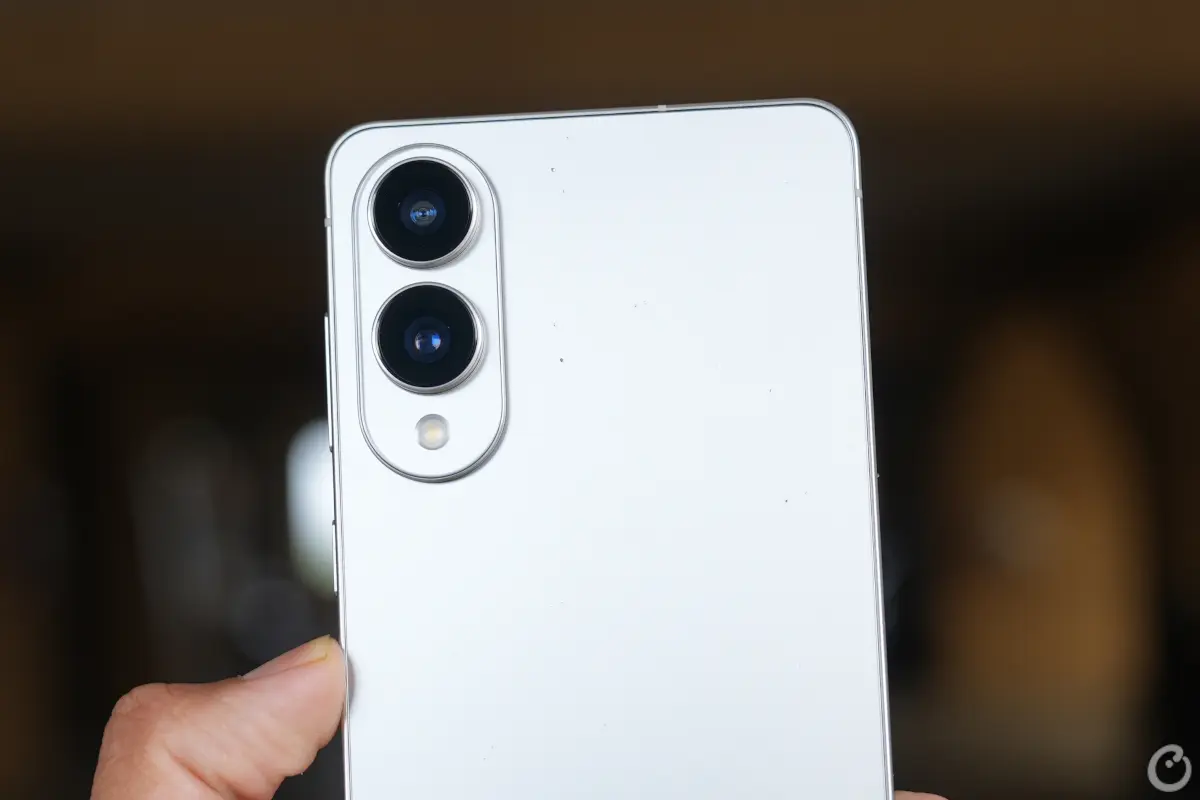
The camera also supports up to 10x AI digital zoom, 4K 60fps, and 8K 30fps video recording. There is also support for LOG mode video capture, allowing creators to color grade in post-processing. The camera does a great job and photos shot in daylight are sharp, color-accurate, with good dynamic range.

Photos shot in low light look detailed and capture more light with reduced noise. It is also able to retain colors when capturing photos with neon lights.

Portrait mode also does a good job of using AI to separate the background from the foreground, while also adding a shallow depth of field. Edge detection is good too, making the photos look like they are captured using a DSLR. Now, unlike the Galaxy S25+ and Galaxy S25 Ultra, the Edge lacks a periscope telephoto lens to ensure a sleek and slim profile, but the in-sensor zoom with AI does a decent job, at least in good lighting conditions. We shot a few photos in 1x, 2x (lossless), 4x and 10x (digital AI zoom) at the airport, and the results were good enough to be able to read the plane’s registration number from at least 250 meters away.
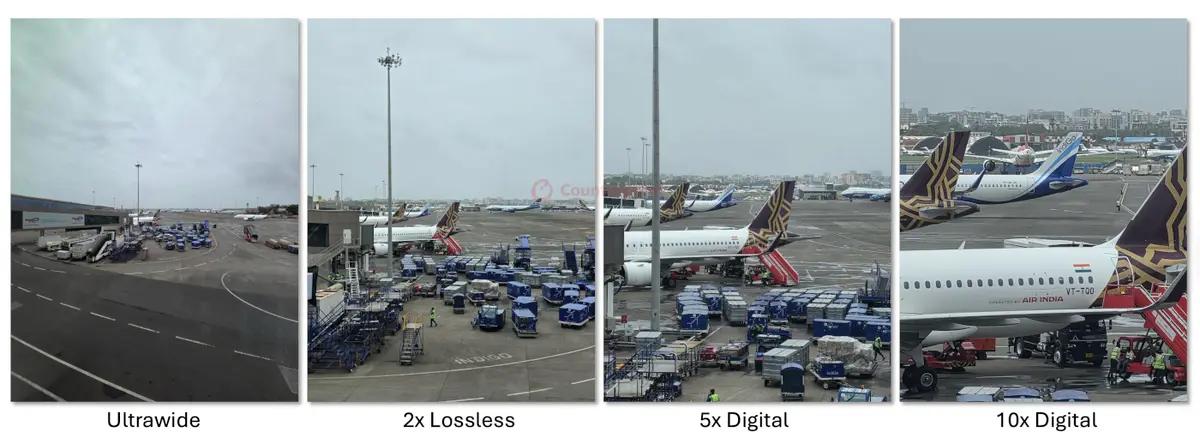
Samsung has also added a 12MP f/2.2 ultrawide camera with auto-focus, which captures good photos without barrel distortion on the corners. It also doubles as a macro camera and lets you capture good, detailed close-up photos.

The 12MP front camera also does a pretty good job of clicking detailed selfies while mostly retaining the skin tone. Even the portrait mode is impressive.
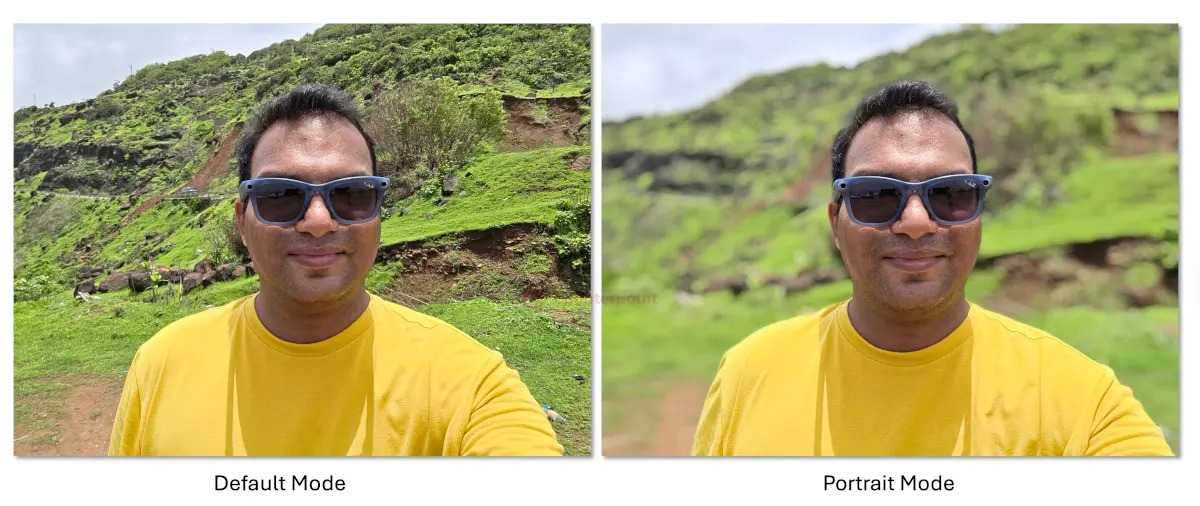
Lastly, when it comes to videos, the 8K 30fps mode delivers smooth results, but the 4K 60fps videos are smoother. The ability to capture LOG videos makes the Galaxy S25 Edge good for content creators. There are two ways to colour-grade – one using the built-in color corrector in the gallery app, which is simple and easy. But if you want more granular control, that can be done using video editing software like Davinci Resolve, Adobe Premiere Pro and others.
The Galaxy S25 Edge offers versatile cameras to capture good photos in daylight, low-light conditions, along with advanced video capabilities like LOG mode for creators.
Lightweight, But No Compromise on Performance
The Galaxy S25 Edge is powered by a custom 3nm Qualcomm Snapdragon 8 Elite for Galaxy SoC featuring an octa-core Oryon CPU. It features two prime cores clocked at 4.47GHz (compared to 4.32GHz on other SD 8 Elite SoCs), and six performance cores clocked at 3.53GHz. This is paired with 12GB of LPDDR5X RAM and 256GB of UFS 4.0 storage. All this translates into peak performance without a hitch – irrespective of whether you are multitasking between different apps, editing 4K videos on the go, or playing graphics-intensive games.
Samsung had to tweak the thermal architecture to include a wider surface area to dissipate heat and maximize cooling. And while it mostly works in keeping the device cool, there are times when the device gets a little warm when put under a little stress. The device performance does get throttled here to 60% as per the “CPU Throttling Test” benchmark, but besides the device getting warm at the back, we did not notice any lag or stutter during usage.
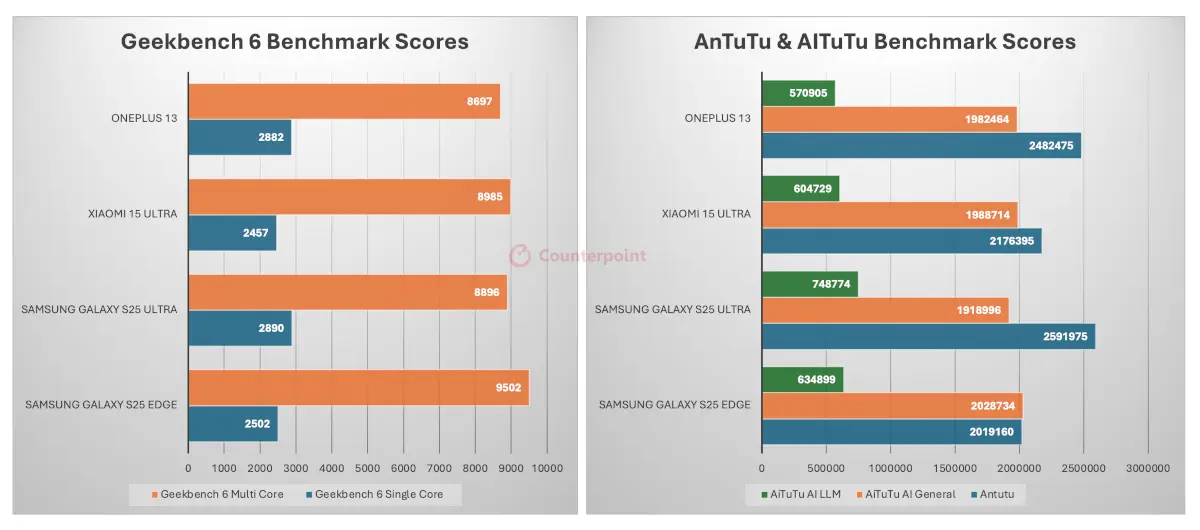
We also ran some synthetic benchmarks to compare it with the Galaxy S25 Ultra and OnePlus 13, and Xiaomi 15 Ultra, both of which are also powered by a Snapdragon 8 Elite SoC, and the S25 Edge’s performance comes close to them or is on par. Though it scores the lowest in the Antutu benchmark, of the lot, the Geekbench 6 multi-core score is better than other devices.
With a powerful custom Snapdragon 8 Elite SoC at the helm and neat optimization, the Galaxy S25 Edge delivers smooth, consistent performance that stands up to its competitors.
Battery Life: Reliable, But Could Have Been Better
Samsung engineers had to make some sacrifices to attain the thin form factor, one of which was packing a smaller 3,900mAh battery. High-density silicon-carbon battery could have been a good solution to get more juice out of the battery. But that does not mean the S25 Edge cannot last a whole day.
Now, battery life is subjective and varies based on individual usage, but we were able to get nearly a full day’s worth of usage and close to four hours of screen time. Our screen resolution was set to max (QHD+), and the refresh rate was set at Adaptive throughout. We assessed the phone under multiple scenarios – one hour of continuous gaming in total. We tried Asphalt 9 Legends and COD: Mobile with Wi-Fi and brightness at 60%, and the battery drained by 16%. With the same usage on 5G, the battery drained by 24%.
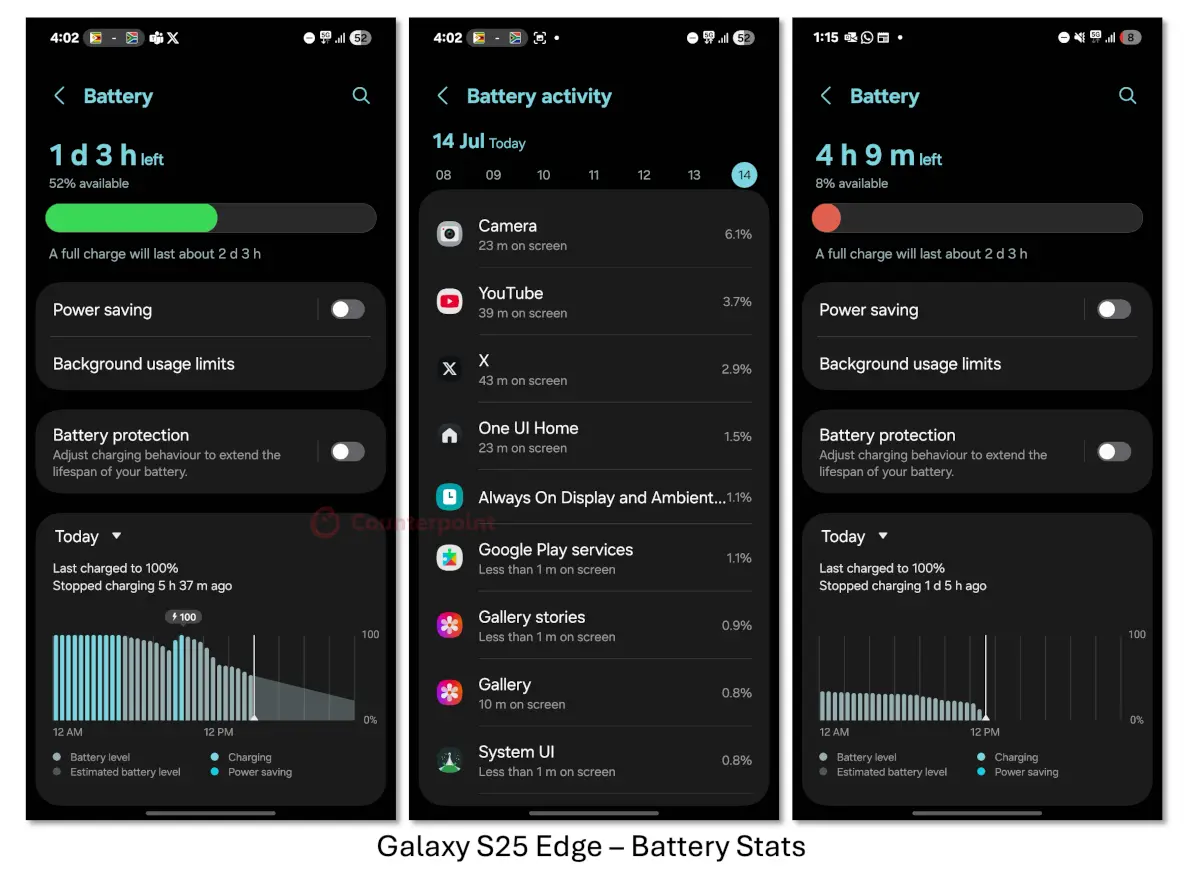
Similarly, after two hours of clicking photos and posting on X (formerly Twitter), all on 5G, the battery drained by 33%. And then some binge-watching for two hours on Netflix with brightness at 60% and volume at 80%, the battery drained to 8%. In our third test with regular usage, including phone calls for an hour, scrolling through reels on Instagram for half an hour, some conversations over WhatsApp, Teams, and checking emails, listening to an hour’s worth of podcasts on TWS, we were able to get entire workday worth of battery life (9 AM to 7 PM), with 12% left at end. The S25 Edge is reliable with regular usage, but if you push too hard, you will need to charge by midday or towards the end of the workday to avoid the anxiety.
The Galaxy S25 Edge offers a reliable, all-day battery life for regular use, though a smaller capacity means heavy usage will likely require a midday top-up.
Galaxy AI: GenAI, Multimodal, and Agentic AI bring a New Era of Interaction
The Galaxy S25 Edge runs on Android 15 with Samsung’s One UI 7 skin on top. What truly sets it apart is the Galaxy AI integration and the new Agentic AI experiences, together with Samsung’s own Bixby assistant and Google’s multimodal Gemini AI. Earlier this year, Samsung also introduced Now Brief, which uses AI to offer a personalized summary by collecting information from weather, news, calendar events, and so on, throughout the day. The information can change hourly, including weather updates, upcoming meeting reminders, flight info, currency details if you are going abroad and much more.
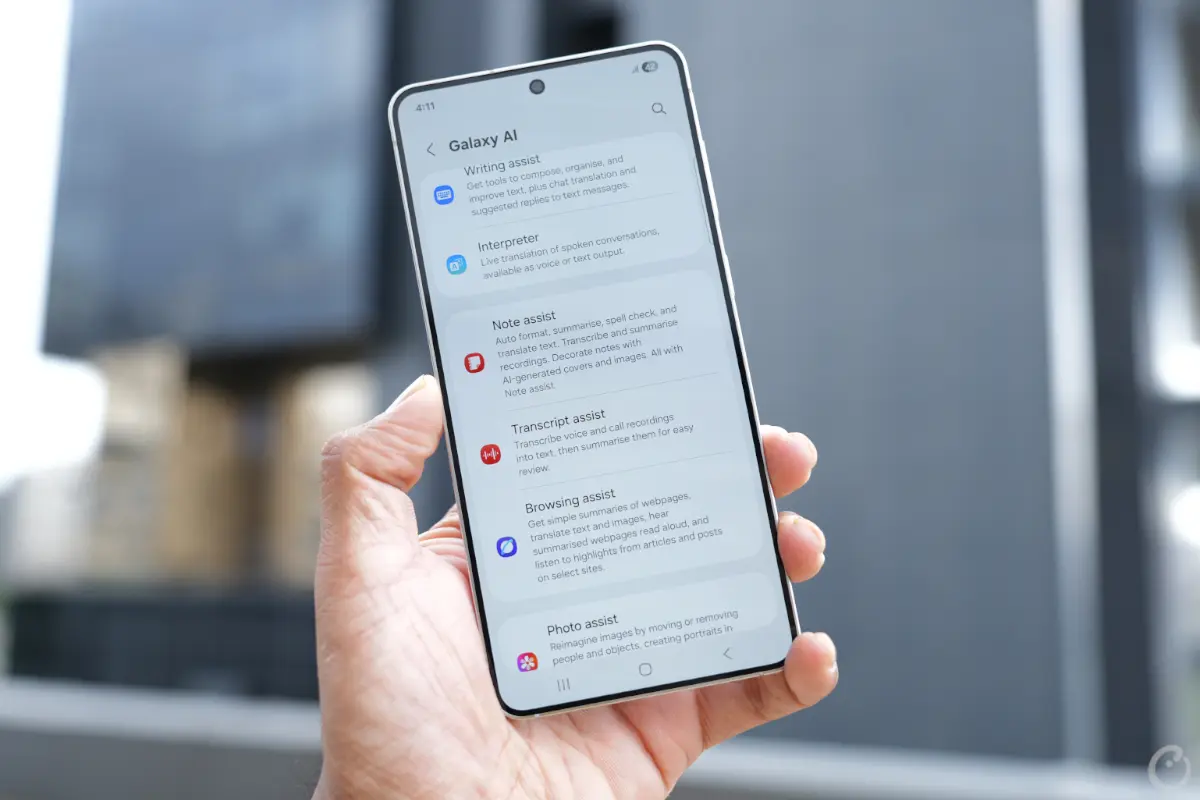
A lot has changed in the last year since we first reviewed Galaxy AI. Besides adding new capabilities, Samsung has also improved some of the older features. For instance, Writing Assist now works across apps, and when composing, you can choose between Standard, Email, social media and Comment to generate more accurate text.

You can now turn your photos and rough sketches into art using Drawing Assist or ask AI to add elements to the photos. Portrait Mode photos can also be turned into art using AI. There is also a new Audio Eraser tool that allows you to remove wind noise and focus on clear vocals in the videos shot on the phone.
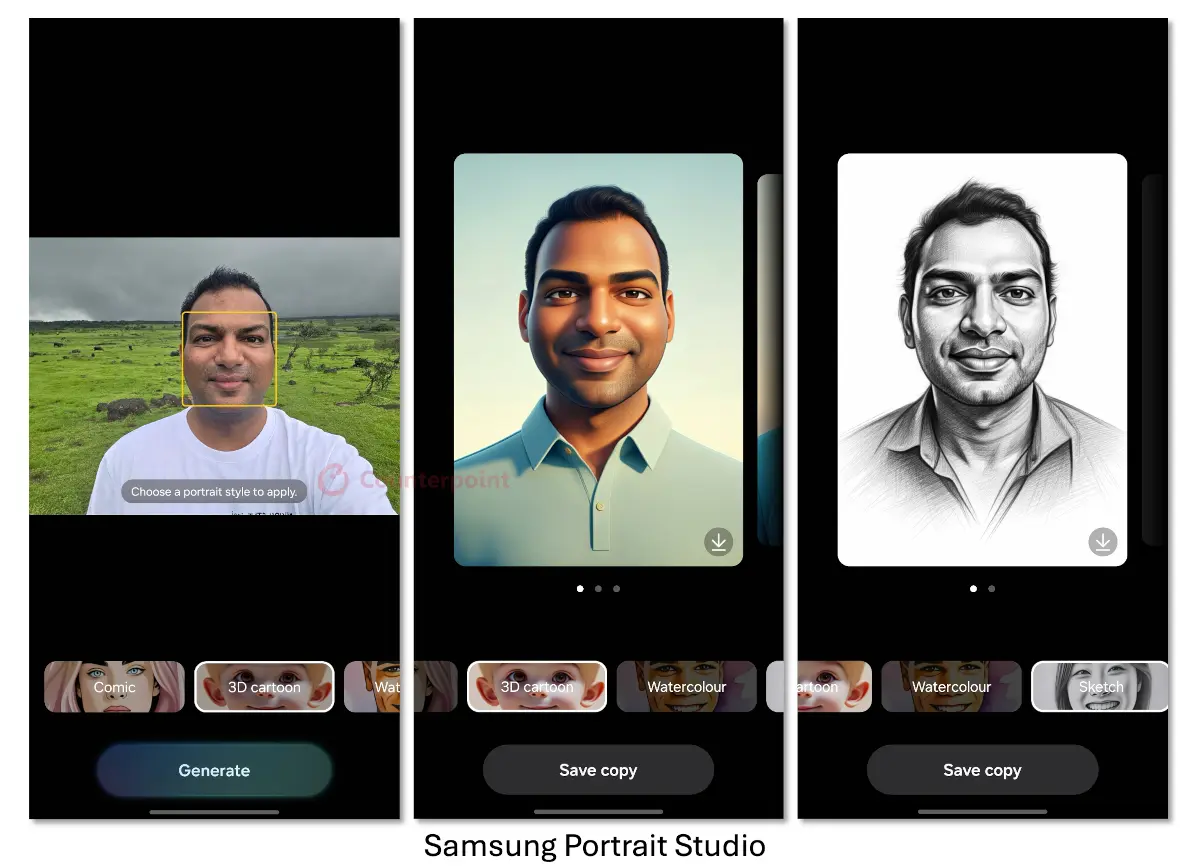
The AI experience takes a big leap with more intelligent agentic capabilities. The Galaxy S25 Edge integrates Google’s Gemini multimodal model, which can understand the context and generate responses based on various inputs – including text, voice, images and videos. It also enables more natural and conversational interactions, like talking to a real assistant.
AI agents can perform tasks across multiple apps with a single command, and Samsung is working closely with Google to enable these Gemini AI agentic experiences across Google and Samsung apps. For instance, you can long-press the power button or say “Hey Google” to invoke the Gemini assistant. You can then ask something like “find the schedule for Liverpool’s next game and add it to my calendar.” The AI will understand the context, execute the search, and perform the follow-up action to create a calendar event, thus eliminating the need to manually jump between different apps. Similarly, when you click a photo of an event poster, using the AI Select tool and Google’s Circle to Search, you can add the same to the calendar without having to input everything manually. However, we noticed that it does not add all the details, and in some fields, you will need to add manually. Circle to Search can also recognize phone numbers and URLs, and prompt actionable steps.

Galaxy AI takes a major leap with agentic capabilities, using Google's Gemini multimodal model to understand complex requests across apps and perform tasks for you.
Besides, Galaxy AI tools can also help you summarize webpages and lengthy articles, live translate to break language barriers, change conversational tone in chats and messages, to name a few. We covered all these features when Galaxy AI initially rolled out with the Galaxy S24 series, which can be read here, or our in-depth video can be watched here.
Galaxy AI transforms your smartphone into a powerful assistant, integrating smart tools for communication, creativity, and daily productivity.
The Galaxy S25 Edge also gets Google’s Gemini Live, allowing for a more natural, real-time conversation with the Gemini AI assistant. You can ask general knowledge questions, trip itineraries, recipes to cook a certain dish or cuisine and much more. Interestingly, you can also use your phone's camera and screen for contextual help and advice based on what you are seeing. For instance, you can show some vegetables and ask can be prepared with them, show a tree or a flower and ask for related information, like how much watering is needed and so on. You can show a book and ask for its review or even screen share to ask specific questions like how to set an alarm or change wallpaper and much more. It is a good use case, especially for the elderly and not-so-tech-savvy users.
Amid all the GenAI and agentic AI interactions, personalization and privacy are important. Keeping that in mind, Samsung has designed a Personal Data Engine to analyze usage patterns on-device and personalize AI features without sending your sensitive information to the cloud. Robust security with Knox protection is a key part of Samsung’s marketing strategy.
Samsung's on-device Personal Data Engine and Knox protection ensure your data is private and secure.
Key Takeaways
· With the Galaxy S25 Edge, Samsung has expanded its S-series portfolio to create a new thin and light device alongside its foldable flagships.
· This is not just a one-off device, but is defining a new category of "slim flagships" to diversify its premium lineup and capture a specific market segment.
· The deep integration of Galaxy AI, along with Google's Gemini AI, gives Samsung an edge in the AI assistant space, offering a more intelligent and agentic user experience.
· Samsung’s decision to use a smaller-capacity battery is a notable risk, but it manages to offer acceptable performance with regular use.
· For Samsung, the critical part of marketing this device will be to convincingly alleviate concerns about battery life at the point of sale – similar to how the thinness of the device shines once it is held in hand.
· The Galaxy S25 Edge also gives Samsung a competitive edge in positioning ahead of Apple’s rumored thin and light iPhone 17 Air launch expected soon.


