

- 25년 3분기 전세계 생성형 AI(GenAI) 스마트폰 누적 출하량 5억 대 돌파
- 중국 제조사들의 주도 아래, 생성형 AI 스마트폰은 중·고급형 세그먼트 중심으로 빠르게 확산
- 2억 5천만 대 이상의 기존 스마트폰이 운영체제(OS) 업데이트를 통해 제한적인 생성형 AI 기능 지원
- 카운터포인트리서치의 소비자 조사 결과, 응답자 10명 중 9명이 생성형 AI 디바이스에 대해 인지하고 있는 것으로 나타나
- 문서·글쓰기 관련 작업이 주요 생성형 AI 활용 사례로 부상
- 생성형 AI 스마트폰 누적 출하량은 2026년 3분기 10억 대를 초과할 것으로 전망
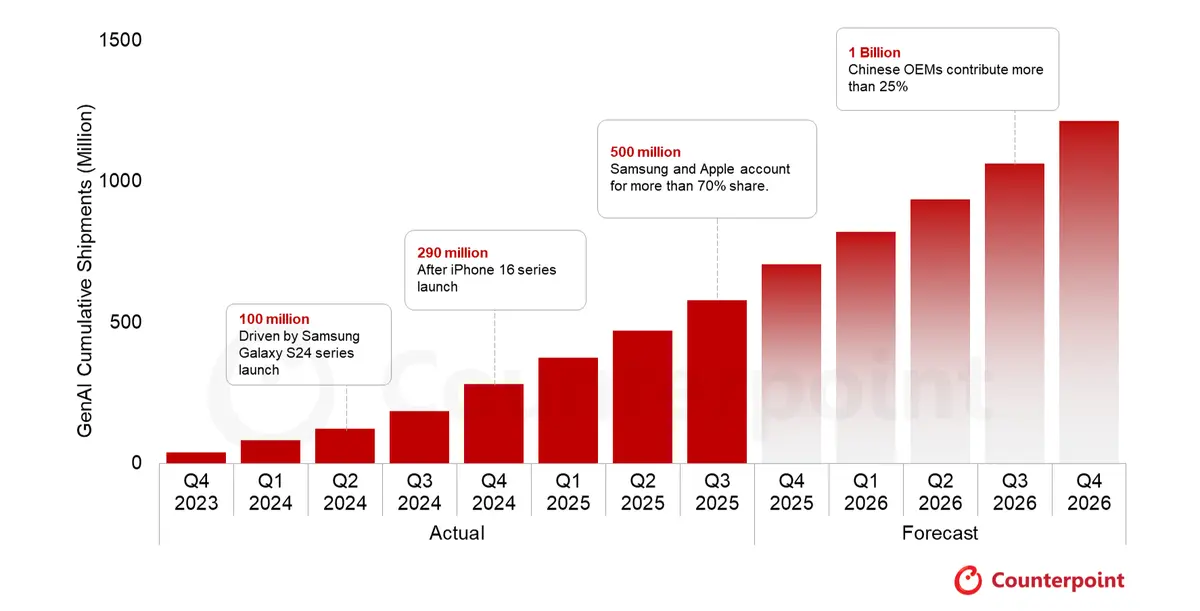
카운터포인트리서치(이하 ‘카운터포인트’)가 최근 발간한 AI360 리포트에 따르면 2025년 3분기 전세계 생성형 AI(GenAI) 스마트폰 누적 출하량이 5억 대를 돌파한 것으로 나타났다. 2023년 말 첫 출시 이후 불과 2년이 채 되지 않아 이루어진 성과이다. 초기 성장은 도매가 600달러 이상 프리미엄 스마트폰을 중심으로 이루어졌으며, 해당 가격대에서는 생성형 AI 기능이 사실상 표준 사양으로 자리잡았다. 애플과 삼성은 프리미엄 스마트폰 시장에서의 강력한 시장 지배력을 기반으로 전체 출하량의 70% 이상을 차지했다.
전세계 생성형 AI(GenAI) 스마트폰 누적 출하량
생성형 AI(GenAI) 스마트폰의 성장은 현재 중·고급형 스마트폰 시장으로 이동하고 있으며, 이는 중국 제조사들을 중심으로 진행되고 있다. 이들은 경쟁이 치열한 시장에서 차별화를 강화하기 위해 경량화 된 대규모 언어모델(LLM)과 멀티모달 AI 어시스턴트를 스마트폰에 탑재하며, 보다 폭넓은 사용자층이 생성형 AI 기능을 활용할 수 있도록 했다. 이러한 확산은 퀄컴 스냅드래곤 6·7 Gen 시리즈 및 미디어텍 8000 시리즈 등 중급형 칩셋의 지원을 통해 가속화되고 있다.
전세계 2억 5천만 명 이상의 기존 스마트폰 사용자가 운영체제(OS) 업데이트를 통해 일부 생성형 AI(GenAI) 기능을 지원받은 것으로 나타났다. 이번 업데이트를 통해 문서 작성 보조, 사진 편집, 콘텐츠 요약 등 핵심 AI 도구가 추가되며, 기존 사용자들도 초기 수준의 생성형 AI 경험을 체험할 수 있게 되었다. 특히 ‘서클 투 서치(Circle to Search)’ 기능은 이번 업데이트 대상 기기 전반에서 가장 활발히 홍보되고 널리 채택된 기능으로 부상했다. 다만 완전한 형태의 생성형 AI 기능 세트는 여전히 최신 고급형 스마트폰에 한정되어 있으며, 이는 대규모 언어모델(LLM)에 최적화된 NPU(신경처리장치)와 고용량 메모리 구성 등 고사양 온디바이스 처리 능력에 의존하고 있기 때문이다.
소비자들의 생성형 AI(GenAI) 스마트폰 인지도는 매우 높은 수준으로 나타났다. 카운터포인트의 소비자 조사에 따르면, 응답자 10명 중 9명이 생성형 AI 스마트폰을 인지하고 있었으며, 이는 주요 제조사들의 적극적인 마케팅 활동과 빠른 기능 통합의 영향으로 분석된다. 현재 스마트폰 업계는 대부분의 제품이 유사한 기능을 제공함에 따라, 명확한 사용자 효용을 제공하고 업그레이드를 유도할 수 있는 혁신적인 생성형 AI 활용 사례 개발에 주력하고 있다. 특히 문서 작성·요약 등 글쓰기 관련 작업이 대표적인 생성형 AI 활용 분야로 부상했으며, 이는 생산성과 커뮤니케이션 효율을 높이는 도구에 대한 사용자 선호를 반영한다. 전반적으로 효율성이 생성형 AI 스마트폰의 가장 핵심적인 가치로 평가되고 있으며, 신흥시장 사용자들이 선진시장보다 더 높은 만족도와 가치 인식을 보이는 것으로 나타났다.
전세계 생성형 AI(GenAI) 스마트폰 누적 출하량은 2026년 3분기까지 10억 대를 넘어설 것으로 전망된다. 이는 첫 5억 대가 출하되는 데 걸린 기간의 절반 수준으로, 성장 속도가 한층 가속화되고 있음을 의미한다. 이러한 확산은 중급형 기기에서도 활용 가능한 고성능 AI 칩셋의 보급과 경량 온디바이스 AI 모델의 빠른 도입이 견인하고 있다.
현재 스마트폰 내 AI 활용 방식에도 근본적인 변화가 진행 중이다. 기존의 음성비서 기능은 대규모 언어모델(LLM)을 활용하는 멀티모달 AI 에이전트로 진화하고 있다. 안드로이드는 ‘제미니(Gemini)’를 중심으로 전통적인 음성 인터페이스에서 강력한 행동 기반 AI 에이전트로 전환하고 있으며, 애플은 개인정보 보호와 앱 간 자연스러운 작업 연계를 강조한 ‘애플 인텔리전스(Apple Intelligence)’를 확장했다. 또한 삼성은 ‘AI 컴패니언(AI Companion)’ 전략을 지속적으로 고도화하며 생성형 AI 경쟁 구도를 강화하고 있다.
수출 바우처 상담 문의
(카운터포인트 Email: [email protected], 02-553-4813)
카운터포인트리서치는 기술 생태계 전반에 걸쳐 시장 데이터, 인사이트, 리포트 및 컨설팅 서비스를 제공하는 글로벌 산업 및 시장 조사 기관입니다. 반도체 제조사, 부품 공급업체, 소프트웨어 및 애플리케이션 개발자부터 통신 서비스 제공업체, 유통 채널, 투자자에 이르기까지 공급망 전반에 걸친 다양한 글로벌 고객에게 자문을 제공합니다.
[카운터포인트리서치]
경험이 풍부한 당사의 애널리스트 팀은 전 세계 주요 혁신 허브, 제조 클러스터, 주요 상업 중심지에 위치한 글로벌 오피스를 통해 고객을 지원하고 있습니다. 기업 내 최고경영진(C-suite)부터 전략, 시장 인텔리전스, 공급망, 연구개발(R&D), 제품 관리, 마케팅, 영업 등 다양한 부서와 지속적으로 소통하고 있습니다.
카운터포인트 주요 연구 분야
: 인공지능(AI), 자동차, 클라우드, 커넥티비티, 소비자 가전, 디스플레이, eSIM, IoT(사물인터넷), 위치 기반 플랫폼, 거시경제, 제조, 네트워크 및 인프라, 반도체, 스마트폰 및 웨어러블 기기 등 공개된 시장 데이터, 인사이트 및 리포트를 확인하고, 애널리스트와의 소통을 원하시면 카운터포인트 라이브러리를 방문해 주세요.
