- The Nubia Red Magic 7s Pro is a solid gaming phone but continues to lack in camera performance and software support compared to other Android flagship devices.
- Gaming phone sales will likely remain a niche product in the US market.
- However, gaming phones continue influencing mainstream smartphones designs by being the first to have features such as higher refresh rates, cooling systems, and specialized gaming modes to optimize performance.
- In Q3 2022 less than 15% of US smartphone sales were from 90Hz refresh rate or higher smartphones.
Gaming phones have remained a niche product in the US for years despite carrier efforts to include mobile gaming aspects into their portfolios and services. Back in 2018, AT&T was the first to include a gaming phone, the Razer 2, as part of its product portfolio. Sales were weak, however. According to the US Monthly Sell-Through Tracker, Razer did not reach higher than 1% market share in sales within AT&Ts portfolio during the device’s tenure. Since then, most attempts by carriers to highlight mobile gaming have focused on cloud mobile gaming services like GeForce NOW or the now-defunct Google Stadia. More recently, Verizon has announced a new partnership with Razer and Qualcomm to bring a new handheld called the Razer Edge 5G in early 2023. For the most part, gaming phones have remained on the sidelines, only available in the unlocked market.
Gaming phones’ influence on market
While gaming phone sales have been a fraction of those seen by the latest Apple iPhone or Samsung S series devices, they have a big impact on design choices for more mainstream devices. We continue to see mainstream OEMs putting more gaming features into premium flagships, such as higher screen refresh rates up to 144Hz, gaming-optimized modes and vapor cooling technologies. Smartphones with a refresh rate of 90hz or higher made up less than 15% of total smartphone sales in Q3 2022 and we expect this penetration rate to increase in the future as more OEMs implement this feature on both high and low-end devices. Qualcomm’s Snapdragon Elite Gaming portfolio with Variable Rating Sharing Pro and Volumetric Rendering are additional options for OEMs to choose from when launching a new device.
Nubia Red Magic 7s Pro: Latest gaming phone to enter US
The Red Magic 7s Pro came out just three months after the Red Magic 7s made its debut and is one of the more recent gaming phones that have entered the US market. Nubia is a sub-brand of ZTE and Red Magic smartphones are specifically designed for gaming. The brand has been very aggressive with its product launch cycles, having released 16 Red Magic branded devices in the last four years. Having had the opportunity to use the device for a few weeks now, the phone feels refreshing from a feature perspective compared to the more popular flagship options available in the US market.
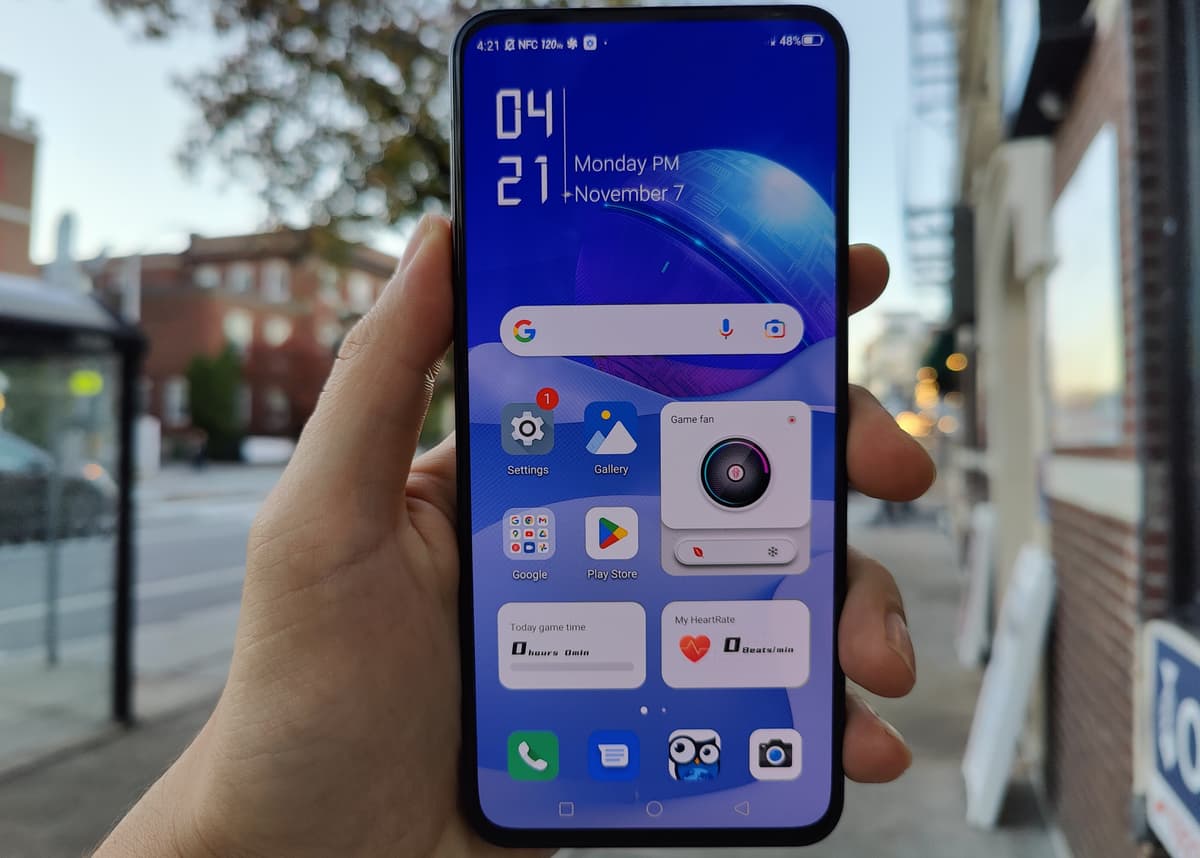
The cooling fan can be directly enabled on the home screen.
The Red Magic 7s Pro comes with the latest Qualcomm Snapdragon 8+ Gen 1 processor and features a dedicated gaming chip called Red Core 1. It has a 5,000mAh dual-cell battery, and a 65W charger for rapid charging. There are two configurations to choose from – 12GB RAM with 256GB storage for $729 and 18GB RAM with 512GB storage for $899.
The smartphone has a high-speed cooling fan that can run up to 20,000RPM and a multi-layer cooling system called ICE 10.0 that is made up of different components to keep the device cool when playing graphics-intensive games. It also comes with a 6.8-inch AMOLED screen with 120Hz refresh rate, 20:9 ratio, 1080*2400 resolution, multi-finger 480Hz up to 960Hz touch sampling rate, and a screen-to-body ratio of 92.7 due to the inclusion of the first under-display camera in a gaming phone. Red Magic promises up to two years of security updates but only one Android version update.
Like previous Red Magic devices, there are two shoulder triggers that mimic controller triggers with 520Hz sampling giving a response rate as fast as 7.4ms. This is very unique to gaming phones and gives them an edge over the average smartphone due to the ability to have more controls while gaming. However, it would have been interesting to include ways to utilize these shoulder triggers more outside of gaming. In the past, we’ve seen Apple utilize the Apple logo on the back of the iPhone as an added button or Pixel devices using Active Edge, a way of squeezing a phone to launch Google Assistant.
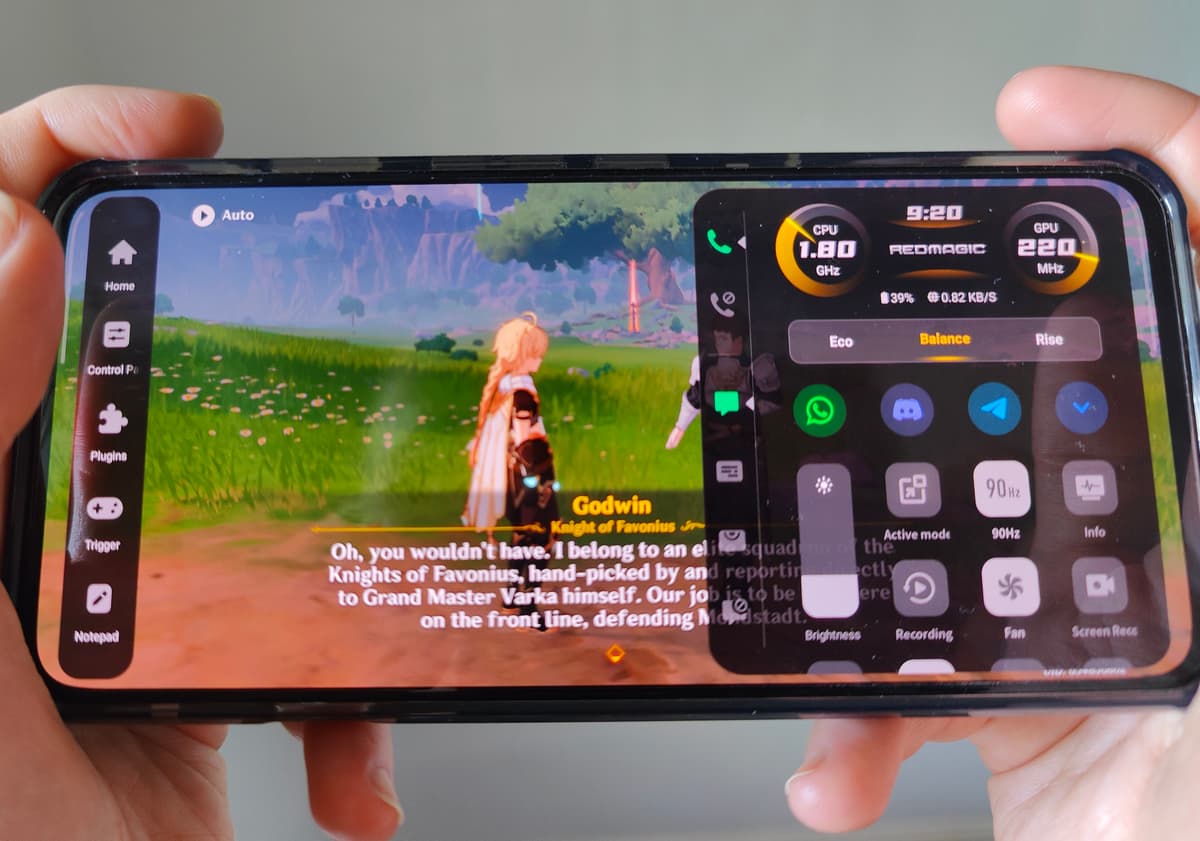
While in a game, simply swipe from the top left or right corner to get to the Game Space HUD to enable different gaming modes, configure the shoulder triggers, start a screen recording, or even take notes.
Camera performance needs improvement, a common theme among gaming phones. To optimize screen real-estate, there is an under-display camera with 16MP resolution. It works fine for basic selfies, but images tend to have a lot of background noise and there are issues with lens flare and refraction due to the under-display nature of the camera. At the back, you get a triple camera set-up comprising a 64MP main camera, an 8MP ultrawide camera and a 2MP macro camera. The 64MP main camera stands out for taking solid portrait shots and Red Magic’s software helps with subtle improvements through edge detection and background blur features. Cameras are never a big selling point on gaming phones, but OEMs could possibly optimize their software more to further enhance image quality.
Overall, the key highlights of the device are the very fast and responsive shoulder triggers, the small but mighty cooling fan and the implementation of the UDC to get more screen real estate for an improved immersive experience. These features certainly make the device stand out as a gaming phone rather than just a flagship device. However, the phone does have its drawbacks. The device is bulky and lacks the finesse and design aesthetics found in flagship devices. Lastly, it doesn’t come with other premium features we have come to expect with the latest flagships, like multiple Android version upgrades, wireless charging, and waterproofing. The latter two are admittedly hard to do, when you dedicate space to a whole cooling fan as design trade-offs need to be made for gaming optimized devices.
Will gaming phones grow?
The Red Magic 7s Pro is very impressive, packed with useful gaming features and a welcome change from the regular flagship line-up found in the US. However, the design and form factor clearly focus on hardcore gamers. At a price point of $800 in the unlocked market, it also remains a very expensive device for most US consumers. The US market is primarily carrier driven, which heavily discounts devices through promotions and trade-ins. Gaming phones will need to carve out a spot in carrier portfolios to truly gain traction, but if the past is any indicator, it is not going to be easy.
Branding remains a big hindrance as gaming phones are often backed by known gaming brands like Asus ROG which may be recognized by gamers but not the general public. There are now also flagship alternatives like the OnePlus 10T available that have sought to create a more hybrid phone – optimized for gaming but without the gaming look. This creates additional competition and drives gaming phones further into their niche. If a more recognizable brand gets into gaming, it could broaden market interest and, along with a reasonable price point, open up a more casual gaming market. This could become the perfect excuse for parents to get their children a phone and not have to also purchase a separate gaming device.
* Key Southeast Asia countries include Indonesia Thailand Philippines and Vietnam
[one_fourth]

[/one_fourth]
[one_fourth]
[/one_fourth]
[one_fourth]
[/one_fourth]
[one_fourth_last]
[/one_fourth_last]


