- Google’s Pixel 7 series was banned from sale in Japan due to a patent infringement ruling.
- The case highlights Pantech’s strategy to monetize SEPs and Google’s response to licensing negotiations.
- This incident underscores the growing importance of patents in the telecom industry and the need for global companies to strengthen their regulatory adaptability.
Access to the full report here: Japan Court Blocks Google Pixel 7 Sales over Patent Dispute — A Landmark SEP Ruling with Broad Market Implications
Pixel 7 Series Sales Halted in Japan
The Tokyo District Court ruled that Google’s Pixel 7 series infringes on patents held by Pantech and issued an injunction halting their sale, importation, advertising, and display. The ruling, issued in June 2025, applies to both the Pixel 7 and Pixel 7 Pro, prohibiting these activities within Japan. Google is not currently selling the Pixel 7 series through its official Japanese store.
The injunction was based on a Standard Essential Patent (SEP) necessary for LTE communications. Pantech’s patent covers a crucial method for mapping control signals — a process that defines how base stations send acknowledgement messages to mobile devices to ensure reliable data transmission. Since this function is a core component of LTE technology used worldwide, the patent qualifies as an SEP.
Pantech is reportedly taking similar legal steps to seek injunctions against successor models, including the Pixel 8 and Pixel 9, suggesting that the dispute may escalate further. In Japan, it is uncommon for a foreign company to be subject to a full sales ban in a patent dispute, highlighting the notable seriousness of this ruling.
Google Pixel Series Sales Mix in Japan
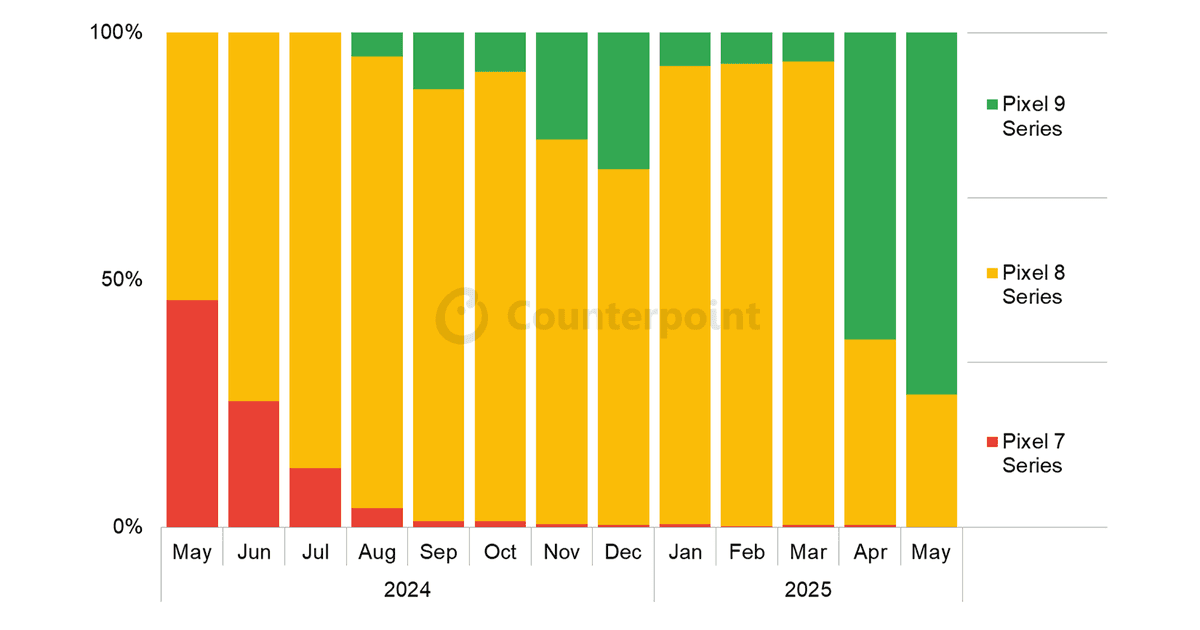
Strategic Implications and Shifting Patent Dynamics
The recent sales ban on Google’s Pixel 7 series is expected to have only a limited impact on the company’s short-term shipment plans. However, over the medium to long term, it may prompt a reassessment of Google’s broader market strategy in Japan. Although the ruling currently applies only to the Pixel 7 lineup, concerns remain about the potential for future enforcement affecting subsequent models. This situation calls for even greater agility and flexibility in Google’s product rollout and promotional planning going forward.
This case highlights a shift in how patent technologies are positioned within the telecommunications industry. Patents that support standard technologies are no longer seen merely as legal protections; they are increasingly being used as tools that can directly influence product distribution and market strategy. As such, it is becoming more important for companies to develop appropriate measures to address this evolving dynamic.
Notably, this development has received relatively little media attention in Japan. However, the sales injunction goes beyond a typical patent dispute, serving as an opportunity to reconsider how global companies adapt to local regulatory frameworks and manage risks in their market expansion efforts.
