

- Indonesia smartphone shipments declined 9% YoY in Q1 2026 as consumers delayed upgrades.
- OPPO maintained its top spot during the quarter, despite a 24% YoY drop in shipments, helped by an expanded mid‑range portfolio that cushioned the impact of rising component costs.
- Xiaomi led the market with a 21% share by leveraging entry-level upgrades and a stronger retail presence.
- Samsung drove 8% YoY growth through stable supply management and premium S26 momentum.
- Premium (>$600) smartphone shipments hit a record high with 8.3% share of the total market, while the entry-level tier (<$150) plummeted.
Jakarta, Beijing, Berlin, Buenos Aires, Fort Collins, Hong Kong, London, New Delhi, Seoul, Taipei, Tokyo – May 20, 2026
Indonesia smartphone shipments declined 9% YoY in Q1 2026 as higher smartphone prices, stemming from the memory supply crisis, resulted in consumers delaying smartphone upgrades, according to Counterpoint's Indonesia Smartphone Tracker.
Commenting on the country’s smartphone market dynamics, Senior Analyst Shilpi Jain said, “Although Indonesia’s economy reached a 14‑quarter high, driven by government spending and the shift of the festive season to Q1 that boosted domestic consumption, the smartphone market declined. This was largely due to price increases stemming from memory market inflation. The impact was evident across both older models and new launches, with price hikes ranging from 7% to 45%. The entry‑level segment was hit the hardest, as consumers deferred purchases or prioritized used phones instead.”
Indonesia Smartphone Shipments Market Share, Q1 2025 vs Q1 2026
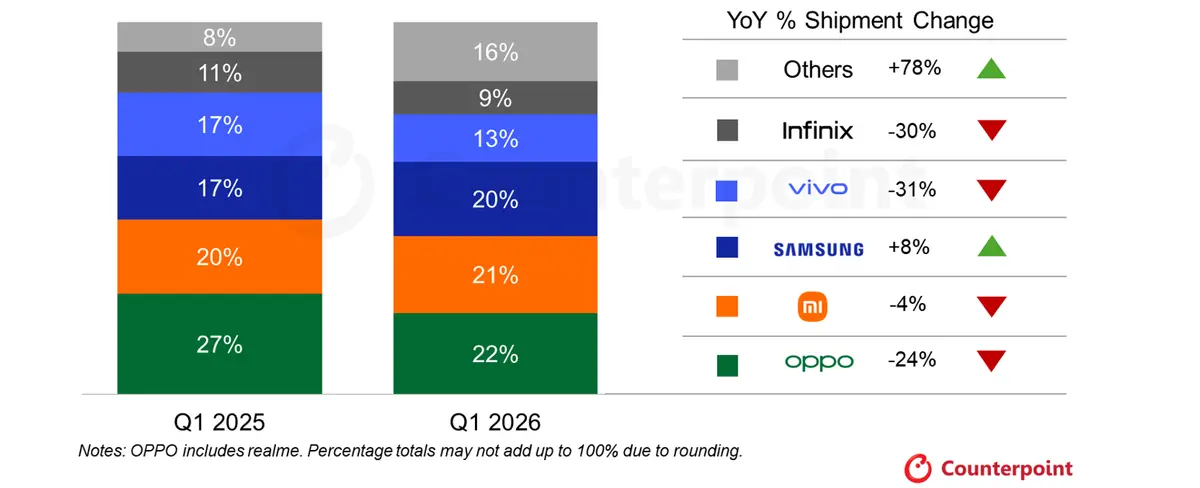
OPPO maintained its leadership position in Indonesia, despite a 24% YoY shipment drop, as it was supported by an expanded mid‑range portfolio, including the A series, which helped cushion the impact of rising component prices. Consumers in this segment are less sensitive to pricing pressures, allowing OPPO to offset part of the decline while strengthening its competitive positioning in the mid-range segment.
Xiaomi on the second with a 21% market share, although its shipments declined 4% YoY as its mid-range products faced competition and product delays. Xiaomi was able to maintain its share lead in the entry-segment by optimizing its component mix and value proposition in its latest models like the Redmi A-series. It also continued to strengthen its retail presence with new concepts that focused on ecosystem display integration.
Samsung was the only brand among the top five to show positive momentum, with shipments rising 8% YoY. Samsung saw more stable retail pricing and stronger brand loyalty. The Samsung Galaxy S26 series also received a greater share of the spotlight, supporting shipment growth in the premium segment. The S26 series is performing better than the S25 series in Indonesia.
vivo and Infinix each fell over 30% YoY driven by a decline in the <$150 price segment due to price hikes and fewer launches. The two brands continue to expand their portfolios in the mid-range and are even strategizing their product targets, such as the Infinix Note 60 Pro, which now aims to compete in the affordable flagship segment.
The "Others" captured a 16% share in Q1 2026, up from 8% in Q1 2025, primarily driven by Apple due to a low base in Q1 2026 when the brand faced a ban in Indonesia. Apple has been growing consistently since the ban was lifted in April 2025.
Apple’s rise also boosted the premium (>$600) segment. By price band, the premium segment stood out in Q1 2026, reaching its highest contribution on record at 8.3% of shipments and posting 30% YoY growth. This mix shift is already pushing ASPs upward, highlighting the continued momentum of premiumization, as brands prioritized higher tiers to offset weak consumer sentiment in the entry‑level segment. In contrast, the entry-level segment (<$150) saw a sharp 19% YoY decline.
Smartphone prices in Indonesia are expected to rise further as component costs continue increasing. Shipments are likely to decline until the second half of the year as consumers are expected to defer their purchases.
About Counterpoint Research
Counterpoint Research is a global market research firm specializing in products across the technology ecosystem. We advise a diverse range of clients – from smartphone OEMs to chipmakers and channel players to Big Tech – through our offices located in the world's major innovation hubs, manufacturing clusters and commercial centers. Our analyst team, led by seasoned experts, engages with stakeholders across the enterprise – from the C-suite to professionals in strategy, analyst relations (AR), market intelligence (MI), business intelligence (BI), product and marketing – to deliver services spanning market data, industry thought leadership and consulting. Our core areas of coverage include AI, Automotive, Consumer Electronics, Displays, eSIM, IoT, Location Platforms, Macroeconomics, Manufacturing, Networks and Infrastructure, Semiconductors, Smartphones and Wearables. Visit our Insights page to explore our publicly available market data, insights and thought leadership, and to understand our focus, meet our analysts and start a conversation.
