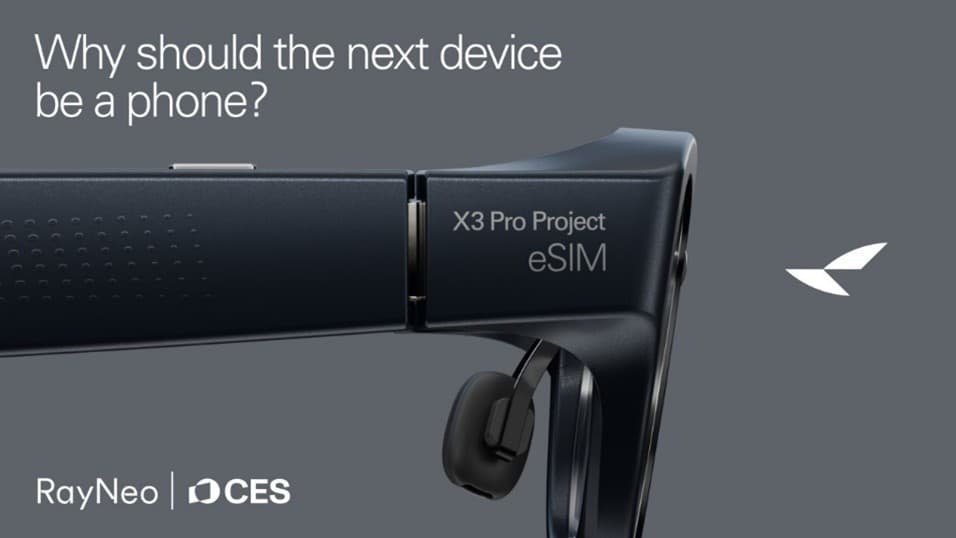
- RayNeo unveiled the world’s first eSIM-enabled AR glasses at CES 2026, underscoring its ambition to deliver truly standalone AR devices.
- XREAL highlighted multiple strategic partnerships at CES 2026, outlining a strategy to expand its business across a broad ecosystem of partners.
- Goertek showcased its full-stack capabilities for XR and smart glasses, spanning reference device designs as well as core optics and sensing technologies.
- Lumus demonstrated a breakthrough in waveguide technology, pushing the waveguide-based AR glasses field of view to 70°.
- Meta-Bounds showcased its ultra-lightweight AR glasses, which won 2026 CES Innovation Awards.
- TDK Electronics and WEART Haptics partnered to demonstrate the latest haptics technology.
eXtended Reality (XR) and smart glasses remained one of the key highlights of CES 2026, continuing the momentum built in 2025. At CES 2026, more than 250 exhibitors related to XR and smart glasses participated, showcasing their latest technological innovations, products, and strategic partnerships. This blog summarizes the major XR and smart glasses announcements from CES 2026 and discusses what they signal about future development trends in this category.
RayNeo Unveils World's First eSIM-enabled AR Glasses at CES 2026
RayNeo showcased the RayNeo X3 Pro – Project eSIM prototype at CES 2026, presenting it as the world’s first consumer AR glasses concept with integrated eSIM and 4G connectivity. By embedding a camera, display, and cellular network directly into the frames, the glasses can function as a standalone communication device, enabling phone-free use during activities such as running or driving. Native 4G connectivity supports features including online music streaming, real-time translation, and instant cloud backup of photos and videos.
However, power consumption of the eSIM-powered AR glasses remains a key concern, and RayNeo has yet to announce a commercialization timeline. Recent investments from Chinese telecom operators China Mobile and China Unicom may strengthen RayNeo’s ability to pursue its standalone AR glasses strategy.
Source: RayNeo
XREAL Highlights Strategic Partnerships at CES 2026
Google and XREAL announced a multi-year extension of their strategic partnership at CES 2026, positioning XREAL as a lead hardware partner for the Android XR ecosystem. The expanded collaboration builds on Project Aura, which is scheduled to launch in 2026, and aligns XREAL’s long-term hardware roadmap with the Android XR platform. Under the agreement, the two companies will work together to bring Android XR to optical see-through devices, including wired XR glasses, while also expanding developer support for the Android XR ecosystem.
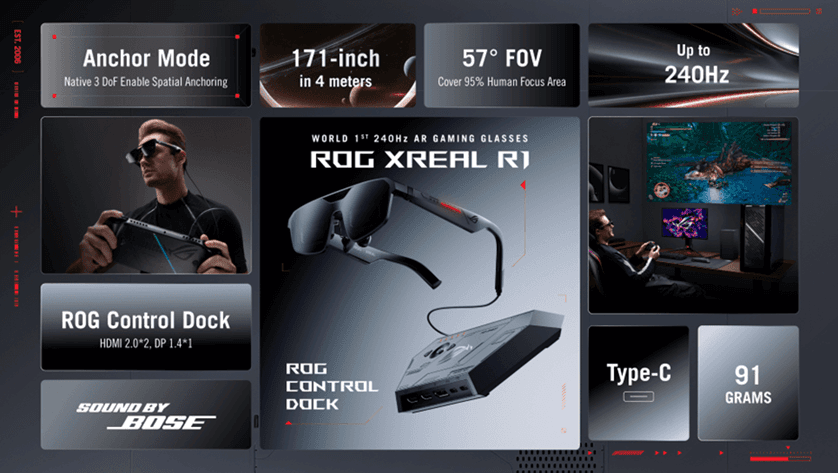
In a separate announcement, XREAL revealed a strategic partnership with ASUS Republic of Gamers (ROG) and jointly unveiled the ROG XREAL R1 AR Glasses. Positioned as the world’s first 240Hz micro-OLED FHD (1920 × 1080) gaming glasses, the ROG XREAL R1 features an exclusive ROG Control Dock for broad connectivity with PCs and consoles. Designed for immersive, ROG Ally–optimized gaming, the glasses offer XREAL’s flagship features, including a 57° field of view, native three degrees of freedom (3DoF), electrochromic tinting, and Sound by Bose audio. Users can also easily adjust virtual screen size and distance at the press of a button. Targeting competitive gamers, the R1 AR glass delivers an industry-leading 240Hz ultra-high refresh rate and 3ms motion-to-photon latency for smooth, responsive gameplay. The ROG XREAL R1 is expected to ship globally in the first half of 2026.
Source: ASUS, XREAL
Goertek Unveils its Full-Stack XR Capabilities Across AR/MR Devices, Optics, and Interaction
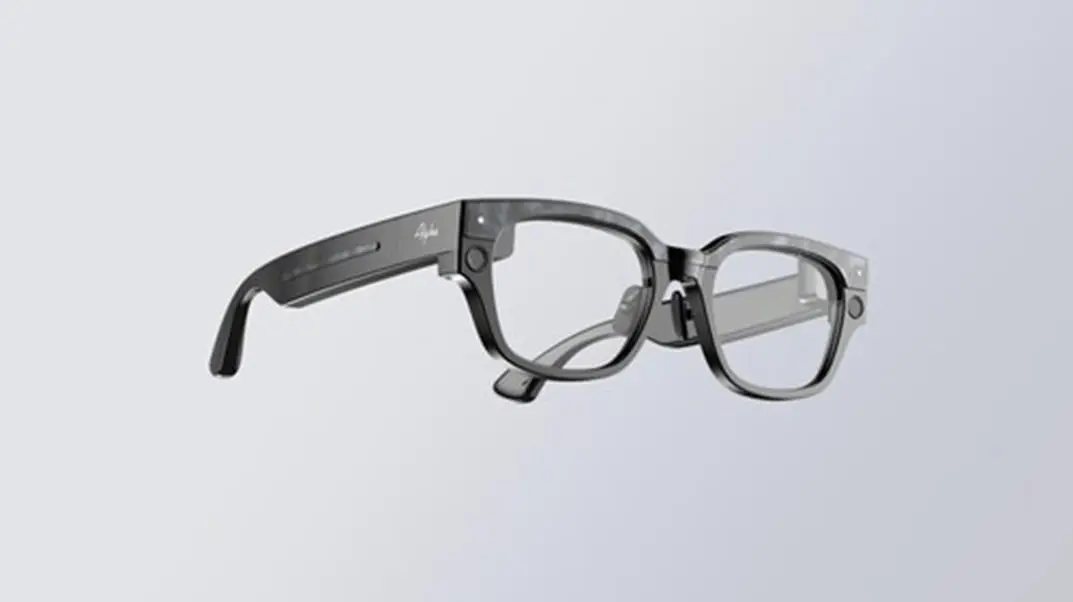
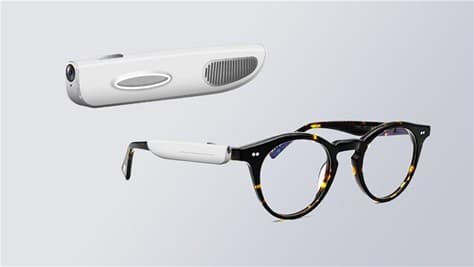
Goertek demonstrated end-to-end building blocks for XR and smart glasses at CES, spanning reference device designs as well as core optics and sensing technologies. In the AI glasses segment, the company introduced multiple reference designs. The core product Rubis AI+AR glasses feature an industry-first MCU + ISP + NPU tri-chip heterogeneous platform that significantly reduces latency and power consumption, along with a full-color etched waveguide and an ultra-compact light engine. They also incorporate a self-developed EMG wristband for novel interaction methods and a modular VPU nose pad that adapts to different face shapes. Additionally, Goertek showcased the Rox Vision smart glasses accessory, which weighs just 13 grams and can be clipped onto regular eyewear to enable vision capture, audio interaction, and on-device AI processing.
Rubis AI+AR Glasses Reference Design
Source: Goertek
Rox Vision glass accessory
Source: Goertek
For MR, Goertek unveiled an ultra-light MR reference design that reduces a 4K MR headset to around 100 grams through system-level optimization, delivering 38 PPD retinal-level clarity at a 100° field of view (FoV), with integrated Video See-through (VST) and 6DoF interaction.
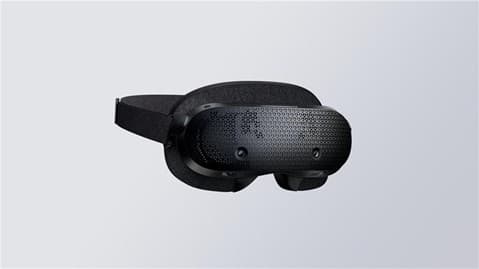
Source: Goertek
In optics, Goertek showcased a variable-focus liquid crystal lens for XR devices that enables continuous refractive adjustment from −3.0 D to +3.0 D in a 1 mm-thin form factor, eliminating the need for corrective eyewear for users with mild vision issues. It also introduced the F15Pi full-color resin waveguide module, weighing only 4 grams, with over 92% grating transmittance and no visible rainbow artifacts.
Lumus’ 70° Waveguide Optics Push AR Glasses Closer to True Immersion
Lumus showcased a major optics milestone that addresses one of AR glasses’ biggest limitations: field of view. Its new ZOE waveguide is positioned as the first geometric (reflective) waveguide to exceed a 70° FoV while remaining viable for glasses-style form factors. This advancement enables AR to move beyond “peek-through” overlays toward more immersive, multi-window experiences that sit naturally within the user’s line of sight.
Alongside ZOE, Lumus also highlighted upgrades to its Z-30 platform, with a stronger focus on real-world practicality. Improvements include higher brightness efficiency – critical for outdoor readability –and a clear roadmap toward thinner and lighter optics with Z-30 2.0. Together, these developments target a core industry bottleneck: scaling waveguide optics that fit into normal-looking frames while remaining manufacturable at reasonable cost.
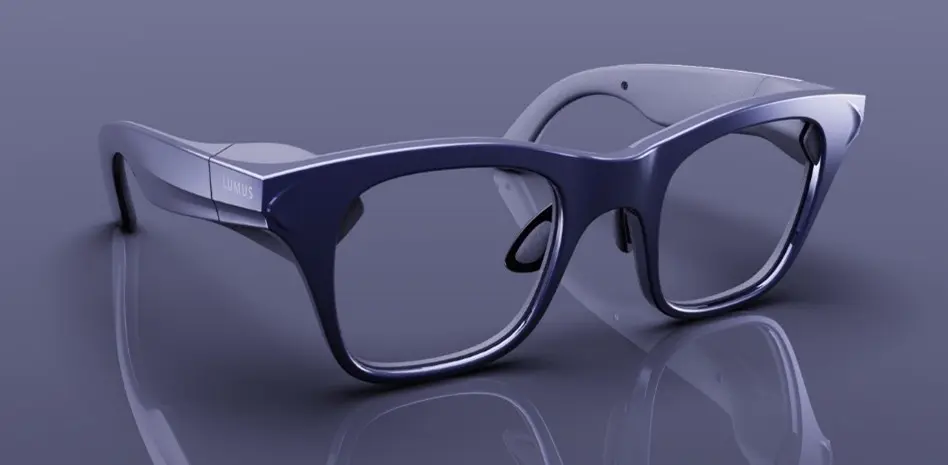
Source: Lumus
Meta-Bounds Wins CES 2026 Innovation Awards for Ultra-light AR Glasses
China-based optics and design solution provider, Meta-Bounds, showcased a range of products and technological achievements at CES 2026. Highlights included two reference design solutions that won 2026 CES Innovation Awards: the 25-gram world’s lightest stylish AR glasses and the 38-gram world’s lightest full-Color AI+AR glasses.
The 25-gram design is based on a monocular green display and achieves its ultra-light weight through Meta-Bounds’ proprietary resin waveguide technology, which the company claims is about 50% lighter than mainstream solutions currently on the market. The glasses also feature ultra-slim temples measuring just 9.5 mm. The 38-gram solution supports full-color displays and integrated cameras, enabling photography and visual AI assistance.
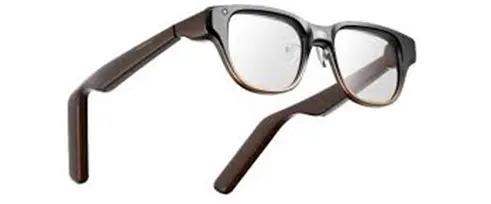
Separately, Meta-Bounds announced a collaboration with BUTTONS, a Los Angeles–based tech and lifestyle brand, to launch the BUTTONS VISION X AR smart glasses, highlighting the integration of AR functionality with fashion-forward design. Meta-Bounds also supports the development of Lenovo AI Glasses, which feature a binocular green display, integrated cameras, and are powered by Lenovo’s Qira ambient, system-level intelligence.
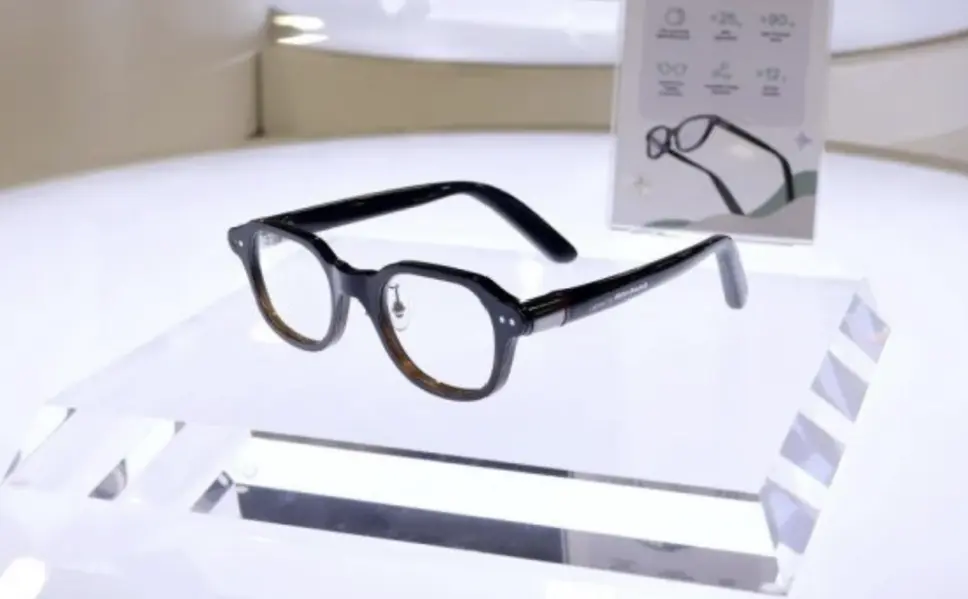
Source: Meta-Bounds
BUTTONS VISION X AR smart glasses
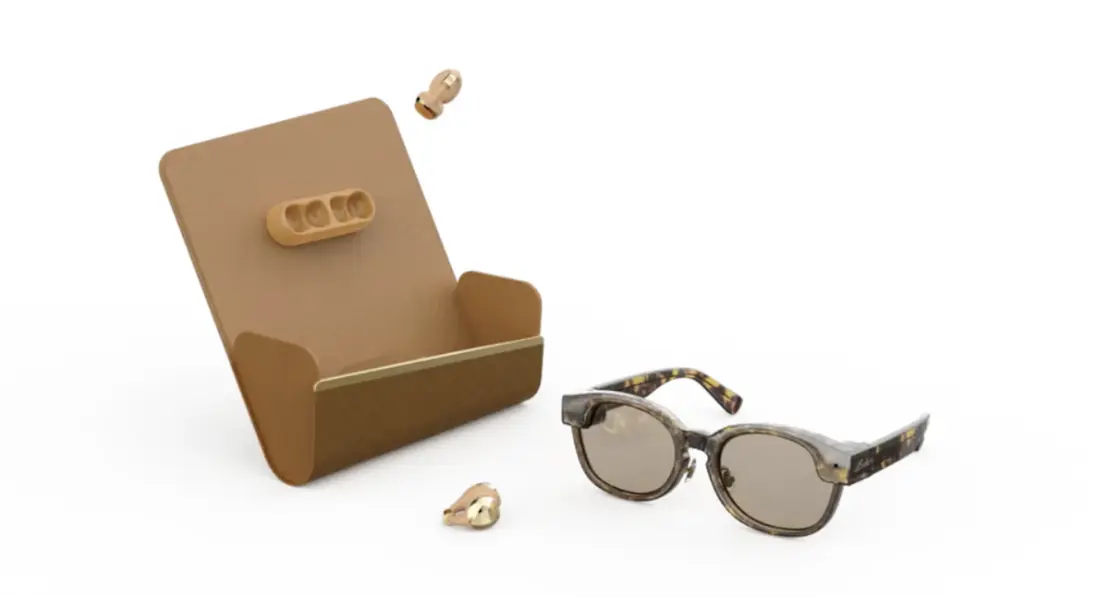
Source: BUTTONS
Lenovo AI Glasses
Source: Lenovo
TDK Electronics and WEART Haptics Partner to Demo the Latest Haptics Technology
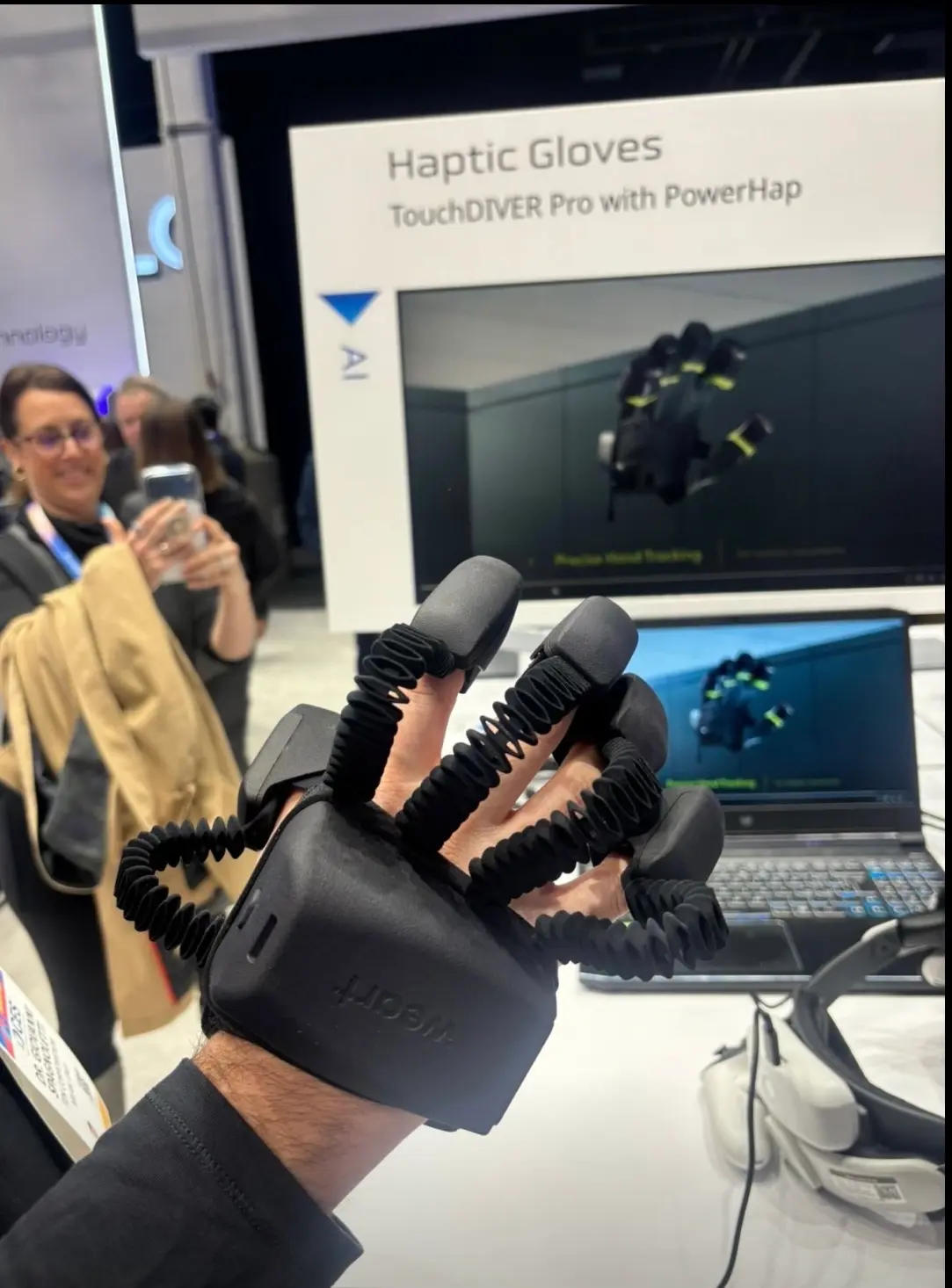
At TDK’s booth at CES 2026, TDK partnered with WEART Haptics to demonstrate TouchDIVER Pro, WEART’s next-generation wearable haptic glove, through a live XR experience. Designed to let users truly feel digital content, the demo paired the glove with a Meta Quest Pro, though the system also supports other platforms including Pico, HTC, and Windows Mixed Reality headsets. TouchDIVER Pro is made from flexible, stretchable materials that adapt to different finger sizes and provides rich haptic feedback, allowing users to perceive the shape, texture, and even temperature of virtual objects. WEART sees initial applications for the technology in enterprise training scenarios. TDK Electronics contributes a key enabling component through its PowerHap™ actuator, which delivers high-definition vibrations essential for realistic texture rendering, machinery interaction, and precise tactile notifications.
Beyond these highlights, many other companies showcased AI glasses products at CES 2026, with most emphasizing lightweight comfort, enhanced AI capabilities, and improved AR display performance. At the same time, a number of purpose-driven companies presented glasses designed for healthcare and accessibility applications. For example, Lighthouse XR and Lumen Technologies both demonstrated smart glasses specifically for blind and visually impaired users, incorporating technologies such as advanced sensing, responsive haptic feedback, and customized fit to support safer and more independent mobility.
Taken together, the XR and smart glasses announcements at CES 2026 make one thing clear: the industry is moving beyond experimentation toward real-world viability, and AI glasses are set to remain a key investment focus for consumer electronics companies worldwide. While no single product yet represents a definitive “end state” for AI glasses, steady progress across optics, displays, AI integration, connectivity, and interaction technologies is dismantling many of the barriers that have long constrained the category. We expect a growing number of the announcements and demonstrations unveiled at CES to transition into commercial products throughout the remainder of 2026 and beyond.


