

- The MacBook Neo marks one of Apple’s most aggressive pushes into the education computing market in more than a decade.
- The launch comes at a time when Google has established overwhelming dominance in the K-12 education market, largely through Chromebooks, Google Workspace and Chrome/Windows IFDs for education.
- Higher education could be Apple’s real opportunity here. University and college students typically purchase their own laptops rather than receiving school-issued devices.
Apple’s introduction of the MacBook Neo marks one of the company’s most aggressive pushes into the education computing market in more than a decade. Starting at $599, or $499 with education pricing, the device is Apple’s most affordable MacBook ever and is clearly positioned to compete with low-cost Windows and Chromebook laptops that dominate classrooms today.
The launch comes at a time when Google has established overwhelming dominance in the K-12 education market, largely through Chromebooks, Google Workspace and Chrome/Windows Interactive Flat Displays (IFDs) for education. This dominance was further solidified during the COVID-19 pandemic, when the US government injected unprecedented funding into education technology.
The US government provided more than $276 billion in direct education relief during COVID-19 through the Education Stabilization Fund (ESF) and related programs. The majority of this funding, totaling $189.5 billion, went to K-12 schools, while higher education institutions received $75.2 billion. The remaining funds were allocated to private schools and state discretionary education programs.
MacBook Market Share in $400-$699 Segment
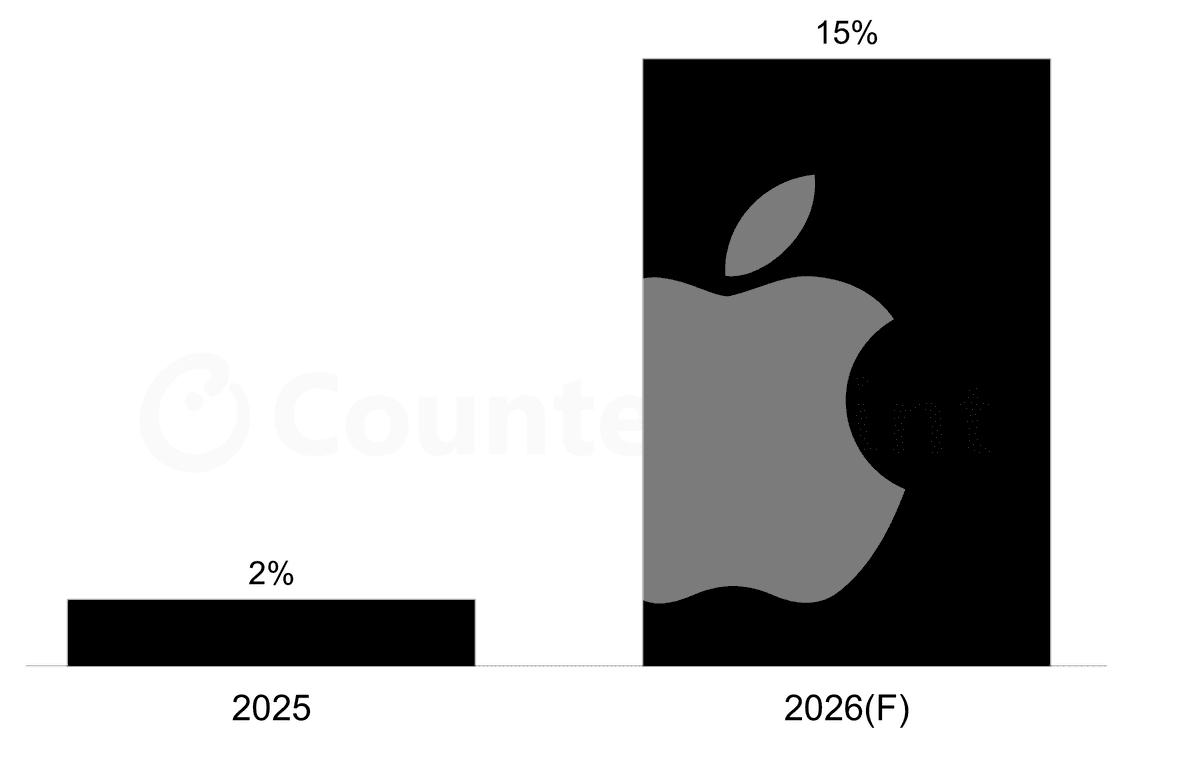
During my tenure at ViewSonic, I witnessed firsthand the dominance of Google and Windows platforms in K-12 classrooms, particularly as Chromebooks and Windows devices became deeply embedded within school IT infrastructures. Long-standing relationships with IT administrators and familiarity with existing systems create a significant barrier for Apple to penetrate the K-12 market.
However, higher education represents a more significant opportunity for Apple, where MacBooks have historically been viewed as a preferred computing platform for students preparing to enter the workforce.
Strategic implications for Apple
The MacBook Neo is unlikely to displace Chromebooks at scale in the K-12 market in the near term. Schools remain highly price-sensitive and deeply integrated into the Google ecosystem.
However, the device could serve several strategic roles for Apple:
- Education ecosystem entry: Students exposed to macOS earlier in their education journey may develop long-term platform loyalty.
- Bridge between K-12 and university: The MacBook Neo could act as a transition device for students moving from high school to universities and colleges.
- Expanding Apple’s addressable market: By lowering the entry price compared to the MacBook Air, Apple significantly expands its potential student customer base.
Key takeaways
- Google still dominates K-12 educational segment: Chromebooks control the majority of classroom devices due to cost, manageability and integration with Google Workspace.
- MacBook Neo targets Chromebook price tier: With a starting price of $599 ($499 education), Apple is entering a price band it previously ignored.
- Higher education is Apple’s stronger opportunity: University students prioritize performance, software compatibility and ecosystem integration, areas where macOS devices excel.
- Ecosystem strategy matters more than hardware: Google’s advantage stems from its complete hardware, software and cloud management ecosystem, not just inexpensive devices.
- The long-term play is platform loyalty: By lowering the entry price of macOS hardware, Apple may capture students earlier and retain them through college and into professional careers.
Bottom line
The MacBook Neo represents a strategic attempt by Apple to re-enter the education computing market at scale. While Chromebooks remain deeply entrenched in K-12 classrooms, the MacBook Neo could reshape purchasing dynamics among students and universities by bringing the macOS ecosystem to a significantly lower price point.
Over time, this strategy could strengthen Apple’s presence in higher education while expanding its long-term user base among the next generation of professionals.