

- S11 marks Apple’s first major smartwatch silicon upgrade in two years, powering the next wave of AI and health features.
- Apple’s new Health Sensing System moves the Watch beyond tracking, with a readiness score designed to guide users on how ready their body is for different activities.
- Apple expands its AI capabilities with on-device Audio Intelligence, while keeping privacy at the core of the experience.
- With stronger sensing, faster charging and more AI at the same price, Apple is making the upgrade proposition more compelling for its installed base.
Apple launched the Apple Watch Series 12 and Apple Watch Ultra 4 on Wednesday, powered by the new S11 chip, which enables new features focused on health and AI. Both watches keep the exterior of their predecessors while introducing a new S11 chip with notable improvements, a redesigned sensor stack which Apple calls the Health Sensing System, and Audio Intelligence, a set of new on-device AI features. Despite rumors of potential price hikes, pricing remains unchanged – Series 12 and Ultra 4 start at $399 and $799, respectively. Pre-orders open Thursday and in-store availability is expected September 18.
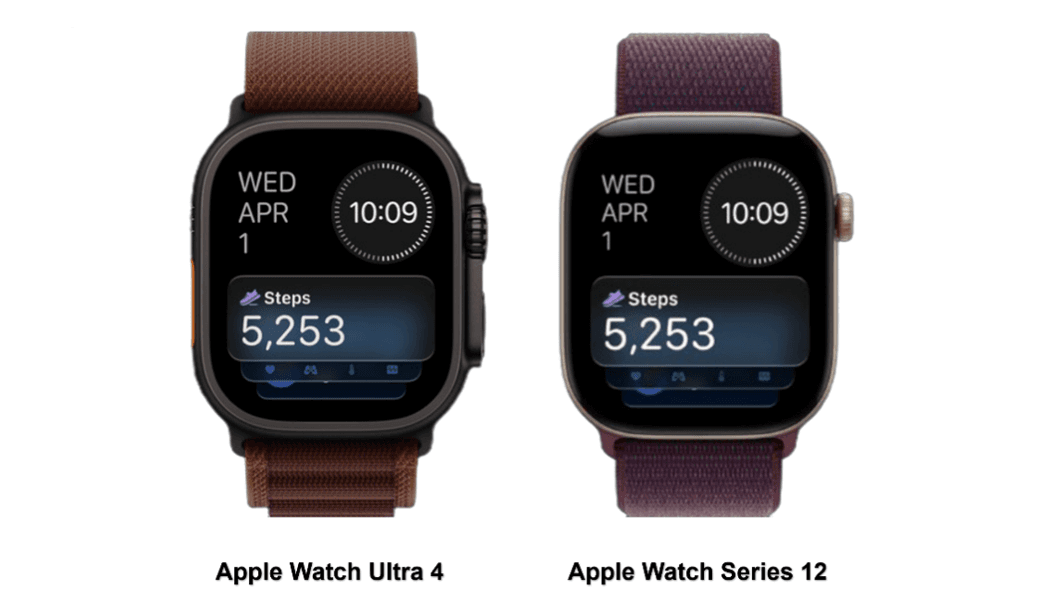
What’s new?
The S11 chip is Apple’s first new smartwatch silicon since the S10 debuted with the Series 10 in 2024 (the Series 11 and Ultra 3 both used the S10). Apple describes it as its most powerful wearable chip. S11 runs the always-on sensing and audio processing without penalizing battery life, while also recording health metrics more frequently than before. The new processor also adds Secure Exclave, a hardware-isolated compartment that processes microphone audio and discards it – the privacy layer underneath the new AI features.
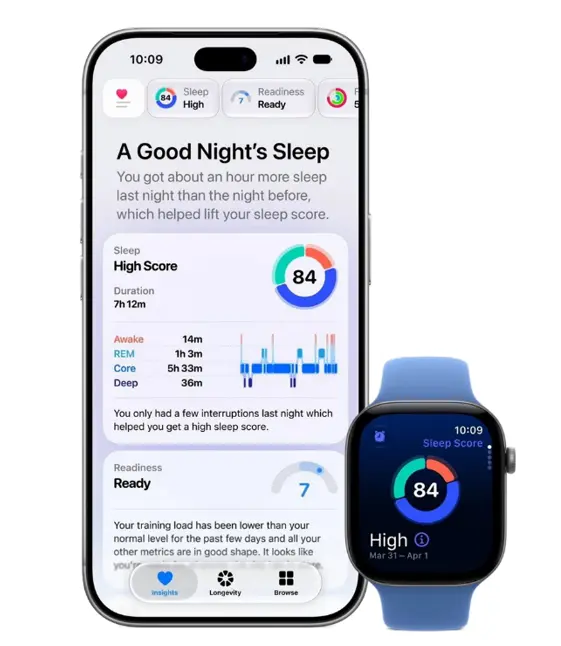
Apple’s new Health Sensing System utilizes improved optical and electrical heart sensors with larger green LEDs, which now sample heart rate every five seconds, and heart-rate variability (HRV) up to 24x more often than before. Apple splits HRV into a “recovery” reading (daily stress and recovery) and an “overall” reading (longer-term cardiovascular health), adds a daytime Vitals view, and introduces a daily 0-10 readiness score with four recommendations – ‘Recover’, ‘Pace Yourself’, ‘Ready’ and ‘Go For It’. Apple claims this system is the most accurate heart rate sensing in a wearable, based on a study involving over 1,000 participants. Apple also claims the most accurate step tracking for any smartwatch after the pedometer model was redesigned. The new readiness score directly competes with similar metrics seen in Oura, Whoop and Garmin.
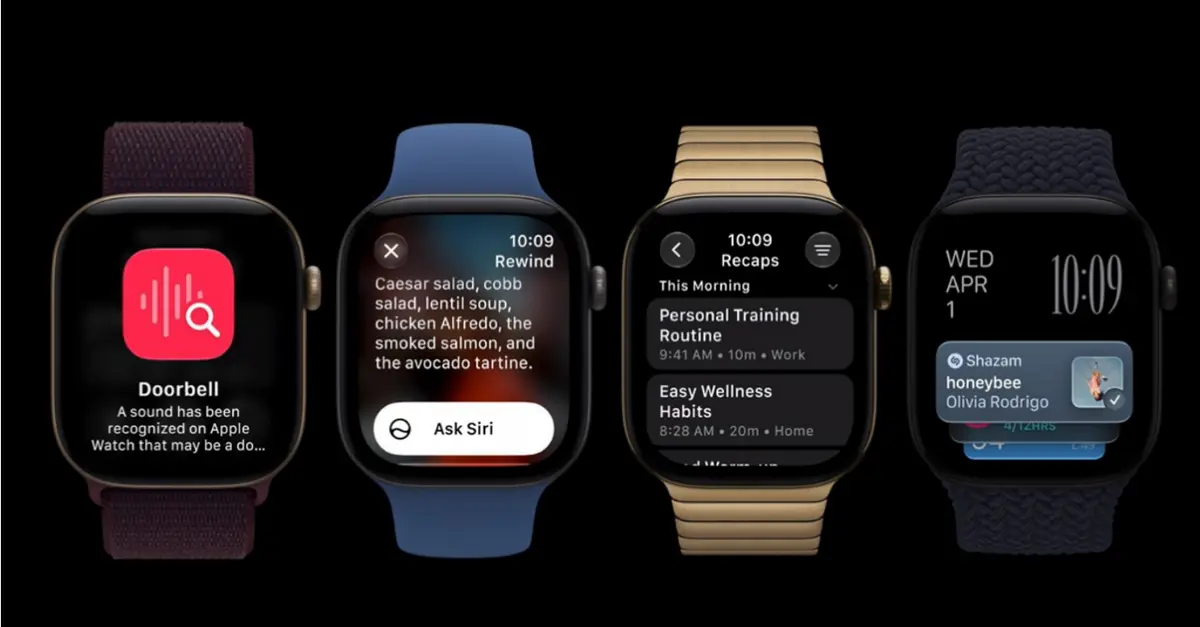
Audio Intelligence is a new set of audio-based AI features, all opt-in. Sound Recognition sends a notification for important sounds (sirens, alarms, doorbells, etc.) for users who are deaf or hard of hearing. Live Rewind lets the user see the previous 15 seconds of conversation as text, Siri Recap generates summaries of a user’s conversations throughout the day, and Shazam is now faster and automatic, identifying nearby music instantly without tapping the app or screen. With the new Secure Exclave, Apple says no audio is recorded or stored.
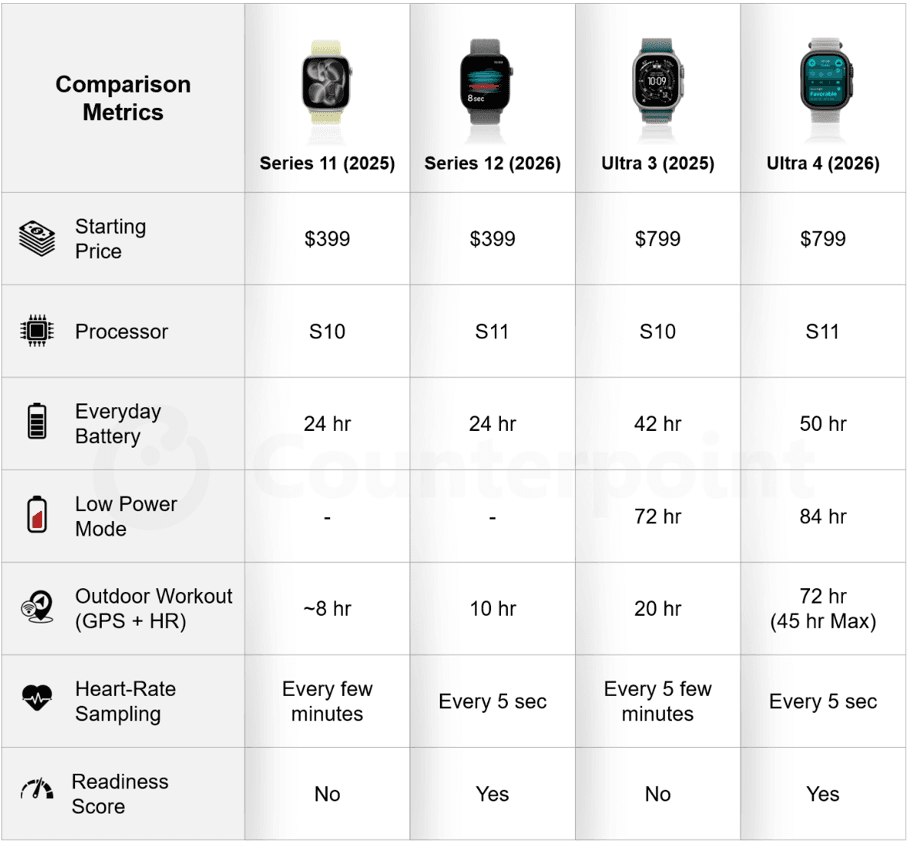
Apple has also improved the battery and charging. The Series 12 delivers up to 24 hours of everyday battery life (same as Series 11), but extends outdoor-workout tracking to 10 hours (up 25%) and charges faster – 15 minutes of charging now adds 12 hours (up 50%). The Ultra 4 improves from 42 to 50 hours of everyday use, from 72 to 84 hours in Low Power Mode, and adds an Extended Workout mode rated at 25 hours with full GPS and heart rate (up 25%), in addition to a 45-hour Max Extended mode for extended events. 15 minutes on the charger adds 18 hours for the Ultra 4.
The materials in the aluminum Series 12 models have been improved. They now get Ceramic Shield 2, which Apple rates 60% tougher than the Ion-X glass on Series 11. A ceramic case returns for the first time since 2019, in pearl white and night blue, alongside new dark bronze, black and light gold colors for the aluminum case and a new radiant gold color for the titanium case. The Ultra 4 remains in natural and black titanium, with a new Hermès Grand H titanium band designed to extend over a wetsuit.
WatchOS 27 launches September 14 with the new Siri AI rolling out as an English beta the same day. Notably, WatchOS 27 requires Series 9 or later, SE 3, or Ultra 2 or later, cutting off a significant number of users of popular older models like the first-generation Ultra. A redesigned Health app will launch later this year. It will feature an Insights tab that translates real-time biometrics into a 0-10 Readiness score, a Longevity tab that tracks biological "Health Age", and iPhone-camera-assisted Movement Evaluations for on-demand indoor VO2 max testing. Additionally, the app will feature an in-app, $119 Quest Diagnostics panel covering 50+ blood biomarkers, with proactive health alerts for perimenopause and menopause.
Key comparisons
Compared to last year’s launch of the Watch Series 11 and Ultra 3, which were focused on connectivity and health alerts, the new models this year centered on sensing and silicon upgrades. Two rumored features did not launch this year – touch ID in the side button and cuffless blood-pressure measurement, a feature long desired by many consumers.
What the data says
Apple enters this launch with momentum. According to Counterpoint’s Global Smartwatch Shipments Tracker, global shipments declined 4% YoY in Q2 2026, the first contraction in a year, driven by weakness in basic smartwatches and by premium users deferring purchases ahead of expected launches. However, Apple was the exception – shipments grew 14% YoY, the fastest among the top five brands, with growth in every region lifting its global share to 20.1% from 17.0% last year. The Series 11 and SE 3 together accounted for more than 80% of Apple’s global shipments in Q2, indicating that Apple’s volume is heavily weighted in the $201-$400 price band, not the Ultra.
Analyst takes
This launch is aimed at Apple’s installed base, not switchers. The upgrade drivers are strong – watchOS 27 drops support for anything older than Series 9, so Series 7 and 8 owners don’t get the new Siri and health features unless they buy the new hardware; the Health Sensing System is the first meaningful sensor change since the Series 8 temperature sensor; and readiness and HRV give Apple more credibility in the recovery-tracking pitch that has been pulling athletes toward Garmin (shipments up 11% in Q2) and ring vendors. Counterpoint’s Q2 data showed premium buyers holding back for a launch, and that pent-up demand now has a product to land on in Q4.
Unchanged pricing is the subtle headline. A new chip, new sensor array and a ceramic option at the same $399 and $799 entry points protect Apple’s mainstream volume at a time when the basic segment is shrinking and Huawei is consolidating share in China.
Health and sensing will be more important than AI for near-term adoption. Audio Intelligence is the most differentiated feature Apple showcased, but with Live Rewind and Siri Recap in late-2026 beta, English-only, iPhone 16-gated, and excluded from the EU at launch, it is a 2027 demand driver. Sensing, readiness and battery will be the key drivers for the Series 12 and Ultra 4.
Apple is expanding the Watch from a tracking device to a daily health companion. The new readiness score is particularly important because it converts multiple health signals into simple, actionable recommendations.