
Q3 2026 Highlights
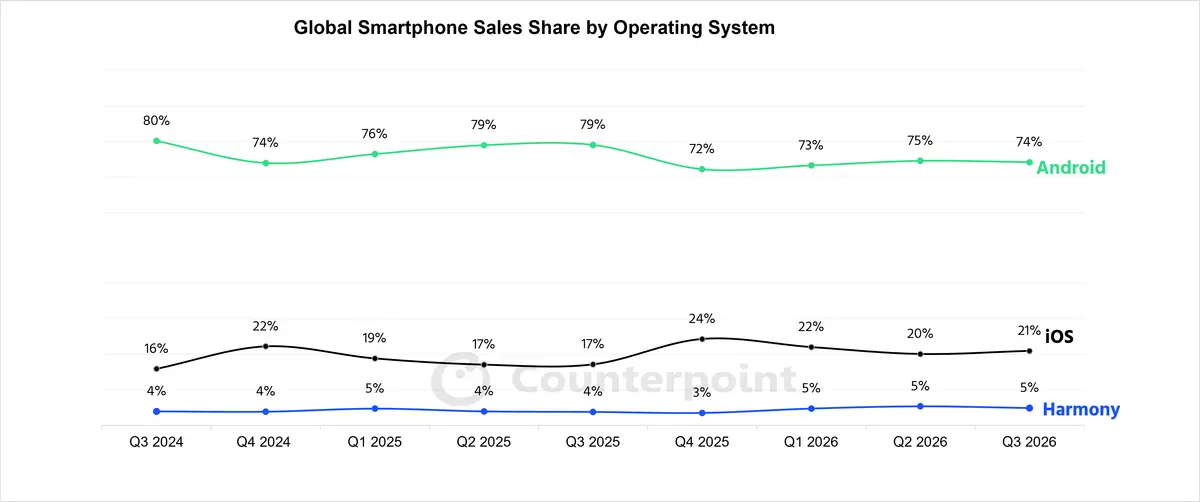
| Global | Q3 2024 | Q4 2024 | Q1 2025 | Q2 2025 | Q3 2025 | Q4 2025 | Q1 2026 | Q2 2026 | Q3 2026 |
| Android | 80% | 74% | 76% | 79% | 79% | 72% | 73% | 75% | 74% |
| iOS | 16% | 22% | 19% | 17% | 17% | 24% | 22% | 20% | 21% |
| Harmony | 4% | 4% | 5% | 4% | 4% | 3% | 5% | 5% | 5% |
Market Highlights
- Global smartphone sales continued to decline in 2026, with the downturn deepening to 16% YoY in Q3 2026. The decline was driven by the RAM supply crisis, which significantly impacted the entry segment and led to price increases across higher-tier segments.
- Android's share reached 74% for the quarter, down 5% from Q3 2025, reaching its lowest-ever Q3 level. Android’s broad presence across price tiers made it more vulnerable to the market slowdown than its peers. However, flagship launches from OPPO, vivo, and Xiaomi helped cushion the decline, while Samsung’s latest foldables further mitigated the decline.
- iOS reached its highest-ever Q3 market share of 21% as iPhone sales grew 2% YoY in Q3 2026. The iPhone 18 Pro series outperformed the iPhone 17 Pro series, supporting Apple's growth during the quarter. Despite price increases across the iPhone portfolio accompanying the new series launch, demand remained strong.
- HarmonyOS captured 22% of the Mainland China market as Huawei grew 12% YoY in Q3 2026, defying the broader market decline of 10%. Growth was driven by strong demand across price tiers, led by the Enjoy 90 Pro Max, Nova 16, and Mate 80 series. However, Huawei's September price increases may slow down the momentum in coming quarter.
iOS vs Android Quarterly Market Share for USA, China and India
US Market
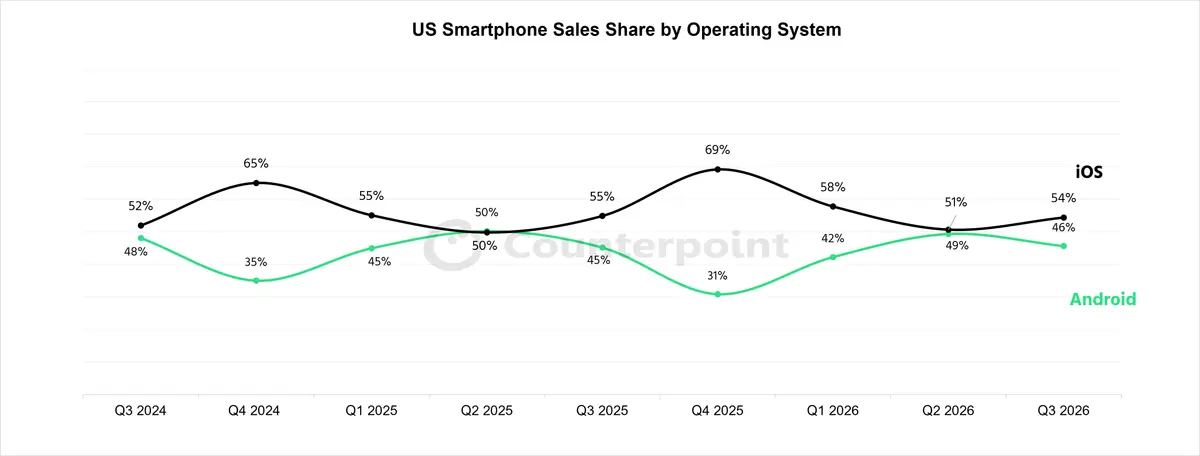
| US | Q3 2024 | Q4 2024 | Q1 2025 | Q2 2025 | Q3 2025 | Q4 2025 | Q1 2026 | Q2 2026 | Q3 2026 |
| Android | 48% | 35% | 45% | 50% | 45% | 31% | 42% | 49% | 46% |
| iOS | 52% | 65% | 55% | 50% | 55% | 69% | 58% | 51% | 54% |
China Market
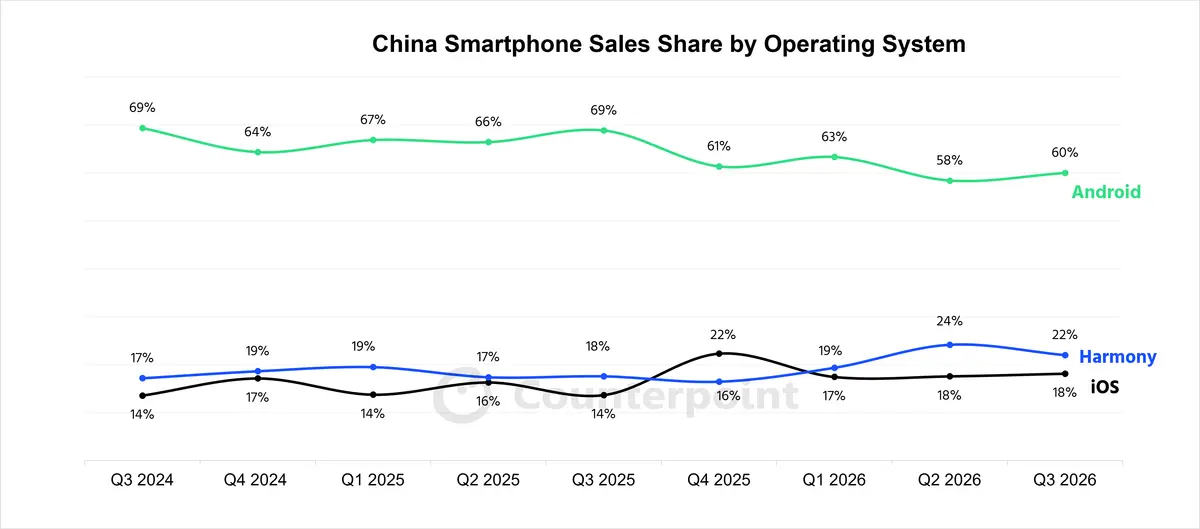
| China | Q3 2024 | Q4 2024 | Q1 2025 | Q2 2025 | Q3 2025 | Q4 2025 | Q1 2026 | Q2 2026 | Q3 2026 |
| Android | 69% | 64% | 67% | 66% | 69% | 61% | 63% | 58% | 60% |
| iOS | 14% | 17% | 14% | 16% | 16% | 22% | 17% | 18% | 18% |
| Harmony | 17% | 19% | 19% | 17% | 17% | 16% | 19% | 24% | 22% |
India
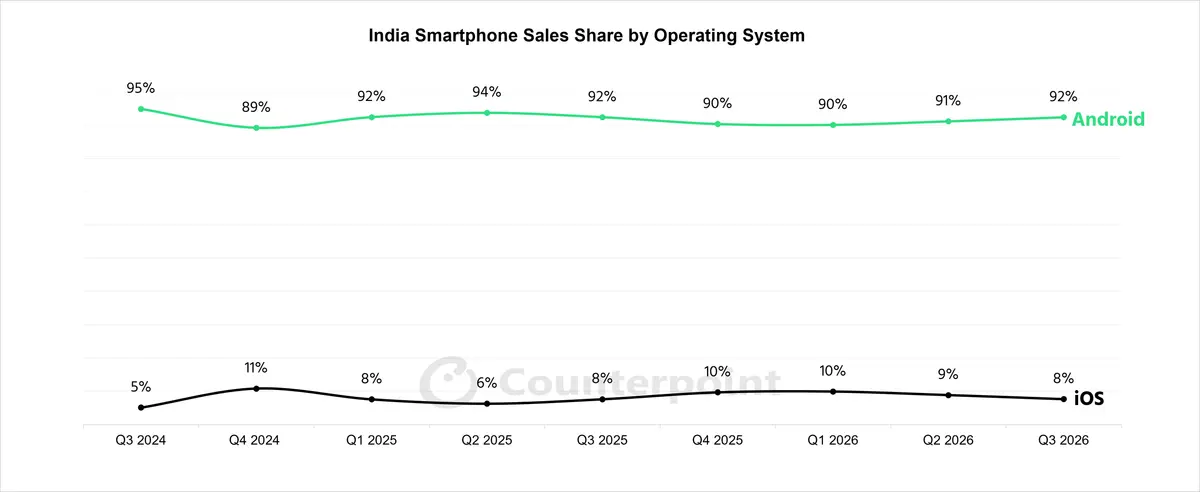
| India | Q3 2024 | Q4 2024 | Q1 2025 | Q2 2025 | Q3 2025 | Q4 2025 | Q1 2026 | Q2 2026 | Q3 2026 |
| Android | 95% | 89% | 92% | 94% | 92% | 90% | 90% | 91% | 92% |
| iOS | 5% | 11% | 8% | 6% | 8% | 10% | 10% | 9% | 8% |
This page presents quarterly insights into the worldwide smartphone OS scenario, featuring country-specific breakdowns for Android, iOS, and HarmonyOS, specifically focusing on the US, China, and India.
This data is a part of a series of reports which provide an insightful view of the changing trends in smartphone components and driving factors in the various price segments. It covers 99% of the global handset market with specification analysis.
For detailed insights on the data, please reach out to us at [email protected]. If you are a member of the press, please contact us at [email protected] for any media enquiries.
Q2 2026 Highlights

| Global | Q3 2024 | Q4 2024 | Q1 2025 | Q2 2025 | Q3 2025 | Q4 2025 | Q1 2026 | Q2 2026 |
|---|---|---|---|---|---|---|---|---|
| Android | 80% | 74% | 76% | 79% | 79% | 72% | 73% | 75% |
| iOS | 16% | 22% | 19% | 17% | 17% | 24% | 22% | 20% |
| Harmony | 4% | 4% | 5% | 4% | 4% | 3% | 5% | 5% |
Market Highlights
- Global smartphone sales declined 11% YoY in Q2 2026, with the slowdown worsening from a 4% YoY decline in the previous quarter. The decline was steepest in the entry-level and mid-tier segments, particularly across emerging markets, resulting in shifts in OS share.
- iOS recorded its highest-ever June quarter share at 20%, supported by steady demand for the iPhone 17 series and the launch of the iPhone 17e. Price increases by competing brands further strengthened the iPhone's value proposition, while trade-in offers and financing programs helped drive upgrades.
- Android's sales share fell 4% YoY in Q2 2026 to 75%, as competition from iOS and HarmonyOS intensified. The Samsung Galaxy S26 series performed better than its predecessor, mitigating the overall decline in Android's share. Chinese Android OEMs are shifting their focus to higher-value devices and scaling back activity in the entry-level segment to navigate RAM shortages and rising costs.
- HarmonyOS accounted for 24% of China's smartphone sales during the quarter and 5% globally. Higher component sourcing from local OEMs helped keep the brand better insulated from rising component prices and enhanced its competitiveness. The Huawei Enjoy 90 Pro Max contributed significantly to sales, while older smartphone models continued to sustain demand.
iOS vs Android Quarterly Market Share for USA, China and India
US Market

| US Share | Q3 2024 | Q4 2024 | Q1 2025 | Q2 2025 | Q3 2025 | Q4 2025 | Q1 2026 | Q2 2026 |
|---|---|---|---|---|---|---|---|---|
| Android | 48% | 35% | 45% | 50% | 45% | 31% | 42% | 49% |
| iOS | 52% | 65% | 55% | 50% | 55% | 69% | 58% | 51% |
China Market
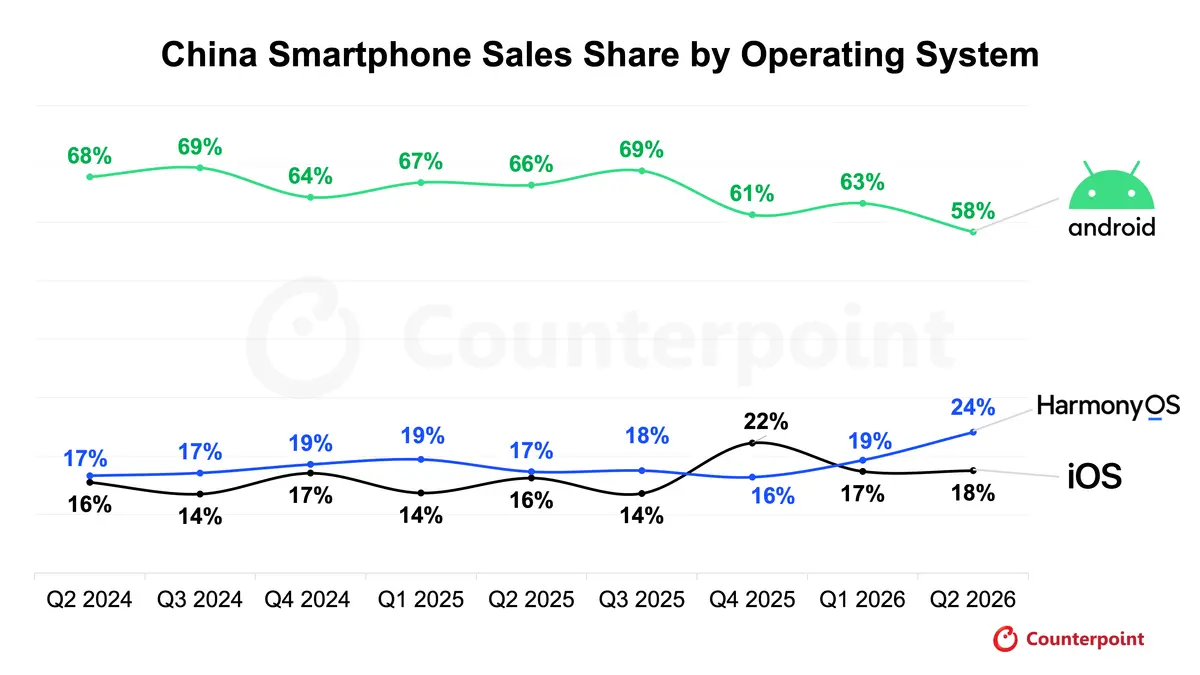
| China Share | Q3 2024 | Q4 2024 | Q1 2025 | Q2 2025 | Q3 2025 | Q4 2025 | Q1 2026 | Q2 2026 |
|---|---|---|---|---|---|---|---|---|
| Android | 69% | 64% | 67% | 66% | 69% | 61% | 63% | 58% |
| iOS | 14% | 17% | 14% | 16% | 14% | 22% | 17% | 18% |
| Harmony | 17% | 19% | 19% | 17% | 18% | 16% | 19% | 24% |
India Market

| India Share | Q3 2024 | Q4 2024 | Q1 2025 | Q2 2025 | Q3 2025 | Q4 2025 | Q1 2026 | Q2 2026 |
|---|---|---|---|---|---|---|---|---|
| Android | 95% | 89% | 92% | 94% | 92% | 90% | 90% | 91% |
| iOS | 5% | 11% | 8% | 6% | 8% | 10% | 10% | 9% |
This page presents quarterly insights into the worldwide smartphone OS scenario, featuring country-specific breakdowns for Android, iOS, and HarmonyOS, specifically focusing on the US, China, and India.
This data is a part of a series of reports which provide an insightful view of the changing trends in smartphone components and driving factors in the various price segments. It covers 99% of the global handset market with specification analysis.
For detailed insights on the data, please reach out to us at [email protected]. If you are a member of the press, please contact us at [email protected] for any media enquiries.


