

Der deutsche Automobilhersteller BMW hat am 5. September, vier Tage vor Beginn der IAA Mobility 2025 in München, sein mit Spannung erwartetes vollelektrisches SUV der nächsten Generation, den iX3, vorgestellt . Der iX3 ist eine bedeutende Markteinführung für BMW, da das Fahrzeug auf der mit Spannung erwarteten, futuristischen Plattform „Neue Klasse“ basiert, die CEO Oliver Zipse erstmals im Jahr 2021 angekündigt hat. Der iX3 hat technologische Durchbrüche erzielt, von der Elektrifizierung und dem digitalen Cockpit bis hin zur fortschrittlichen Fahrerassistenz. Die fortschrittliche Fahrerassistenztechnologie des Unternehmens wurde in enger Zusammenarbeit mit Qualcomm entwickelt und basiert auf der Snapdragon Ride Pilot-Lösung von Qualcomm.
L2+ – Der Weg zur vollständigen Autonomie?
BMW und Qualcomm haben Snapdragon Ride Pilot vorgestellt, ein automatisiertes Fahrsystem der Stufe 2+, das freihändiges Fahren im neuen iX3 ermöglicht. Snapdragon Ride Pilot basiert auf Qualcomms Snapdragon Ride System-on-Chips (SoCs) und enthält einen neuen, gemeinsam von BMW und Qualcomm entwickelten Software-Stack. Diese Markteinführung unterstreicht den wachsenden Trend unter Automobilherstellern, freihändige Level-2-Systeme einzuführen, wie sie beispielsweise bei Ford, GM und Nissan der Fall sind. Stellantis hat kürzlich sein eigenes STLA AutoDrive angekündigt.
Die fortschrittlichen Fahrfunktionen eröffnen Automobilherstellern lukrative Zusatzverkaufsmöglichkeiten. Ford beispielsweise meldet für sein BlueCruise-System Bruttomargen von über 70 % und verzeichnete im vierten Quartal 2023 ein Wachstum der gefahrenen Kilometer um 25 % gegenüber dem Vorquartal. Diese Margen sind besonders beeindruckend, wenn man bedenkt, dass viele Automobilhersteller derzeit mit der Umstellung auf elektrifizierte Modelle unter Margendruck stehen.
Das freihändige, aber aufmerksame System bietet sowohl Kunden als auch Automobilherstellern einen erheblichen Mehrwert. Typischerweise verwenden solche Systeme ein Setup mit fünf Kameras und fünf Radarsensoren (5V5R) und geringer Rechenleistung. Da für die Sensorik kein teurer Sensor wie LiDAR erforderlich ist , bleiben die Systemkosten niedrig. Mobileye bietet beispielsweise ein ähnliches Produkt namens Surround ADAS mit Stückkosten von 700 bis 800 US-Dollar an. Dies bietet OEMs die Möglichkeit, solche Funktionen und Technologien zu einem attraktiven Preis anzubieten oder sie in einem Abonnementpaket zu bündeln, das für Autokäufer attraktiv ist.
Früchte der langjährigen Partnerschaft
Qualcomm und BMW arbeiten seit 2021 gemeinsam an Fahrerassistenztechnologien und entwickeln gemeinsam einen Software-Stack auf Basis der später von Qualcomm übernommenen Perzeptionssoftware Arriver. Ziel dieser Zusammenarbeit war die Entwicklung einer sicheren, intelligenten und skalierbaren Plattform für assistiertes Fahren. An diesem Projekt waren 1.400 Personen aus fünf Ländern beteiligt, die schließlich mit der Einführung von Snapdragon Ride Pilot gipfelten .
Snapdragon Ride Pilot: Win-Win für beide
BMW
Europäische Autohersteller wie BMW spüren den Druck, da ihre chinesische Konkurrenz, darunter BYD, NIO und Xpeng, weiterhin aggressiv mit Fahrzeugen der neuesten Technologie und Ausstattung in die europäischen Märkte expandiert . Daher könnte der Zeitpunkt des Debüts von Snapdragon Ride Pilot für BMW zur Verbesserung seiner Markt- und Technologiepositionierung nicht günstiger sein. Obwohl BMW in seinem BMW 7er bereits die autonome Fahrtechnologie der Stufe 3 eingeführt hat, sind die Verkaufszahlen solcher Fahrzeuge in Deutschland nach wie vor sehr niedrig. Laut BMW liegt die Nutzung des Autobahnassistenten in Deutschland jedoch bei über 50 % und in den USA bei über 40 %. Als die Funktion für autonomes Fahren angeboten wurde, nutzten BMW-Kunden in Deutschland den Dienst während über 65 % ihrer Fahrzeit, während die Kunden in den USA ihn für fast 50 % nutzten.
Mit der Neue Klasse-Familie hat BMW eine Zonenarchitektur eingeführt, die aus insgesamt vier Hochleistungscomputern besteht, die von BMW auch „Superbrains“ genannt werden. Die „Superbrains“, die die automatisierten Fahrfunktionen des iX3 antreiben, basieren auf dem Qualcomm Snapdragon Ride SoC und bieten eine 20-mal höhere Leistung als der vorherige ADAS-Chip. Während in Zusammenarbeit mit Qualcomm ein Software-Stack für automatisierte Technologie entwickelt wurde, hat BMW Fahrrichtlinien und Sicherheitsleitplanken entwickelt, um sein Engagement für sicheres Fahren zu gewährleisten. Qualcomm stellte fest, dass Snapdragon Ride Pilot die Standards für Automotive Safety Integrity Level (ASIL) und Funktionale Sicherheit (FuSa) erfüllt und auch dem FMVSS 127-Standard und NCAP in den USA sowie der Fahrerkontroll- und Assistenzsystem-Verordnung (DCAS) der UNECE entspricht.
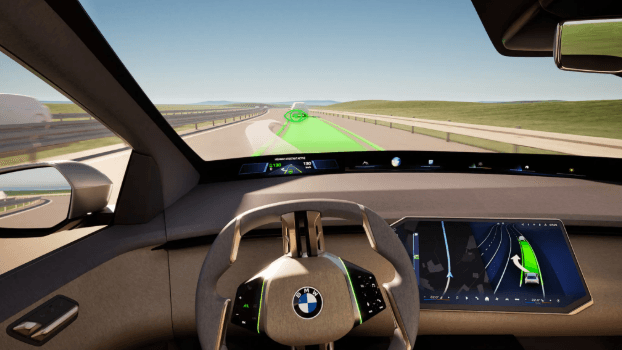
Der iX3 bietet sowohl einen Autobahnassistenten als auch einen Stadtassistenten. Dabei erkennt das System eine rote Ampel, stoppt das Fahrzeug und startet es anschließend wieder. Der Autobahnassistent ist in sieben europäischen Ländern verfügbar, während der Stadtassistent zum Zeitpunkt der Markteinführung nur in Deutschland verfügbar war. Darüber hinaus bietet BMW durch den Einsatz von KI-Software ein umfassendes Spektrum an Fahrassistenzsystemen, die kontextsensitives Fahren für komplexe Aufgaben wie Spurwechsel und Überholen ermöglichen. Mit diesem umfassenden Paket positioniert sich BMW als erste Wahl für Kunden, die Wert auf sicheres und intelligentes Fahren legen.
Qualcomm
Die Einführung von Snapdragon Ride Pilot könnte sich als entscheidender Moment für Qualcomms Geschäft mit Fahrerassistenzsystemen (ADAS) erweisen , da es dem Unternehmen ermöglicht, eine bewährte, vollwertige Fahrlösung der Stufe L2+ anzubieten, deren Sicherheit von BMW validiert wurde. Das Unternehmen hat angekündigt, dass die Snapdragon Ride Pilot-Technologie auch anderen Automobilherstellern und Tier-1-Zulieferern zur Implementierung zur Verfügung steht. Sie können aus einem einsatzbereiten Funktionsumfang wählen oder eigene Fahrrichtlinien entwickeln.
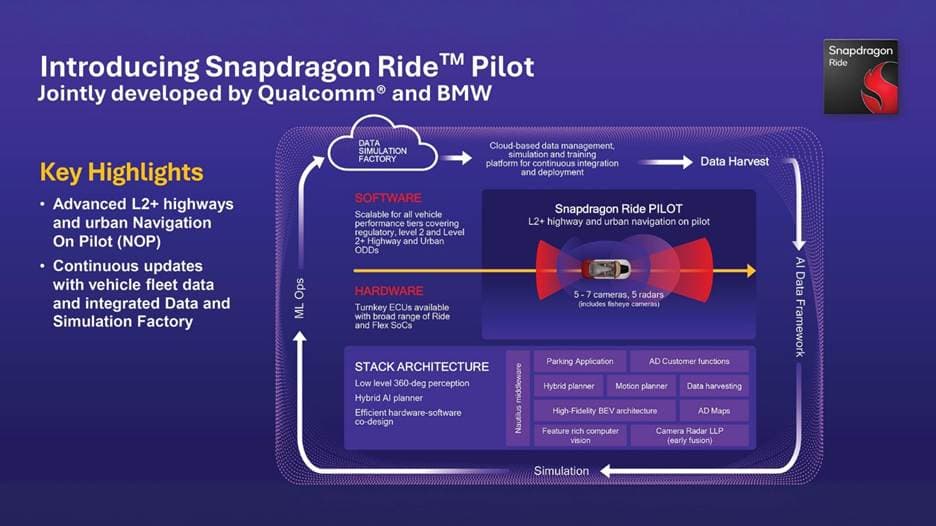
Snapdragon Ride Pilot wurde in 60 Ländern validiert und soll bis 2026 auf über 100 Länder ausgeweitet werden. Das System wird kontinuierlich mit Daten aus Fahrzeugflotten sowie synthetischen Daten und KI-basierten Simulationen trainiert. Dieser Ansatz ermöglicht der Plattform, effektiv zu lernen und sich anzupassen, indem eine Datenschwungradstrategie genutzt wird, die eine kontinuierliche Feedbackschleife zur Modellverbesserung schafft.
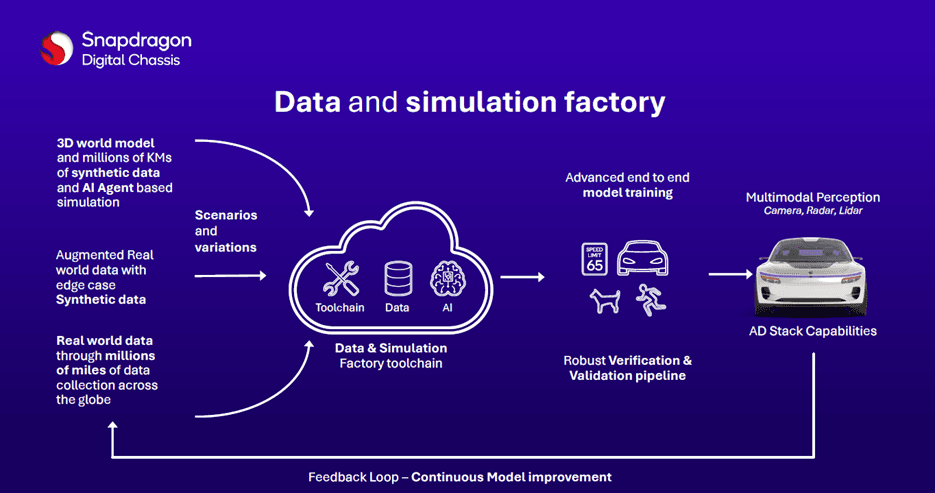
End-to-End-Autonomes Fahren (E2E AD) sorgt in der Branche für großes Aufsehen, da viele chinesische OEMs diesen Ansatz nach Tesla übernommen haben. Qualcomm verfolgt einen hybriden und fortschrittlichen Ansatz, der regelbasierte Pfadplanung, Steuerung und KI-basierte Wahrnehmung kombiniert und so ein hohes Maß an Sicherheitsvalidierung und Vertrauen bietet. Der Wahrnehmungsstapel verfügt über eine Bird-Eye-View-Architektur (BEV), die erstmals von Tesla implementiert wurde .
Abschluss
In der heutigen Automobilwelt werden Partnerschaften zu einem entscheidenden Erfolgsfaktor, da zwei Partner zusammenkommen, um Neues zu entwickeln und dabei die Stärken des jeweils anderen zu nutzen. Die Zusammenarbeit zwischen BMW und Qualcomm führte zur Entwicklung der Snapdragon Ride Pilot-Plattform, deren Erfolg als Beleg für das ADAS-Angebot von Qualcomm dienen wird. Gleichzeitig verfügt das Unternehmen über die nötigen Voraussetzungen, um seinen Kundenstamm zu erweitern, da immer mehr OEMs fortschrittliche Fahrfunktionen einführen möchten.
Mit dem iX3 hat BMW seine Absichten deutlich gemacht: Das Unternehmen ist bereit für den Umstieg auf software- und technologiebasierte Fahrzeuge. Die Partnerschaft des OEM mit Qualcomm bietet seinen Kunden neue Technologien wie City Assist Driving und Symbiotic Drive, ein System, das die Aktionen des Fahrers mit KI-gestützter Software integriert und so ein nahtloses und intuitives Fahrerlebnis schafft.

