

- Brands like Motorola and Amazfit are adopting lightweight operating systems instead of complex app ecosystems to deliver extended, multi-week battery life.
- Smart rings are moving beyond basic health tracking to become productivity companions, offering features such as voice notes, meeting transcription, and gesture control.
- Emerging players like Luna Band and Speediance are reshaping the market with premium, screen-free trackers that do not require subscriptions.
- Overall, the wearables industry is shifting away from screen-heavy “wrist computers” toward compact, AI-driven devices designed for long battery life and seamless health and productivity tracking.
Introduction
At CES 2026, the wearables industry witnessed a crucial turning point with the collective trend moving toward niche building rather than offering one device for all. In smartwatches , Amazfit and Motorola are directly challenging tech giants by prioritizing multi-week battery life and premium features at value prices. Additionally, strategic partnerships, such as Moto's collaboration with Polar, highlighted the focus on specific consumer segments. Pebble's return highlighted growing demand for minimalist, notification-first watches .
The industry, previously dominated by smartwatches , is now increasingly focusing on other device types, namely smart rings and fitness bands, with smart rings receiving notable attention this year.
Finally, fitness bands such as Luna Band and Speediance Strap are entering the market with non-subscription models, providing consumers more options beyond the subscription-based Whoop-dominated market. This blog will guide you through the key launches across all categories.
Key Highlights
Battery Life Over App Ecosystems: A move toward simple operating systems and e-paper displays, like the Moto Watch and Pebble Round 2, focuses on multi-week battery life instead of the app-heavy features of Wear OS or WatchOS .
Wearables as AI Inputs: Devices are changing from passive trackers to specialized active AI tools, with the Pebble Index 01 and Vocci AI ring focusing on voice recording and meeting notes rather than traditional health tracking.
No Subscription Models: Brands like Luna and Pebble address subscription fee concerns by offering complete hardware solutions with no recurring monthly fees, positioning them as direct challengers to Whoop 's subscription model.
Clinical Trust Through Partnerships: Tech companies are working with medical and sports science firms. For example, Motorola has partnered with Polar to prove its data is accurate and to build trust in the health market.
Let us now explore the key wearables showcased at CES 2026 in greater detail:
1. Smartwatches
Innovation in smartwatches has shifted from "new sensors" to better endurance and strategic partnerships.
Amazfit Active Max
Source: Huami
- The smartwatch features a large 1.5-inch AMOLED display with 3,000 nits brightness and supports offline mapping, making it suitable for outdoor environments. It also offers up to 25 days of battery life with typical use and 64 hours of continuous GPS tracking.
- Additionally, it includes BioCharge Energy Monitoring for Better Readiness, which dynamically adjusts throughout the day based on workouts, activity level, and stress. The watch offers 170+ workout modes and AI-powered Zepp Coach.
- Physically, the watch features an aluminum alloy case design, physical buttons, and a highly responsive touchscreen.
- By offering premium features such as offline maps, 3,000 nits brightness, and AI coaching at a price of $169, Amazfit aims to dominate the value segment.
- The watch also addresses the battery issue, a major consumer pain point, that major brands like Apple and Samsung have not adequately tackled. This approach will help Amazfit attract more customers and strengthen the brand’s market position.
Moto Watch (2026)
Source: Motorola News
- The smartwatch features a round 47mm display with a sleek stainless-steel crown and aluminum frame, offering up to 13 days of battery life (up to 7 days with always-on display).
- The key highlight of the watch is its partnership with Polar, which helps fitness-conscious consumers track various metrics such as calories, training load, sleep, and recovery. For running enthusiasts, the watch also features dual-frequency GPS to better track and record their runs.
- The watch will start at $116 and will be launched across Europe, the Middle East, Africa, Latin America, Asia-Pacific, and North America in the coming weeks, with US availability beginning January 22.
- Moto Watch has abandoned WearOS in favor of a fitness-first approach to deliver extended battery life. Like Amazfit, Motorola is addressing the consumer battery pain point to attract mass-market customers with an affordable price and sleek design.
- The Polar partnership is expected to strengthen Moto's market position due to Polar's strong presence in the fitness industry.
Pebble Round 2
Source: repebble.com
- Pebble is making a comeback with Pebble Round 2, following the original Pebble Round launched in 2015. The successor represents a significant leap forward, offering a 1.3-inch e-paper always-on reflective color display with 10-14 days of battery life.
- At just 8.1mm thick with no bezel, it prioritizes aesthetics and comfort over comprehensive fitness tracking (notably, it lacks a heart rate monitor).
- The watch is available for pre-order at $199, with shipments expected to begin in May 2026.
- While most brands focus on creating a smartphone experience on the wrist, Pebble's commitment to delivering a notification-first smartwatch sets it apart and appeals to niche customers seeking minimal device usage. The nostalgia factor will also contribute to the watch's sales appeal.
2. Smart Rings
The smart ring sector saw the most aggressive expansion in the wearable industry, diversifying into specialized use cases ranging from medical grade to productivity focus rings.
RingConn Gen 3
Source: Ringconn
- Ringconn has introduced Ringconn Gen 3, its next iteration, featuring multiple enhancements over its predecessor.
- The new ring includes a built-in vibration motor for smart haptic alerts, which vibrates to notify users of any health anomalies.
- The ring now also features hypertension tracking (currently in beta testing) and is available in more sizes, ranging from 6 to 15, with improved battery life of 10-12 days.
- The price has not yet been announced, but the ring is expected to remain subscription-free.
- With the introduction of a vibration motor for health alerts and blood pressure tracking, Ringconn is strengthening its position in health monitoring to compete with industry leaders like Oura. The subscription-free model, combined with extended battery life, is expected to significantly expand Ringconn's market share.
Pebble Index 01
Source: repebble.com
- The ring features a microphone and button designed solely to capture quick thoughts, memories, and reminders as voice notes.
- Unlike other smart rings, Pebble Index 01 is marketed as an external memory device rather than a health and fitness tracker ring.
- The ring is powered by a non-rechargeable Silver Oxide battery with about two years of battery life.
- The ring is available for pre-order at $75, with worldwide shipping beginning in March 2026. After shipping commences, the price will increase to $99.
- It is being marketed as a memory collector, appealing to researchers, authors, students, and professionals who want to capture their thoughts instantly without accessing their phones. This positioning is expected to create a new sub-segment within the smart rings industry.
Vocci AI Ring (by Gyges Labs)
Source: Vocci
- The Vocci AI Ring is designed to record, transcribe, and summarize work meetings and conversations, while generating actionable insights.
- The ring is 2.8mm thick with IPX4 water-resistant metal construction. It features a button to initiate recording and is powered by Automated Speech Recognition (ASR) and Large Language Models (LLM) to support over 112 languages.
- The ring offers up to 8 hours of continuous recording on a single charge, and quick-charge technology enables full charging within 30 minutes.
- Pre-orders are expected to begin in February 2026 at a launch price of $199, with shipping commencing in April 2026.
- Like Pebble Index 01, the Vocci AI Ring will create a sub-segment of single-purpose smart rings targeting a niche consumer base. With AI integration and support for over 100 languages, the ring is expected to achieve wide global adoption.
Dreame AI Rings (Series)
Source: Dreame
- Dreame, a smart home company, has expanded its portfolio by entering the smart ring segment with the introduction of three AI-powered smart rings: an AI Smart Ring (general health and haptics), an AI Health Ring (medical-grade ECG), and an AI NFC Ring (access and payments).
- The AI Haptic Ring features a vibration motor for notifications, alarms, and health alerts, and supports air gesture controls.
- The AI ECG Ringis a medical-grade ring that generates ECG reports to detect arrhythmias and atrial fibrillation. It also features a "Family Care" mode for remote health tracking and emergency alerts.
- The AI NFC Ring functions as a digital key, enabling use as car keys, house locks, business cards, and more.
- Dreame's entry into the smart ring market reflects growing interest from both the brand and consumers toward smart rings . By offering multiple specialized rings, Dreame is positioning itself to serve diverse consumer segments based on their specific requirements.
3. Fitness Bands
The screenless band industry is reforming to a subscription-free model, while focusing on providing better user experience and required support.
Luna Band
Source: Lunazone
- The Luna Band is described as an AI-first, voice-led band that tracks health metrics and provides real-time health guidance.
- The band is powered by LifeOS and features 24/7 AI coaching to deliver health guidance via voice commands with Siri integration. With Siri, users can directly log their meals, symptoms, and mood through natural conversations.
- The band is priced at a one-time cost of $149 and is expected to ship in early 2026.
- The subscription-free model directly competes with market leader Whoop. Combined with its advanced features, the Luna Band is expected to attract consumers seeking a more affordable yet technologically sophisticated alternative to Whoop.
Speediance Strap
Source: Speediance
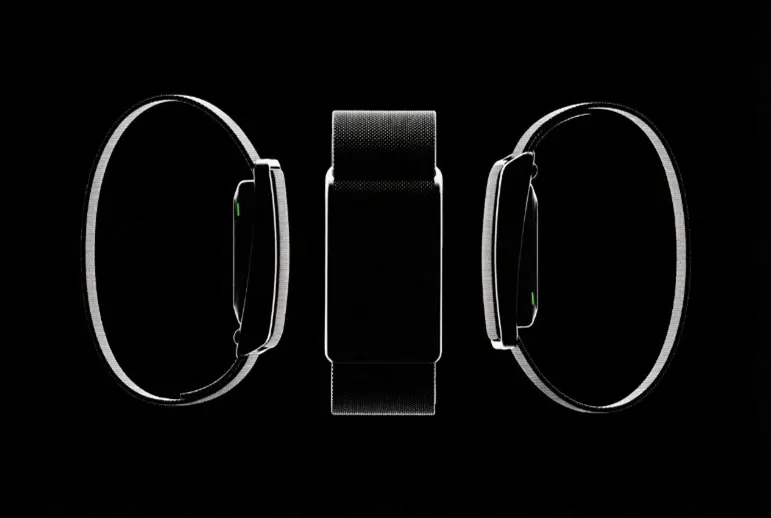
- Speediance showcased a fitness band that collects data on training, sleep, and body temperature to provide daily training and recovery recommendations. The band recognizes various exercises and movements, tracks training volume, and delivers performance insights to help users understand how their bodies respond to different exercises and training methods.
- The band also monitors physiological responses, including stress and core body temperature, to provide personalized workout and recovery suggestions.
- Speediance plans to launch the Strap through a Kickstarter campaign in spring 2026.
- This fitness-focused band targets health and fitness enthusiast consumers, and its multi-level (from workout to recovery) suggestions are expected to capture market share within this specialized segment.
Conclusion
CES 2026 signals the industry's shift from "all-in-one" devices to specialization and intelligence. The market is maturing, moving toward highly specialized devices that serve niche consumer segments while delivering extended battery life and improved endurance. AI integration has accelerated, enabling more proactive health monitoring. The focus has shifted from data collection to interpretation and delivery of personalized insights. Based on the product launches showcased, the wearables industry is expected to fragment into distinct sub-segments, each targeting specific consumers and addressing their unique needs.


