ENG
Report

Samsung Galaxy S26 Series First Impressions: Smarter AI, Stronger Privacy Focus

0
February 27, 2026
  • With the Galaxy S26 series, Samsung has taken the next step in enabling agentic AI with features like ‘Now Nudge’.
  • While the entry-level memory variant of the Galaxy S26 Ultra comes at the same price as last year’s, prices have increased for the base and Plus variants.
  • Privacy Display was the hardware highlight of the launch event, along with faster charging speeds, which will instantly impact usability for the better.


The launch of Samsung’s latest flagship series, the Galaxy S26 series, happened under more scrutiny than usual. The launch, later than in years past, is an indicator of how smartphone OEMs will react to the memory crisis going forward.

For AI, Samsung is shifting its focus from foundational AI claims to day-to-day utility, increasingly with an eye to cross-app capabilities. By repositioning Bixby and setting its ecosystem up to integrate multiple AI partners, Samsung is taking steps to remove friction for users to engage with AI where and how they want.

Lastly, the Galaxy S26 Ultra comes with Privacy Display, a built-in screen protector that helps prevent others from seeing content on the screen. The ability to fine-tune the feature to specific apps brings instant value to a broad range of users and apps.
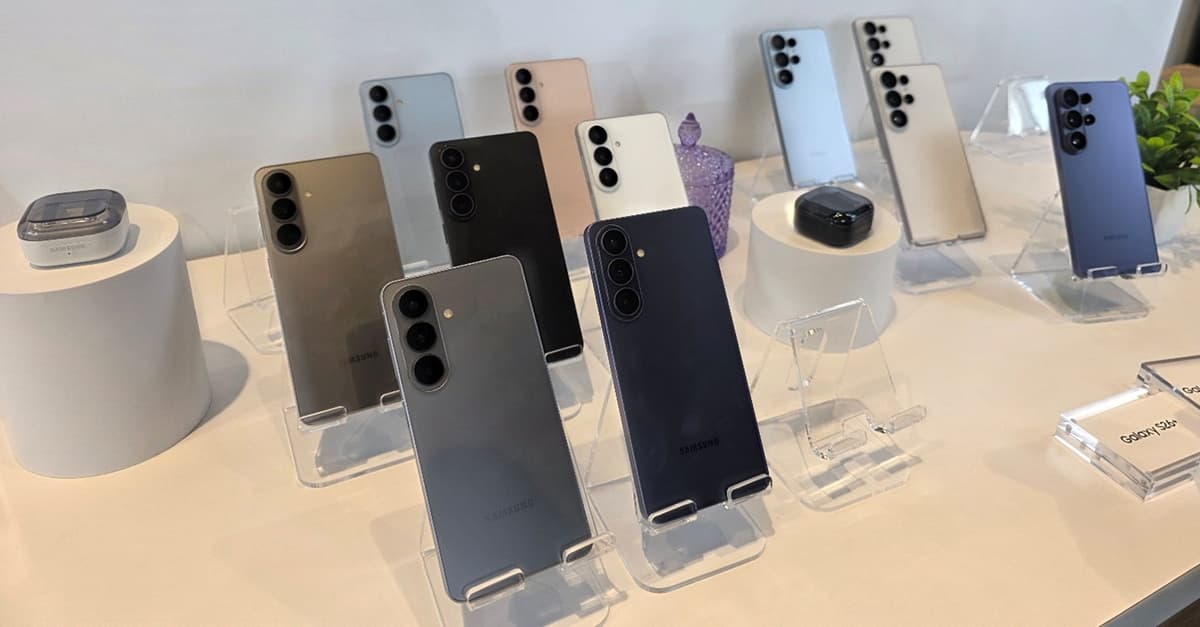
Samsung Galaxy S26-series line-up. (Photo Source: Counterpoint Research)

Samsung makes ‘Now Brief’ more useful with ‘Now Nudge’

Samsung’s updates to ‘Now Brief’ with the new ‘Now Nudge’ feature signal the next evolution in how consumers interact with mobile AI. Rather than requiring users to actively prompt a chatbot, Samsung is leaning into proactive, contextual intelligence. By predicting user needs and surfacing actionable “nudges” based on daily routines and contextual information, Samsung translates AI promises into immediate user benefits. The key benefit is reduced friction for users to onboard to multimodal AI features, bringing these features from deep in the settings to the front of the user interface.

An open AI ecosystem strategy

Samsung is slowly expanding its partnership network by engaging directly with multiple third-party AI service providers, moving beyond the sole reliance on Google. The collaboration with Perplexity integrates it into the Samsung Browser, creating a hot word activation process.

Instead of forcing users into a single AI ecosystem, Samsung is integrating multiple providers directly into the core Galaxy UX. This positions the Galaxy S26 series as a versatile, provider-agnostic platform, appealing to power users who have specific preferences for different AI models depending on the task, and to those users who are looking for a solution to a problem, regardless of who provides it.

With this strategy, Samsung is now on a similar path to Motorola, which positioned Moto AI as an AI management interface that is provider-agnostic. With it, Motorola wants to remove friction for users in finding the right AI service for a specific task. Samsung, too, is positioning its devices as AI provider-agnostic and could easily partner with other companies down the road in addition to its current partners.

Hardware innovation that matters: Privacy Display

While AI dominates the software narrative, the introduction of Privacy Display is a standout hardware differentiator. Shoulder-surfing and public data exposure are real concerns for consumers and enterprise users alike; this feature brings immediate, real-world value.

It is a prime example of hardware-based privacy that users can see and trigger instantly, offering a tangible selling point on the retail floor that is much easier to explain to the average consumer than complex AI architectures. Privacy Display will also be music to the ears of CTOs who try to balance their workforce's need for connectivity and instant access to on-device and cloud-based AI, with the potential threat created by exposed, visible information on handset screens in the world.

Prices increase

Samsung managed to keep the entry-level pricing for the S26 Ultra flat YoY, but the base and Plus variants' prices have increased. Samsung removed the 128GB variant for the base version, creating the lowest S26 price of $899.99*, $40 higher than the same configuration of the S24 last year. The entry variant of the S26 Plus increased by $100, or 10%, compared to its predecessor. Across the Ultra range, price increases were less steep than for the S26 Plus. Samsung is likely trying to move buyers from the base and Plus versions to Ultra – the first two variants only received incremental updates (when considering Snapdragon versions, the Exynos-powered versions on 2nm processors will be a bigger internal hardware upgrade), and the most significant improvements, like Privacy Display, are reserved for the new Ultra.

Challenging outlook for the global smartphone market

Samsung hopes it can capitalize on the momentum of its flagship devices through 2025, in particular the Ultra, as the outlook for the global smartphone market for 2026 is dampened by the increasing impact of the memory crisis.

The S26 series’ launch sets Samsung up to further drive AI features deeper into the user experience, creating use cases that are unlikely to reach previous generations to their full potential.

It will be critical for Samsung to effectively manage its expanding ecosystem of third-party AI providers to avoid creating a confusing fabric of overlapping services, too hard for consumers to distinguish and utilize fully.

Lastly, the instant positive reaction to Privacy Display shows that there are still hardware areas available for innovation, and that do not require an “AI” as a tagline but can still provide immediate value to users.

*Prices discussed here are for the US market. There may be regional variations.


Category

Industry

Smartphone

Service

Standard

Report Type

Report

Time Period

Other

Receive our insightful weekly newsletter and stay ahead of the competition.

Author

Gerrit Schneemann

twitter_icon
linkedin_icon

Gerrit has 17 years of experience in the telecoms and consumer electronics industry. With a long history of covering the global smartphone market, he provides clients with strategic insights and advice impacting short and long-term business needs and decisions. Before joining Counterpoint Research, he spent over a decade at iSuppli, IHS/Markit and finally Omdia, before a short stint at GfK Boutique.