

Gaming as an industry has been growing in leaps and bounds globally. While consoles and PCs are widely used platforms, the smartphone gaming demographic is growing the fastest and this is particularly seen in Southeast Asia. The region also looks to be more promising as there are many factors propelling the current growth, chief among them being a whole new demographic adopting smartphones, getting digitally savvy and getting to know the gaming world. There are other important factors like increased internet connectivity and favorable changes accelerated by the COVID-19 pandemic in the last two years.
There are many other reasons at the country level as well, but there is one undeniable factor that would not have made this growth possible – smartphones. According to Counterpoint Research’s Southeast Asia Smartphone Tracker, key Southeast Asian countries’ (Indonesia, Thailand, Philippines, Malaysia and Vietnam) smartphone shipments in 2021 were back to 2019 levels.
 Source: Counterpoint Research Southeast Asia Smartphone Tracker
Gaming smartphones continue to see an increase in demand. During the festive season in Q4 2021, gaming smartphones saw a 270% YoY increase. The affluent gamer demographic is growing exponentially, and this trend is likely to increase with all the focus that gaming is getting in these markets. Along with consumer interest, there is an increased focus on e-gaming from governments and industry players across the ecosystem. Currently there are more than 102 million active smartphone gamers in the 5 key Southeast Asian countries and this number is bound to increase in the coming years.
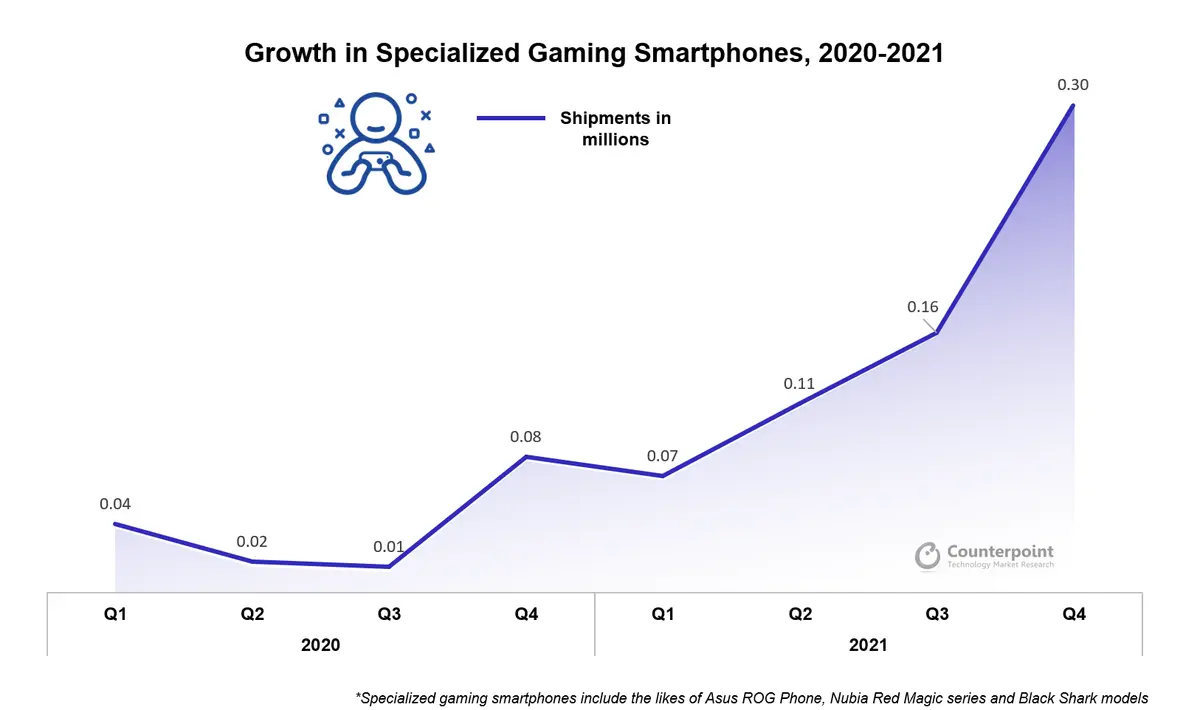
Source: Counterpoint Research Southeast Asia Smartphone Tracker
Indonesia, Malaysia, Thailand, Vietnam, Singapore, and the Philippines are the six most significant countries for mobile gaming in Southeast Asia. Whether they are small quick games to pass some time or more engaging strategy and shooter-type games, the gamer consumer base has gone up in the region just as fast as smartphone adoption over the last two years.
Factors pushing gaming growth over the last two years:
- Investments in internet penetration, especially in Tier 2 and Tier 3 cities.
- Increased focus on 5G infrastructure growth and adoption.
- Consistently growing demand for smartphones, gaming smartphones in particular.
- An effective way to pass the time when stranded at home during pandemic lockdowns and restrictions. For many people, less work or no work is a motivation to play on smartphones.
- An escape from ongoing volatility in macroeconomic factors like inflation, sustained COVID-19 repercussions, war situation in Europe and other more country-level factors.
- Widening choice with multiple gaming genres (like strategy, shooting and e-sports) across multiple platforms (mobile, PC, console and even television).
- Types of games all the way from casual to elaborate heavy-duty games that make a player a full-time earning pro-gamer. Some countries in this region also promote international gaming tournaments.
Connectivity and Ecosystem Initiatives:
Connectivity has played a vital role in increasing online gaming in the region. Fixed broadband connections have seen tremendous growth in the last two years along with a jump in new subscribers. Tier 2 and Tier 3 cities in the key SEA countries have seen some major growth as well. Broadband, whether fiber or fixed wireless, makes up more than 38% of the base in these key SEA countries. 5G connectivity is being improved starting with metro and Tier 1 cities. 4G connectivity is being increased throughout these countries as well. All this has played a major role in pushing the gaming culture irrespective of geography, age, gender, or economic background of the user.
OEMs have understood that a good gaming experience is supposed to be a necessity even for the casual gamer and not just the heavy-duty gamer.
Esports is big in the Philippines. realme, one of the top smartphone brands in the country, has partnered with the national team SIBOL for esport tournaments. realme itself has its pro-gaming tournament ‘Realme Mobile Legends Cup’ in the country.
Infinix is an upcoming brand in most Southeast Asian countries. Its focus on gaming models has led to the brand being considered for low-range to mid-range smartphones for gaming. Gaming smartphone biggies like Asus have said that the gaming smartphone business is not yet profitable for them, but they are still sticking to their image and launching more gaming phones.
Operators like Dtac in Thailand are offering gamers a specialized package with maximum speed and special internet lanes to make sure excess usage does not result in lags.
Top semiconductor companies Qualcomm and MediaTek have been focusing on the gaming consumer for a while now with gaming-related chipset versions of their standard offerings. Even chipset makers like ARM have been considering gaming as a motivation behind future tech. ARM recently came out with a gaming-specific chip.
The Changing Ecosystem:
There is a mix of low-end to high-end smartphone users in each of the SEA countries, but every country shows different characteristics and preferences in gaming genres. Southeast Asia’s consumer base is maturing. Indonesia and Thailand are the region’s largest revenue earners, followed by the Philippines and Malaysia. The Indonesian market is not only the region’s largest but also the fastest growing. In Southeast Asia, the younger population, which used to play smaller games on cheaper phones, is upgrading to mid-tier phones and preferring more heavy-duty games.
It is already established that SEA is a huge gaming market with more potential but there are many factors changing this volatile tech trend currently.
Trends changing the gaming ecosystem:
- Female gamers lead male gamers in many areas of the region. Most avid gamers can be found between the ages of 25 and 60. The bulk of this demographic in the region usually does not have a very high-priced smartphone. This means that even low-range to mid-range smartphones are being used for gaming and not necessarily just for casual games.
- Increase in video content related to gaming, with the rising viewership on online platforms such as Twitch and YouTube, is resulting in marketing initiatives across platforms, apps and games.
- Cloud-based gaming and interconnectivity of gaming platforms are likely to affect device purchases in the coming year. There is an opportunity for consumers to opt for phones with lower specifications. As cloud gaming increases its footprint, gamers will only need a steady, fast internet connection.
- To counter the frequent churn due to higher boredom levels in casual games, more variety is now being introduced in these games. Game makers are investing in research, marketing campaigns and, more importantly, associating with the right players in the ecosystem.
- Consumers are actively demanding the capability to play heavy-duty console and PC games on mobile platforms. This is a big opportunity for smartphone OEMs especially with growth in 5G connectivity.
Gamers and their Smartphones:
 Source: Counterpoint Research
Gamers who are invested in heavy multiplayer graphics online games like PUB G make up a smaller portion of the pie in this region. Instead, games like Subway surfer, Mobile legends, Arena of Valor, Roblox and Free Fire are played the most.
Gaming companies are making sure that smartphone versions of their games are available and that the hardware requirements need not be too high to enjoy these games on the mobile phone. Multiplayer gaming platforms on mobiles are nascent in this region as of now but as the telecom sector advances, this gaming preference is set to grow.
5G and Gaming:
5G penetration into gaming will be a slow process for another 2-3 years, especially for major markets like Indonesia. While Singapore is leading the curve in 5G, Thailand and the Philippines are more capable of advancing with 5G in gaming. The future of cloud gaming and multiplayer mobile setups, however, is bound to remain bleak in this region as compared to the West.
The 5G share in monthly smartphone shipments is likely to reach well above 45% by the end of this year. Most gamers, whether casual or professional, will look to include 5G in their gaming experience, especially since there is growth in the smartphone version of games usually played on consoles and personal computers.
 Source: Counterpoint Research Southeast Asia Smartphone Tracker
The Future of Gaming
Though Southeast Asia has the highest number of gamers in Asia, it contributes the least revenue. The entry point of free games is a crowd puller, but gaming companies and developers are trying to have a stronger revenue model. Ecosystem players have focused on all segments of consumers and made sure that multiple platforms can cater to different demographics based on their convenience and motives. Mobile gaming in Southeast Asia is capable of not just increasing gamer volumes and revenue but also spreading across multiple sectors like retail, e-commerce and sports.
While gamers in Southeast Asia are spread across early teens to senior citizens, the 18-35 age bracket is the one contributing most to the maturing gamer ecosystem.
In the coming months, we will likely see more marketing initiatives on platforms, and gaming business models centered around profit generation, which could be through increased micro-transactions within free game offerings. OEMs, operators, and retail distributors will combine the gaming aspect much more with their offerings.

