The Internet of Things (IoT) landscape has been evolving, and the choice of connectivity technology depends on specific applications. Satellite connectivity has recently gained momentum after Apple introduced the feature in its iPhone 14 and subsequent models. Beyond smartphones, there are numerous use cases, including maritime, monitoring, and tracking, where satellite connectivity can complement existing cellular, LoRa, or other connectivity technologies.
What is Satellite IoT Connectivity?
Satellite IoT refers to systems and networks where a device connects via satellite. Satellite-enabled devices collect data, which is then transmitted to a satellite within the chosen network. The satellite subsequently relays the data to a ground station, from where it is forwarded to the application endpoint for processing and analysis.
There are generally three primary types of satellite networks that can be used for IoT connectivity: Low Earth Orbit (LEO), Medium Earth Orbit (MEO), and Geostationary Earth Orbit (GEO). These satellite networks are distinguished by their deployment location, orbital height and ground coverage area.
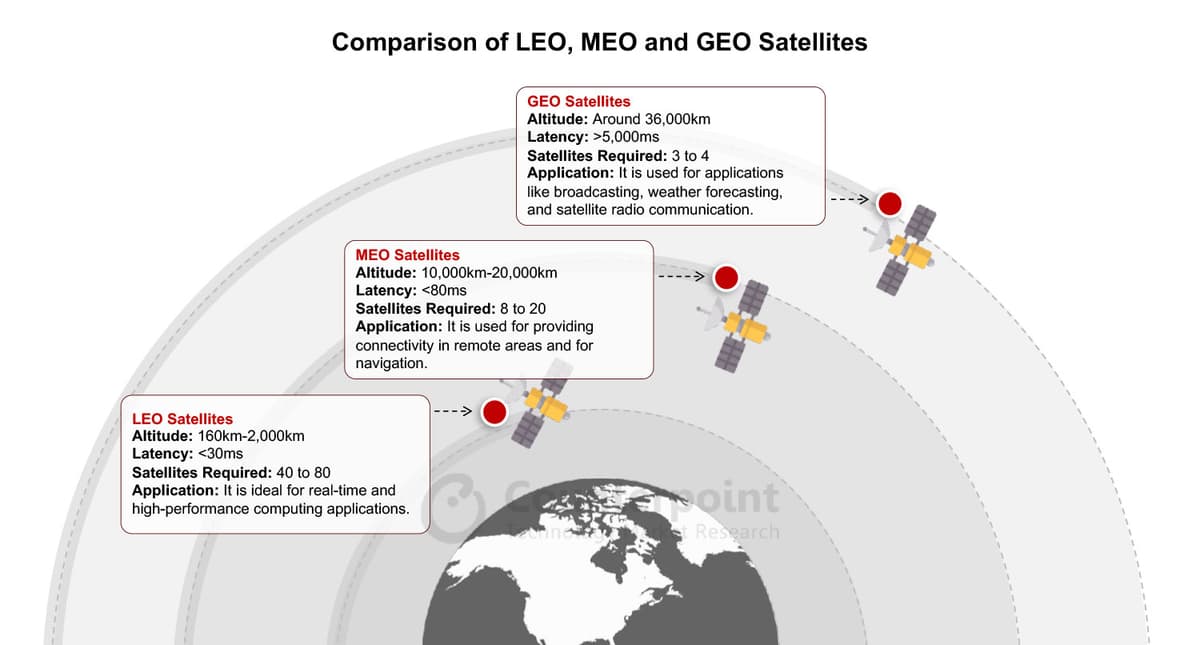
Among these, LEO satellites are the preferred choice for satellite IoT applications due to their proximity to the earth's surface and their lower power requirements compared to GEO satellites.
Benefits of Satellite IoT:
Typically, IoT devices establish internet connections through terrestrial networks like cellular and Wi-Fi. In remote regions with inadequate cellular coverage and limited fiber connectivity infrastructure, satellite IoT is emerging as a popular alternative.
- Larger and Broader Coverage: Satellite-based IoT offers a larger coverage area compared to cellular IoT networks, making them the preferred choice for large-scale, multi-purpose IoT deployments.
- Greater Reliability: Reliability is crucial in wireless applications, particularly for critical purposes like military communications. Satellites are a more reliable option than cellular networks, it achieves over 99.9% availability with proper constellation arrangements. This level of reliability is essential for mission-critical applications such as disaster management and military operations.
- Better Security and Protection: Satellite networks incorporate advanced security measures such as anti-jamming mechanisms and robust cryptographic coding, making them much more difficult to manipulate or breach.
- Longevity of the wireless networks: In general, we have seen a new generation of cellular mobile communication technology replace the existing ones every decade. However, satellite networks have remained active for over two to three decades. showing that satellite networks have a higher longevity than cellular networks.
Targeted Applications:
Satellite IoT can be used in various IoT applications but is best suited for applications where deploying other wireless network-based solutions is challenging.
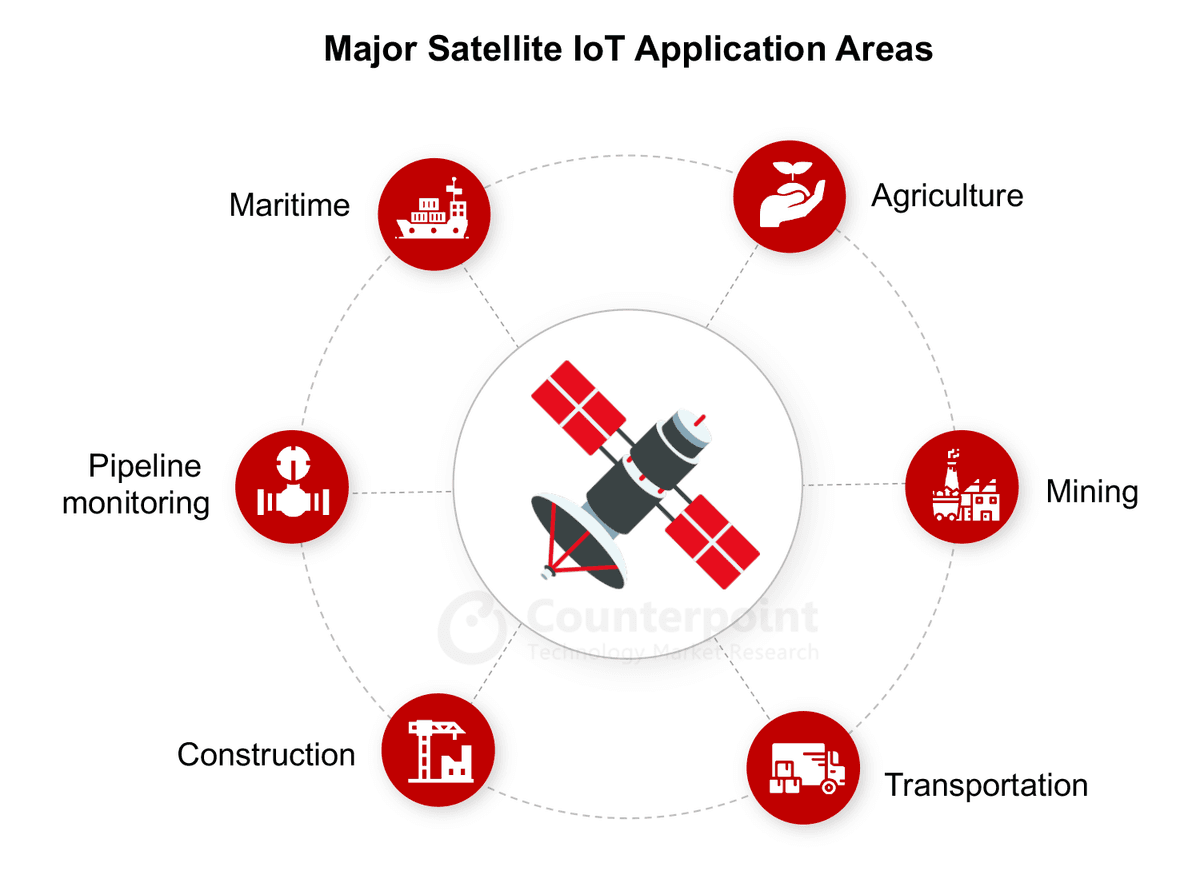
- Maritime: In maritime shipping, communication between ports and ships is of utmost importance along with real-time monitoring of the vessel location. However, in the middle of ocean there are no terrestrial networks, therefore satellite IoT is ideal for reliable communication between ships and ports.
- Oil & Gas Pipeline Monitoring: Most of the oil and gas pipelines move through the oceans and deserts where cellular network is not available. Monitoring of these pipelines to check potential leakages is important which is why sensors are directly connected to the satellite to transmit data in real time.
- Construction: Many construction projects exist in remote areas that are far away from any network infrastructure. In such locations, satellite IoT is an ideal option for tracking heavy construction equipment and machinery.
- Agriculture: To implement precision agriculture, connectivity is important. However, many rural areas have poor cellular network coverage. Hence satellite IoT is a suitable option for the interconnectivity of sensors to collect and analyse important data such as temperature and soil moisture.
- Mining: Satellite IoT is a suitable solution for tracking heavy equipment, providing remote maintenance, and enabling emergency alerts in mining areas. It offers reliable communication even during natural disasters such as earthquakes and landslides.
- Transportation: During transportation, tracking vehicles, containers or other logistics can face a gap in the cellular network coverage area. For tracking continuously, satellite IoT will be useful in transportation services.
Satellite IoT vs Cellular IoT:
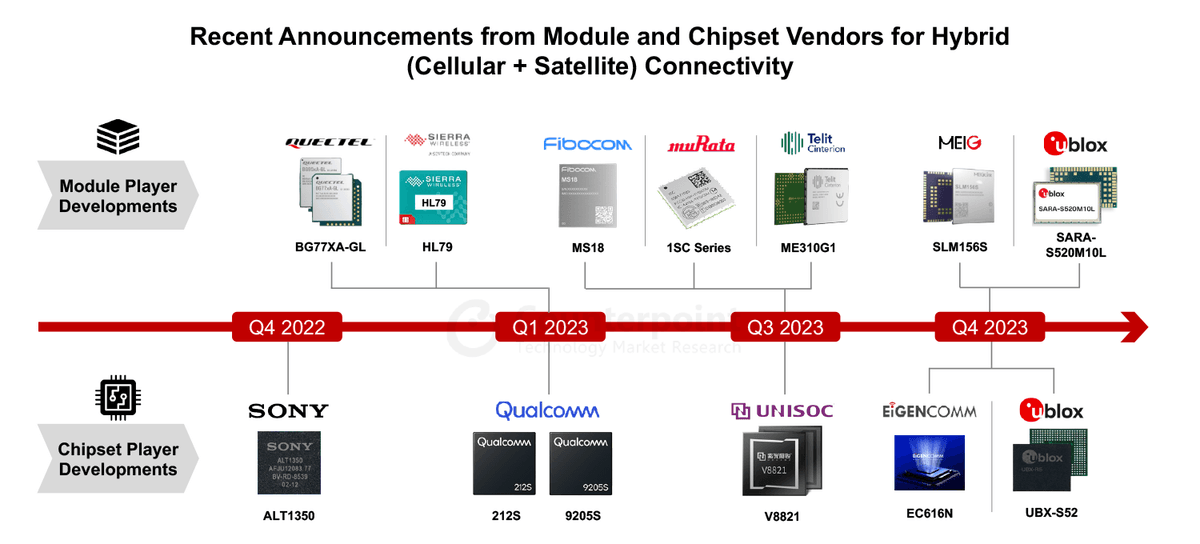
Although satellite IoT and cellular IoT are different from each other, satellite IoT is not intended to replace cellular IoT. Instead, it is designed to complement cellular IoT networks. Many applications demand uninterrupted coverage, and by combining satellite IoT with terrestrial networks, a hybrid connectivity solution can enhance communication. The new 3GPP Rel 17-18 compatible modem, standardized by 3GPP, facilitates both satellite and cellular IoT connectivity using the same module. Altair was the first to introduce the LPWA-based hybrid chipset ALT1350, which supports both non-terrestrial and cellular connectivity, improving communication for specific applications. Additionally, Qualcomm, UNISOC, and u-blox have launched hybrid (Cellular + Satellite) chipsets tailored for tracking applications.
Satellite IoT Ecosystem:
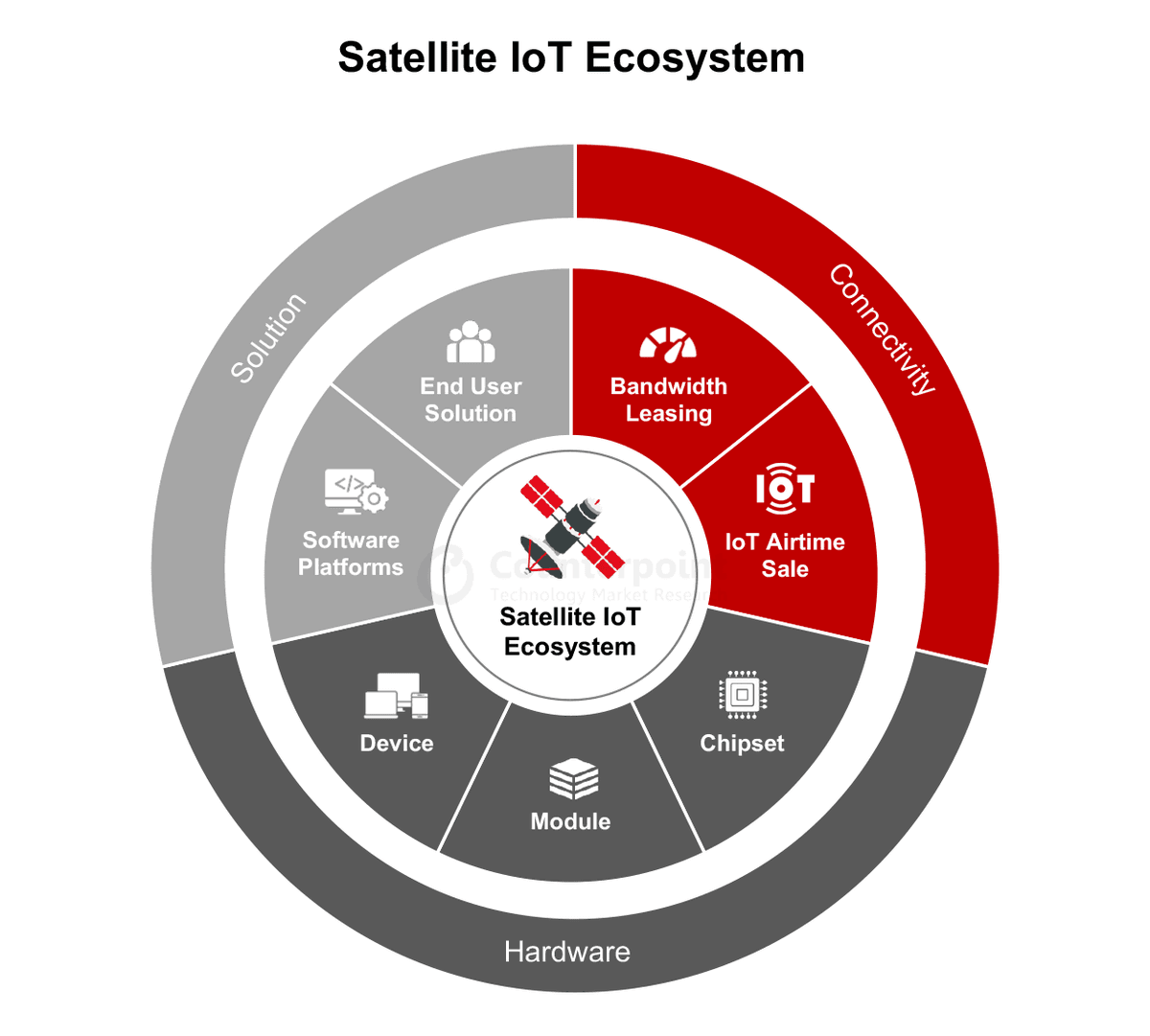
The Satellite IoT Ecosystem can be categorized into three primary segments – Connectivity, Hardware, and Solution. The end users vary depending on the application, which can include asset-tracking vendors, tractor OEMs and maritime vendors. The below figure shows the ecosystem in more detail.
Future Potential:
Satellite IoT can be applied in two primary ways within IoT. First, it serves as the backbone for connecting devices, while the second involves satellite IoT acting as a backup connectivity option alongside terrestrial network. The integration of satellite capabilities with cellular networks in 3GPP releases 17-18 has played a pivotal role. This integration treats satellites as a form of roaming, offering a seamless and extended coverage area. This hybrid approach is gaining popularity across various applications. With component providers already ready with cost-effective solutions, we expect increased adoption of satellite connectivity in the coming year.


