

- This year’s GITEX Global tech event in Dubai featured limited consumer technology unveilings, focusing instead on strategic engagement, with innovation, infrastructure, and futuristic solution-driven demonstrations taking center stage.
- The event recorded a limited presence of smartphone titans. HONOR was among the few present, exhibiting its latest lineup with the aim of reinforcing its position in the Middle East.
- UAE government entities dominated the show with the largest number of advanced technology deployments, reinforcing the country’s strategic commitment to resilience, innovation, and strengthening trust among citizens and investors.
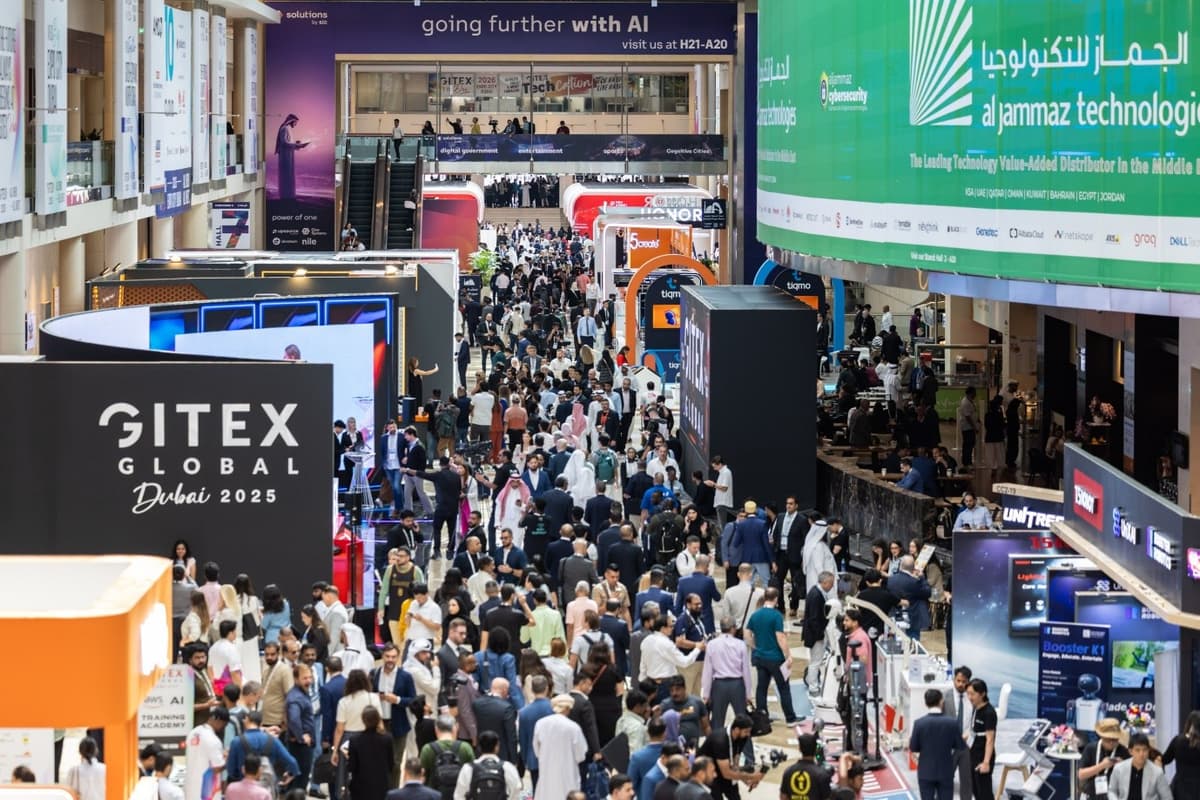
When the doors of GITEX Global 2025 opened on October 13 in Dubai, the city once again became the centre of attention for regional and global technology firms. More than 6,800 exhibitors and 2,000 startups from over 180 countries converged, joined by over 100,000 visitors and bringing together stakeholders from industries, governments, and research and innovation.
Behind this massive scale, GITEX 2025 revealed a quieter transformation from product showcases to strategic dialogue. Government exhibitors dominated the stage, introducing next-generation public-service models. Traditional private sector exhibitors appeared more subdued, with only a few launching their new infrastructural and technological solutions, like Surface Copilot+ from Microsoft and Intelligent Robotics Platform from China Telecom.
The absence of global smartphone titans was particularly noticeable, with HONOR being the sole brand maintaining a hardware presence, though without introducing any all-new models. It is believed that HONOR is seeking to reinforce its global footprint amid intensifying competition in its home market. Regions with high concentrations of high-value and tech-savvy consumers, like GCC countries, have consequently become key strategic targets for the brand’s expansion.
However, this lack of flashy consumer product reveals did not mark a void; it marked a shift in focus from consumer hardware to the systems behind it, and AI-powered, government-led innovation redefining how technology serves society.
The momentum across the UAE governments echoes insights from Counterpoint Research’s AI Cities Ranking Report, which highlights that cities leading in the adoption of AI – among them Dubai and Abu Dhabi – are increasingly driven by governmental digital strategies rather than private disruption.
The UAE’s AI journey is now advancing through a healthy internal rhythm, where each emirate adds its own note to the country’s digital vision. While Dubai’s ecosystem has already set itself as an early regional and global benchmark for AI integration and smart governance, others are rapidly closing the gap through bold, experience-driven innovations. For instance, Abu Dhabi’s expanding AI portfolio reflects a clear intent to participate in shaping the future of intelligent infrastructure.
Every unveiling adds another layer to the UAE’s digital narrative, with each deployment carrying quiet confidence that speaks through execution rather than comparison. Among the new unveilings, a select few are being viewed as catalysts for improving government efficiency while charting the path for AI adoption across connected sectors.
AI-powered driver learning vehicle
Among the standout showcases, Yas Driving School and Tatweer unveiled an AI-powered driver-training vehicle that may redefine how such training is measured.

The concept merges behavioral analytics with automation to create personalized learning paths for drivers through QR-based profiling, allowing every action, every mistake and every improvement to be measured objectively.
Its impact extends well beyond driving lessons, feeding data into policy discussions on licensing, insurance and safety. It represents a public-private model where Yas Driving Academy anchors regulatory safety standards while Tatweer imparts technological depth, ensuring innovation evolves within national safety frameworks, not outside them.
This concept, once scaled, could seed a new industry – AI-based safety analytics, opening doors for software vendors, simulation developers and insurers across the UAE, leading to a mature model that can be adopted to produce high-safety autonomous vehicles.
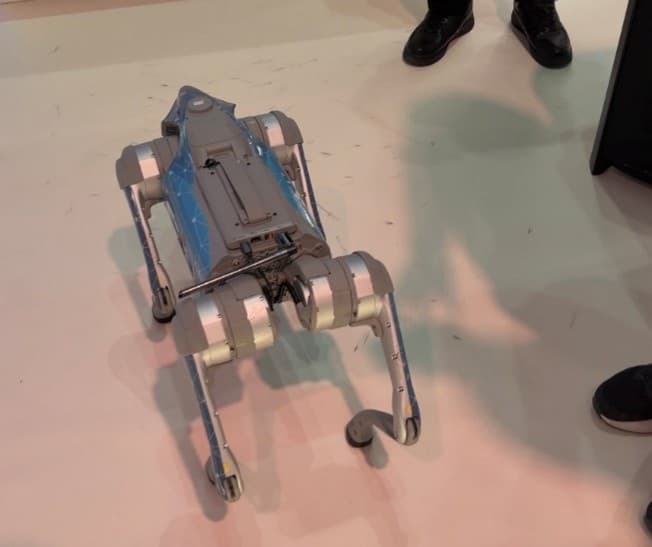
Brain-signal interface-controlled robot dog
Among the most striking demonstrations, Mohamed Bin Zayed University for Artificial Intelligence (MBZUAI), Abu Dhabi’s brain-signal interface controlling a robotic dog captured both curiosity and caution. While brain-computer interface (BCI) experiments are not new globally, this was the first public BCI robot demonstration in the Middle East and Africa (MEA).
Its true significance lies not in the robotic form, but in what it represents – a transition from AI that reacts to human commands, to AI that interprets human thought itself.
Previous BCI demonstrations were largely confined to military or closed research environments. However, showcasing this experiment publicly at GITEX Global 2025 offered Abu Dhabi a platform to address critical policy questions surrounding neuro-AI governance:
• Who owns neural data, the most private form of human information?
• How do we define AI intent and ethical safeguards when machines respond to thought, not action?
• How can we ensure humans remain “in command”, not overridden by algorithmic interpretation?
With this display, Abu Dhabi positioned itself as a responsible pioneer, promoting innovation with a governance-first ethos, a critical stance as neuro-AI moves from labs to regulation.

TAMM hologram: Humanizing digital government
In a digital transformation narrative for the UAE in general, and Abu Dhabi specifically, Abu Dhabi’s government services platform TAMM emerged with a suite of solutions. TAMM Hologram stood out for its human-centric approach. It enables citizens to engage with government representatives through real-time interactive holographic pods distributed across the Emirate. The initiative bridges physical and digital realms, allowing two-way communication in Arabic and English in real time.
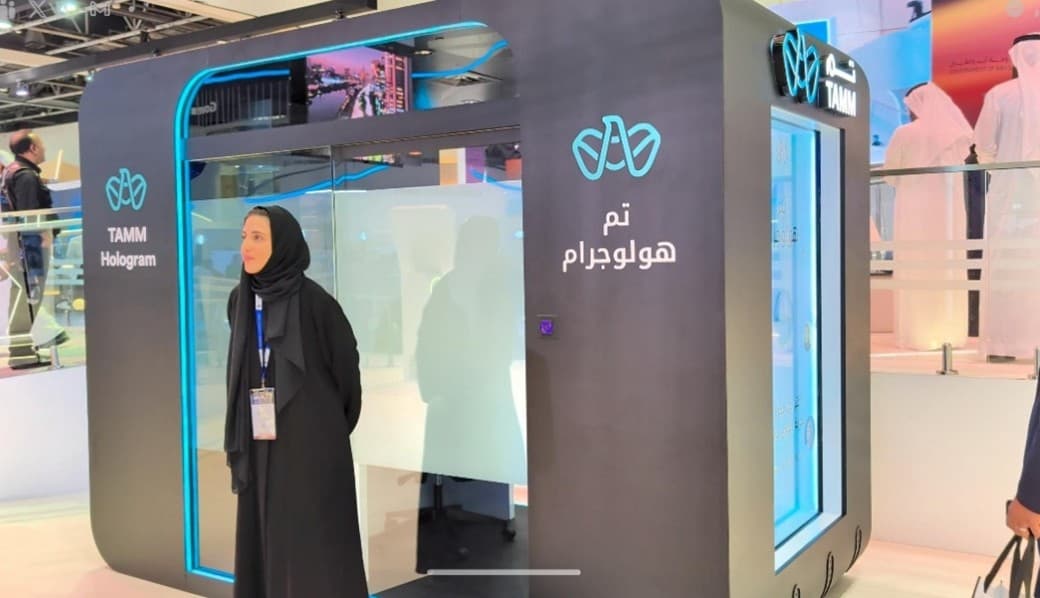
Unlike hologram experiments confined to airports or events, TAMM’s approach translates immersive tech into practical, everyday citizen service. It signifies national readiness for AI-enabled governance, where accessibility and human experience remain central.
This platform not only enhances public interaction but also strengthens the technological sovereignty of Abu Dhabi’s digital infrastructure, reinforcing confidence in secure cloud systems, AI integration and policy transparency. It demonstrates how AI, when embedded in citizen services, can amplify trust rather than replace human connection.
A new identity for GITEX
In parallel, federal and other local government entities across the UAE, along with several public-sector companies, showcased a select range of innovative deployments designed to enhance governance efficiency in multiple aspects, like agriculture, civil defence, connectivity and infrastructure.
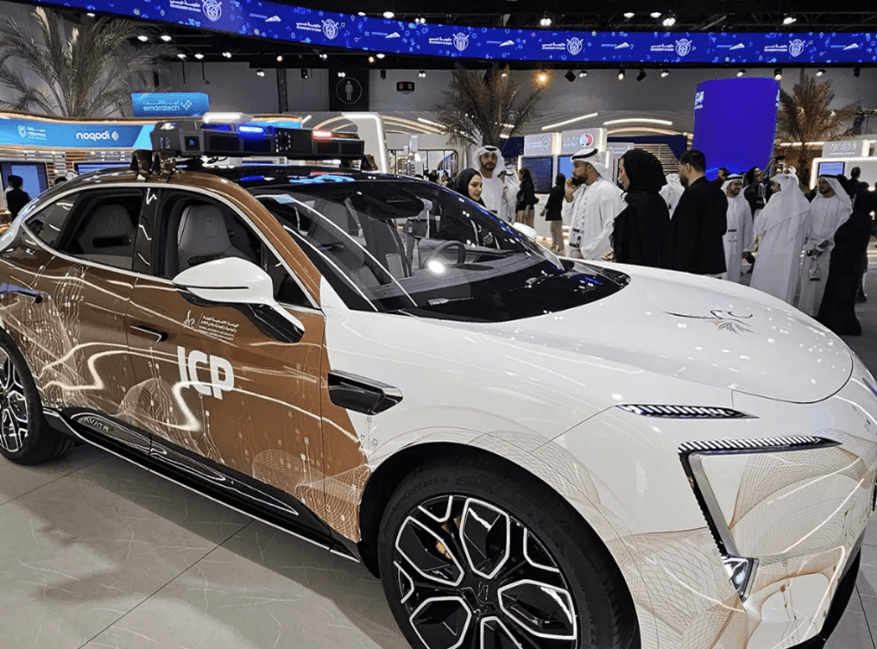
The Federal Authority for Identity, Citizenship, and Port Security (ICP) smart vehicle, for instance, is engineered to detect immigration violations, while AI-powered energy and water monitoring systems aim to monitor national resource management, identify misuse, and explain causes of misuse. Challenging as they are, these initiatives mark a new epoch where technology becomes both the tool and the rulebook of national progress.
To sum up, there was no big hit from GITEX Global 2025 in terms of consumer products or massiveness; the real game-changer was technology. The event marked a movement in which the focus shifted from technology being demonstrated to technology being seen and tested in strategic and regulatory terms. As a result, the UAE has now not only positioned itself as a technology hub, but also as a testing ground, actively affecting the policy frameworks in which AI, data and human beings will have to coexist in the years to come.