MWC 2026: How 5G-A and AI Build the Bridge to 6G in Mobile AI Era
0
March 10, 2026
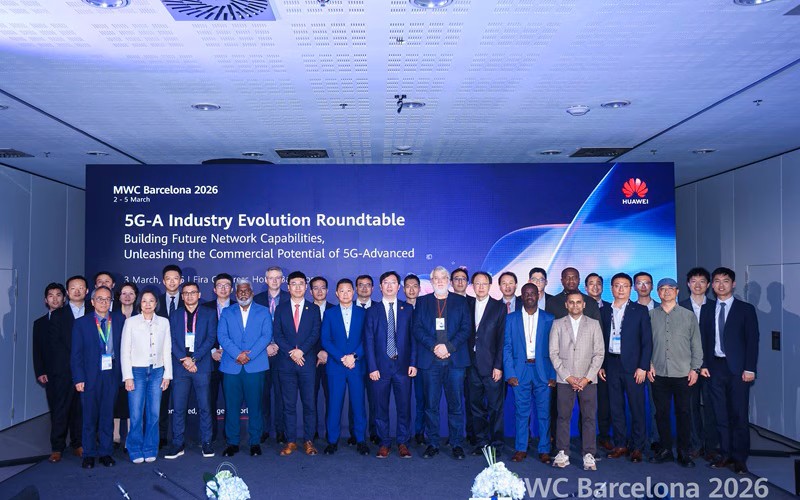
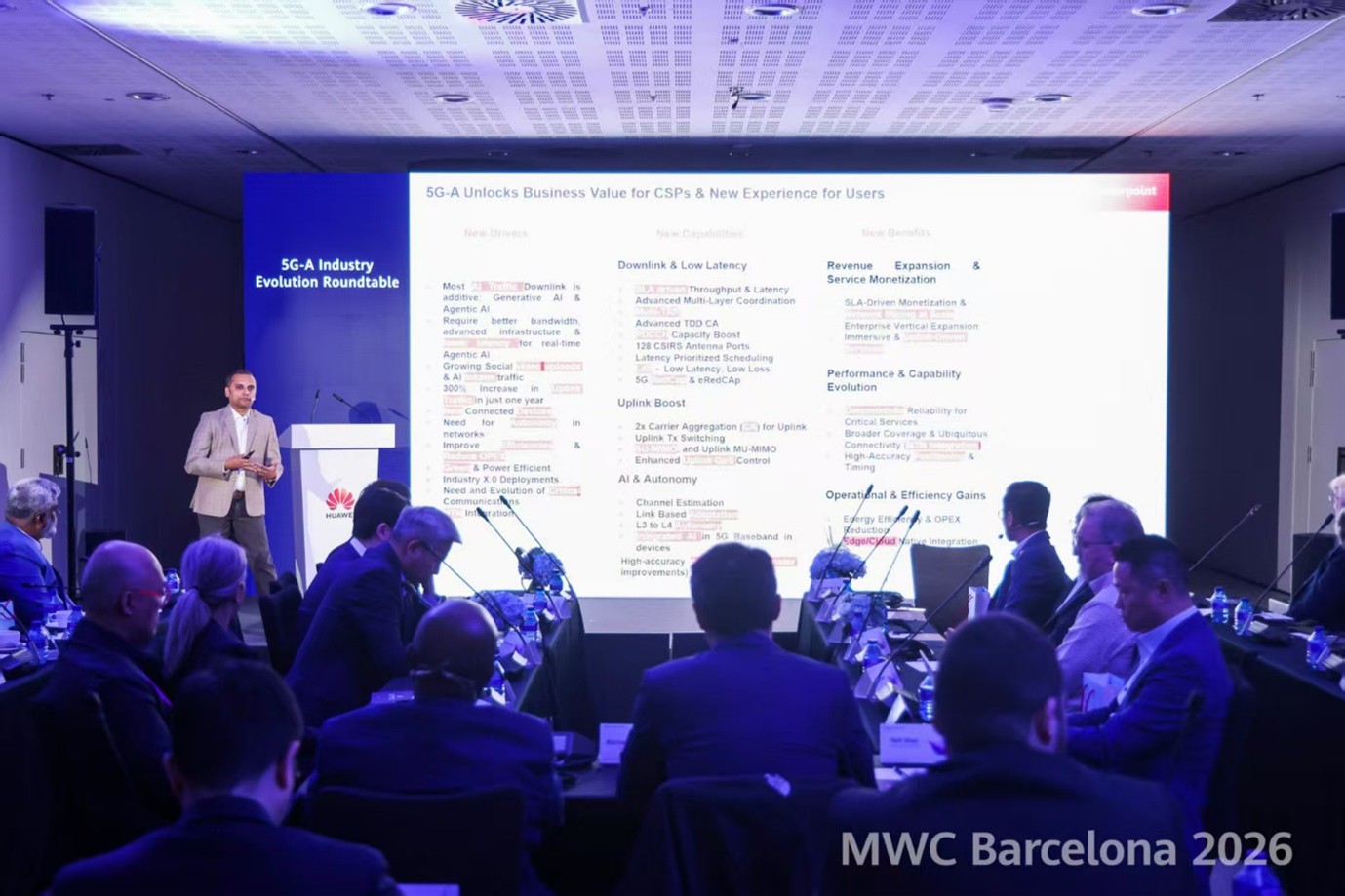
During MWC 2026, Counterpoint analysts delivered an opening keynote at Huawei’s 5G-A Industry Evolution Roundtable, which saw participation from global industry leaders, ecosystem partners, and operators. The conversation spanned from simple connectivity to the architectural evolution required for a truly intelligent era. As we enter the AI-driven era, the shifts in network traffic toward growing AI token workloads alongside video (content creation) are driving an insatiable need for advanced uplink bandwidth and robust and efficient infrastructure.
Our keynote ‘From 5G Advanced to 6G: Enabling Autonomous and Agentic Intelligence’ deep dived into the following topics:
AI is reshaping traffic dynamics
The mobile industry is witnessing a fundamental shift in how data moves across networks. For years, networks were optimized for downlink-heavy video consumption. However, the rise of Generative AI and Agentic AI is introducing token-based, bidirectional flows that demand a massive boost in uplink capacity.
Uplink explosion: There has been a 300% increase in uplink traffic in just one year, driven by social video uploads and AI token traffic.
Token-based flows: AI workloads are shifting the focus from simple data access to real-time, high-definition interaction.
SLA-driven performance: Future networks must move toward guaranteed Service-Level Agreements (SLAs) for throughput and latency to support mission-critical applications like remote surgery and autonomous drones.
5G-A introduces structural drivers that cannot be skipped if operators want to remain competitive. These capabilities provide the foundation for the AI-native 6G era.
More details on the 5G-A-to-6G transition and how devices and traffic are driving the need for newer capabilities and business models can be found in the presentation deck below:
Our keynote was followed by multiple presentations from operators across the globe on the opportunities, challenges and way of working in this mobile AI era. Some keynotes from Zain, U Mobile and others were very insightful.
These presentations were followed by an open roundtable discussion between Huawei’s team, mobile operators and Counterpoint analysts. The discussion focused on key challenges faced by telcos in monetization and how these new 5G-A capabilities can help them optimize and monetize their networks as they move to the AI-native 6G networks by the end of this decade.
Networks are transitioning from manual optimization to closed-loop AI autonomy as we approach the end of this decade. Moving through various levels of autonomy from L3 to L4, the network can sense, think and act with minimal human intervention.
The goal is to reach Intent-Driven Orchestration, where operators will define or intend outcomes as per policy or targeted user experience, and the network will automatically reconfigure itself to meet those needs. This level of autonomy will be the bedrock of future mobile networks. The discussion also explored how telcos can avoid repeating the mistakes of the OTT era.
Strategy for operators: Don't repeat the OTT era
The OTT era saw mobile operators providing the pipes while third-party services captured the majority of the value. To avoid this in the AI era, operators must:
Capture early demand: Target enterprise automation and AI-driven demand before 6G even launches.
Build AI-native maturity: Develop intelligent network operational logic to manage networks autonomously and services via agents.
Establish intent-based monetization: Move away from selling gigabytes and toward selling outcomes and reliability.
Enter strategic partnerships: Forge deep ties with AI hyperscalers and infrastructure vendors to build sovereign, secure AI platforms.
The road to 6G isn't just about speed, but it's about building a network that has the intelligence to act as an agent for the society it serves.
Receive our insightful weekly newsletter and stay ahead of the competition.
Author
Neil Shah
Neil is a sought-after frequently-quoted Industry Analyst with a wide spectrum of rich multifunctional experience. He is a knowledgeable, adept, and accomplished strategist. In the last 18 years he has offered expert strategic advice that has been highly regarded across different industries especially in telecom. Prior to Counterpoint, Neil worked at Strategy Analytics as a Senior Analyst (Telecom). Neil also had an opportunity to work with Philips Electronics in multiple roles. He is also an IEEE Certified Wireless Professional with a Master of Science (Telecommunications & Business) from the University of Maryland, College Park, USA.