
Memory shortage deepens pressure on smartphone market
Shilpi Jain
Senior Analyst
Shilpi is a Senior Analyst with Counterpoint Research, based out of Gurgaon. She has more than 9 years of work experience in consulting and market research field. She closely tracks mobile devices and ecosystem at Counterpoint and led various research and consulting projects. She holds a Master's in Business Administration from Fore School of Management, specializing in Finance, and a Bachelor's degree in Economics from Daulat Ram College, Delhi University.
CNBC Africa · Lunch West Africa — Watch on CNBC Africa
MEMORY · Broadcast . 19 october, 2026
Memory shortage deepens pressure on smartphone market
Overview
Shilpi Jain, Senior Research Analyst at Counterpoint Research, joined the David Alab on the Power Lunch West Africa program to explain how the ongoing memory crisis, driven by surging AI infrastructure demand, is putting the smartphone market under growing pressure. Higher component costs and tighter supply are forcing brands to rethink pricing, specifications and financing, while consumers, especially in emerging markets such as West Africa, are delaying upgrades or turning to refurbished devices.
Shilpi notes that brands with greater exposure to entry-level and affordable segments are the hardest hit. She expects the challenges to persist through the coming quarters and 2027, with a stronger shipment recovery from 2028.
Outline
What is driving the current downturn
- The main factor is the ongoing memory crisis, with AI infrastructure absorbing a growing share of memory supply and demand.
- Smartphone makers face higher component costs and tighter supply. Prices have been rising for about a year.
- Anticipating higher memory prices, brands front-loaded shipments in the earlier quarters of the year, which now adds to the downturn.
How smartphone brands are responding
- Manufacturers are weighing pricing strategies, portfolio optimization and alternative financing schemes to keep devices affordable.
- In emerging markets, brands are trimming specifications, camera configurations and storage options, and some are considering 4G chipsets to cut costs.
- In higher price tiers, brands are leaning on financing schemes, trade-ins, installment plans and promotional offers to reduce the upfront cost for consumers.
Who is most exposed: Apple and Samsung vs. Chinese brands
- Brands with higher exposure to entry-level and affordable segments face greater challenges.
- Apple and Samsung are relatively better positioned. Apple's premium positioning leaves it somewhat insulated, and its shipments have not been hit as hard.
- Brands such as Oppo, realme and Transsion are more exposed because of their heavy reliance on entry-tier segments, and their shipments are being hit harder.
Consumer behavior in emerging markets
- Consumers are delaying upgrades, shifting to the secondhand market, or waiting for promotional periods and major sales events before buying with financing or installment plans.
- Rising component costs are also making feature phones more expensive, making it harder for first-time users to move up to smartphones.
- The risk goes beyond weaker sales to reduced access to smartphones, which could delay the digital inclusion goals governments in emerging markets are pursuing.
What Counterpoint data shows
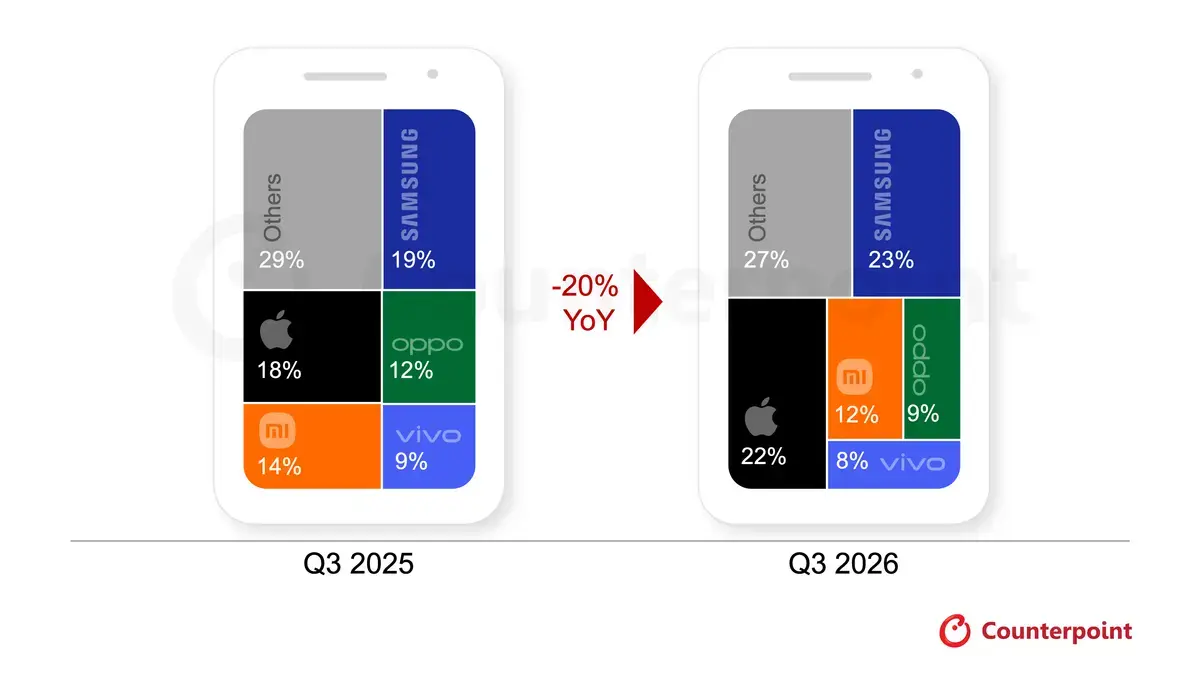
Source: Counterpoint Research - Global Smartphone Sell-in Shipment Share Top 5 Brands (Preliminary Data)
Frequently asked questions
What is behind the current smartphone market downturn?
The ongoing memory crisis, driven by AI infrastructure demand, is raising component costs and tightening supply for smartphone makers. Prices have been climbing for about a year, and brands that front-loaded shipments earlier in the year in anticipation of higher memory prices are now feeling the effect.
Which smartphone brands are most affected by the memory shortage?
Brands with greater exposure to entry-level and affordable segments, such as Oppo, and realme , are the most affected. Apple and Samsung are better positioned thanks to their premium focus, though they too are now adjusting pricing and cutting production orders.
How are smartphone makers responding to higher memory costs?
They are reviewing pricing and portfolio strategies, trimming specifications, cameras and storage in affordable models, and expanding financing schemes, trade-ins, installment plans and promotions in higher tiers.
How is the memory shortage changing consumer behavior in emerging markets?
Consumers are delaying upgrades, buying refurbished or secondhand devices, and timing purchases around sales events and financing offers. These habits could outlast the crisis and may delay digital inclusion in markets such as West Africa.
When will the smartphone market recover?
Counterpoint expects continued weakness in the coming quarters and through 2027.
Explore related research
Explore the research behind this interview
The data and analysis referenced in this appearance are drawn from Counterpoint Research's ongoing trackers and quarterly reports.
New to Counterpoint
Create a free account
- ✓Access selected research and data
- ✓Regular updates from our analysts
- ✓Save reports and download charts
Already registered
Sign in to continue
Pick up where you left off — your saved reports, downloads and alerts.
