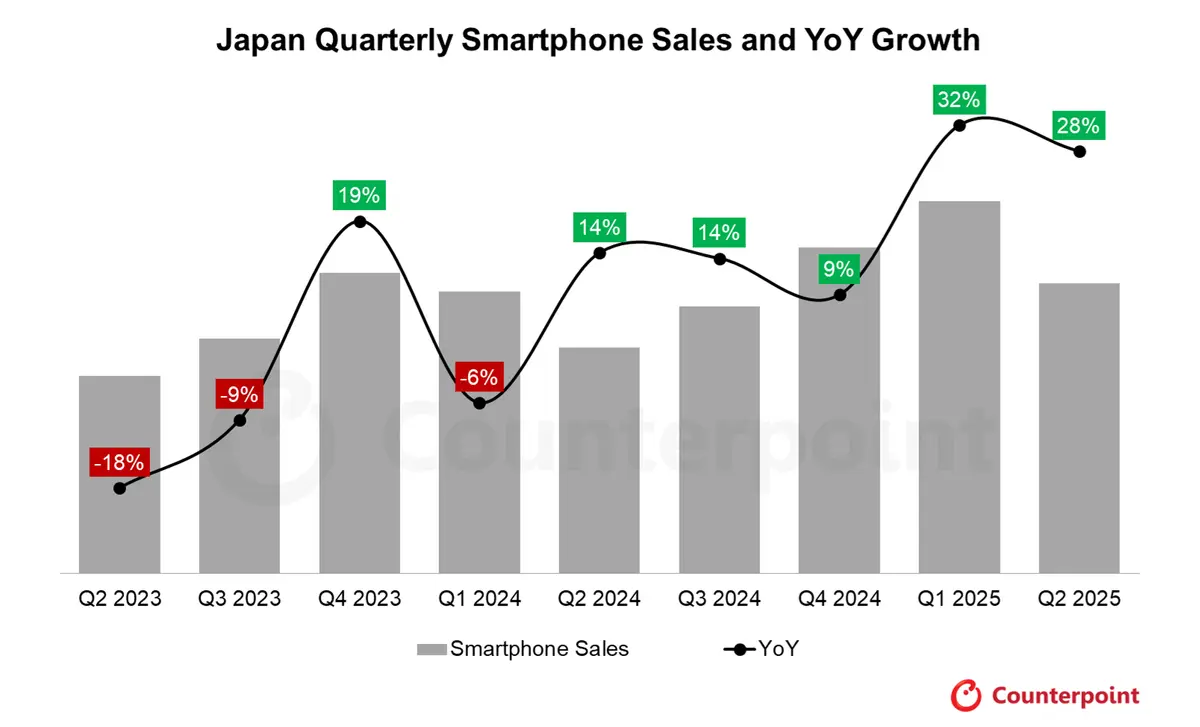
- Following the Ministry of Internal Affairs and Communications’ discount regulations, the “two-year return” program has solidified its position as a mainstream purchasing model
- As the first wave of program users reaches maturity in 2026, replacement activity is expected to increase, and Docomo’s 3G shutdown may temporarily boost device upgrades.
- Despite short-term tailwinds, long-term recovery may be capped by Japan’s aging population, currency weakness, and inflation
Access to the full report here: Japan Smartphone Market Replacement Demand May Strengthen in 2026 as “Two-Year Return” Program Reaches Maturity
Hidden Driver of Japan’s Recovery: Budget-Conscious Consumers Embrace the “Two-Year Return Program
Japan’s smartphone market has been growing steadily since Q2 2024, according to Counterpoint Research’s Japan Smartphone Tracker. The recovery is being driven by brands offering a wider range of models and prices that match consumers’ focus on affordability.
One key factor behind this rebound is the “two-year return program. “It lets users return their phones after two years for lower monthly payments. Major carriers like NTT Docomo, au, and SoftBank have all adopted this plan, which has become a popular alternative to the heavy discounts that were limited by new government rules in late 2023.
Short-Term Boost Expected in 2026, but Structural Headwinds May Limit Long-Term Recovery
The program not only eases upfront costs but also encourages regular device upgrades, contributing to a more stable replacement cycle. With many users set to complete their two-year terms in 2026, alongside Docomo’s 3G network shutdown, the market could see a temporary increase in replacement demand.
However, structural challenges such as an aging population, currency weakness, and inflationary pressure are expected to cap long-term growth. Sustained recovery will depend on how effectively OEMs and carriers can leverage these short-term tailwinds to establish a recurring upgrade-driven market cycle.