Tianma Highlights Next-Generation OLED, Oxide and Automotive Display Technologies at Display Week 2026
At Display Week 2026, Tianma Microelectronics showcased its latest portfolio of consumer, industrial and automotive display technologies, highlighting continued advancements in AMOLED, Oxide LCD, MicroLED and automotive cockpit solutions.
Tianma’s consumer display portfolio featured a range of AMOLED and LTPS-LCD technologies engineered for next-generation smartphones, wearables, and personal electronic devices. The lineup highlights advancements in OLED material systems, high-efficiency device structures, and high-performance backplanes, supporting improved brightness, lower power consumption, and increasingly compact and flexible product designs.
Tianma’s key smartphone demonstrations at Display Week 2026 include:
6.78" BT.2020 SLOD OLED Display: This display combines Phosphor-Sensitized Fluorescence (PSF) technology with Stacked Layer OLED Device (SLOD) architecture to deliver greater than 95% BT.2020 color gamut coverage and peak brightness up to 7000 nits. Compared to the prior single-layer generation, power consumption is reduced by 23%, highlighting Tianma’s focus on improving OLED efficiency while maintaining premium color accuracy and outdoor visibility
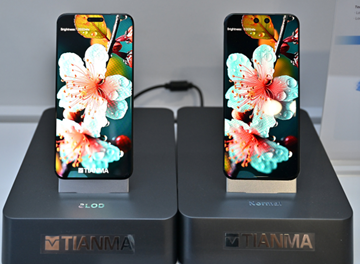
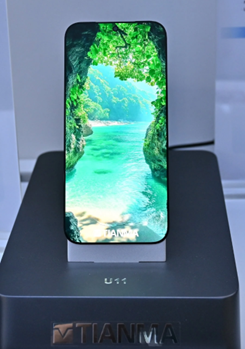
6.58” U11 AM-OLED Display: The display incorporates Tianma’s New Fluorescence Technology (NFT), integrating both PSF and New Fluorescent Blue (NFB) technologies. The panel achieves greater than 96% BT.2020 color gamut coverage while improving exciton utilization and reducing non-radiative losses to enhance energy efficiency and device stability.
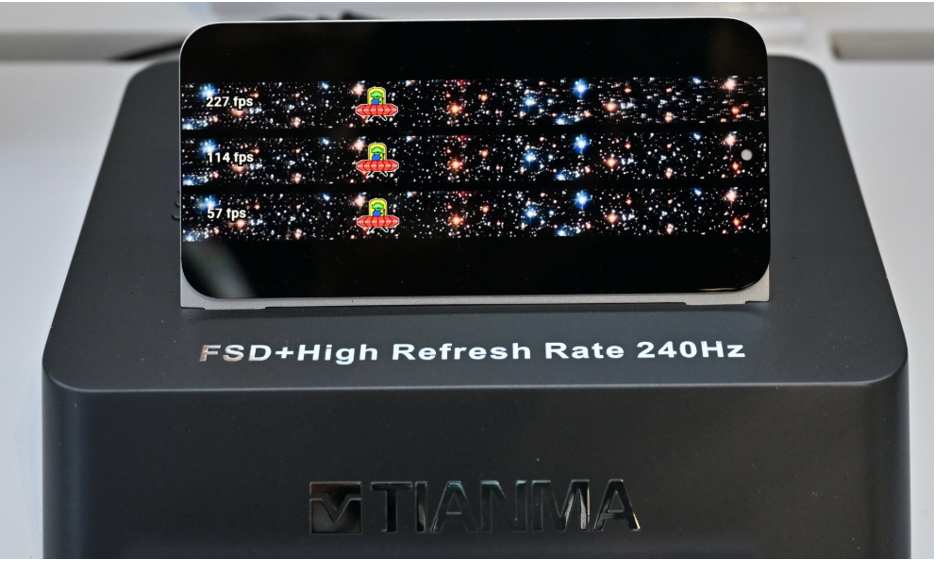
6.32” Ultra-high Refresh Rate AM-OLED Display: This OLED display integrates a 240 Hz refresh rate with a dual-track pixel driving architecture to overcome the traditional trade-off between speed and precision. By separating data writing and TFT threshold compensation, the design enables stable and accurate pixel driving at high refresh rates. Extended compensation time (0.6µs to 6µs) preserves low-gray detail, reduces motion artifacts, and improves image stability.
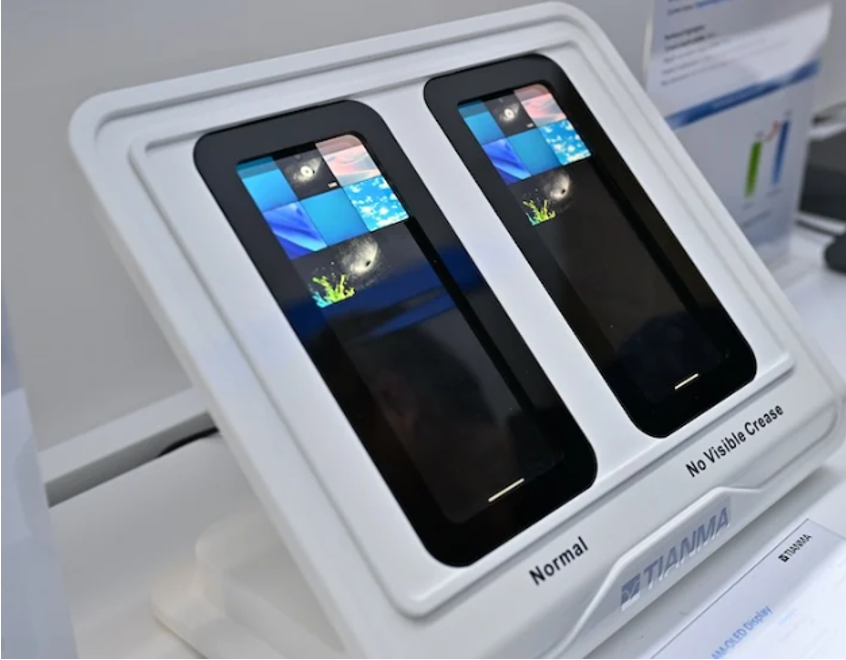
6.9” Creaseless AM-OLED Display: This foldable 6.9” OLED display minimizes both visual crease and tactile discontinuity through an optimized module stack and fold structure. The design incorporates an ultra-thin stack, ultra-low-loss adhesive materials, water-drop bending architecture, and multi-layer stress optimization. A dual-coating UTG structure further reduces deformation and improves rebound performance at the fold.
For IT commercial and industrial applications, Tianma showcased a range of advanced Oxide LCD technologies developed for professional workspace, notebook, tablet, industrial, medical, and gaming applications.
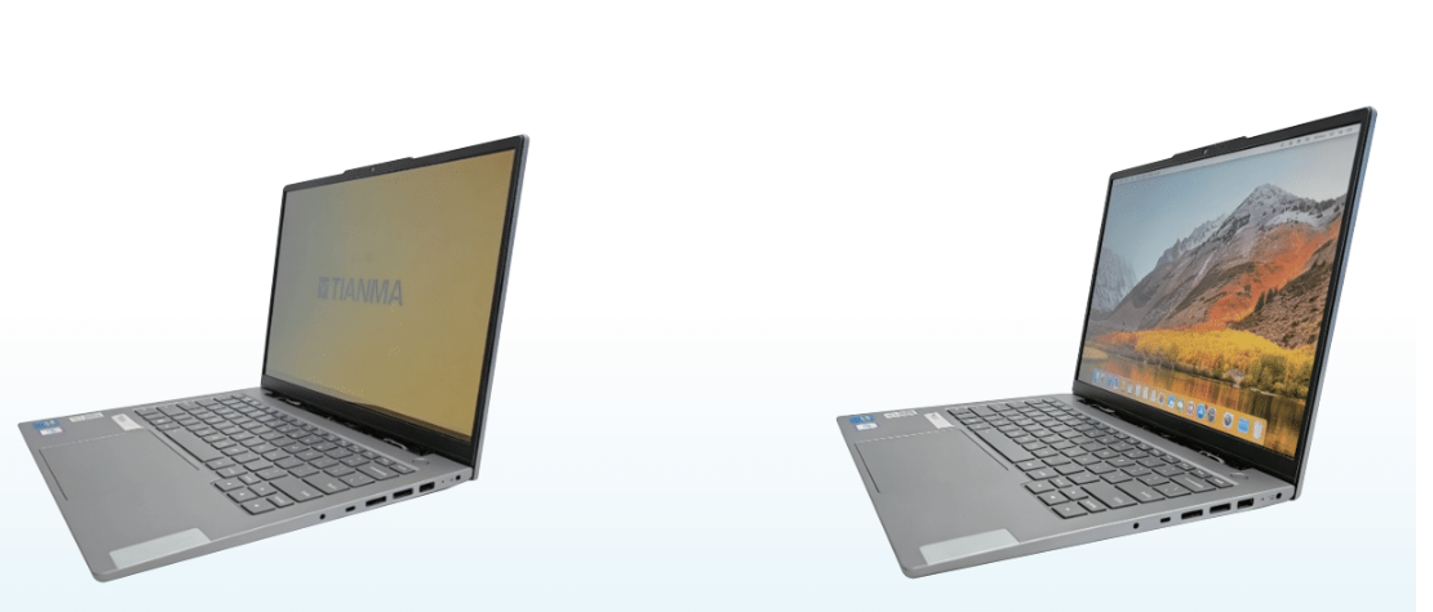
14′′ WUXGA e-Privacy LCD Display: This display integrates an electrically switchable eQ cell to provide on-demand visual privacy in a slim module design for commercial notebook applications. Electrical control enables millisecond-level switching between narrow-view privacy and wide-view sharing modes. In privacy mode, the viewing angle is limited to approximately ±45° to reduce side-view visibility. A branded privacy mode maintains the narrow viewing angle while selectively revealing a custom logo for privacy awareness and identification. When privacy is not required, the display instantly returns to a full viewing angle for normal collaboration. The eQ cell is laminated during module assembly, enabling stable optical performance without external privacy plates.
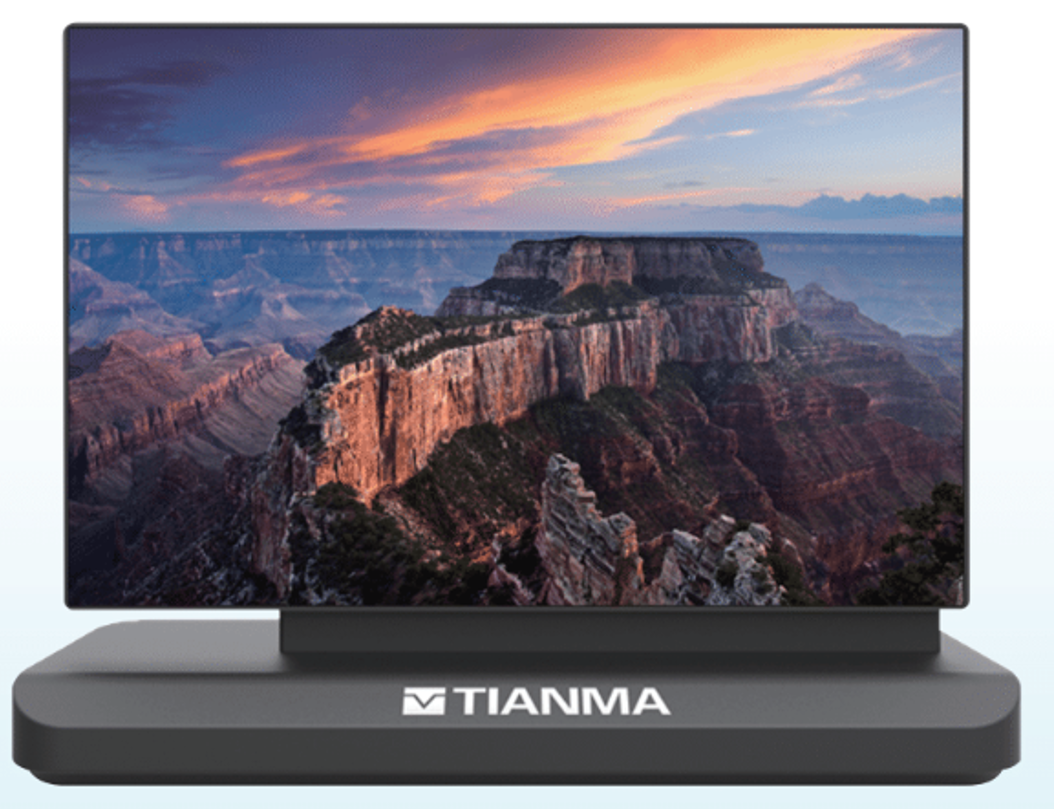
12.8” All-Oxide Display: This display uses an all-oxide TFT backplane supporting a wide refresh range from 1 Hz to 240 Hz while eliminating the need for laser annealing processes required in LTPS or LTPO architectures. The design reduces manufacturing complexity and production costs while improving low-gray uniformity, lowering image sticking and reducing power consumption.
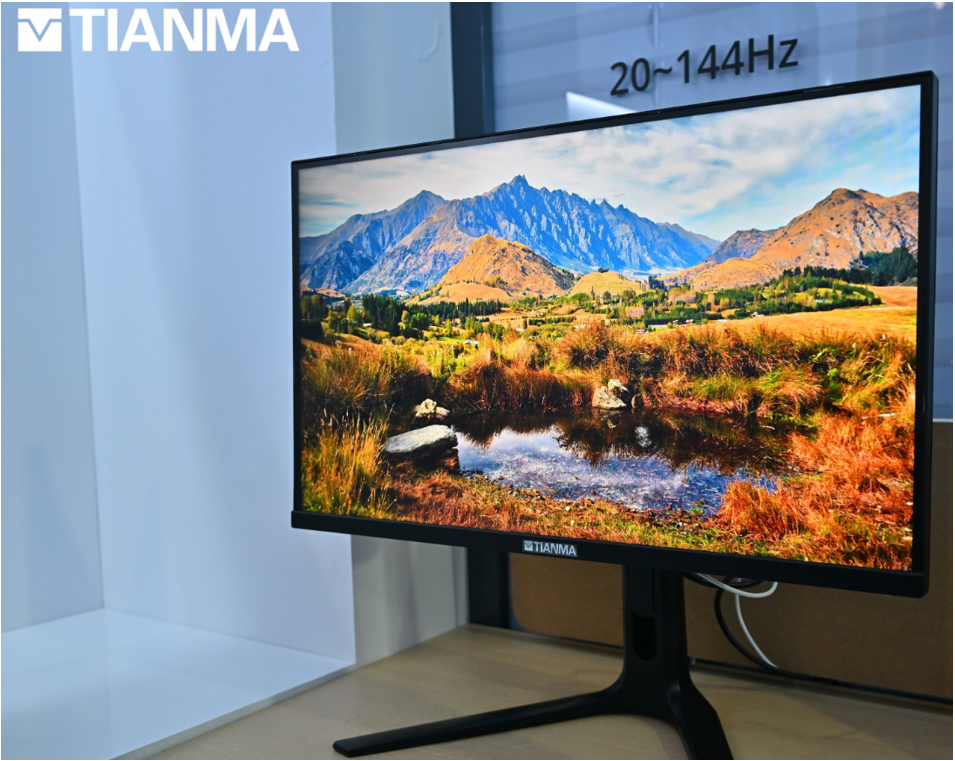
27” QHD Oxide 20 – 144 Hz Monitor: Featuring a 2560×1440 resolution and adaptive refresh rates from 20 Hz to 144 Hz, the monitor extends below the current 24 Hz industry standard to improve power efficiency for desktop and professional workspace applications. The display delivers 350 nits brightness, 3000:1 contrast ratio and power consumption as low as 10.8W in low-frequency operation.
For automotive applications, Tianma showcases spanned a-Si and LTPS-LCD, AMOLED, and Micro-LED technologies.
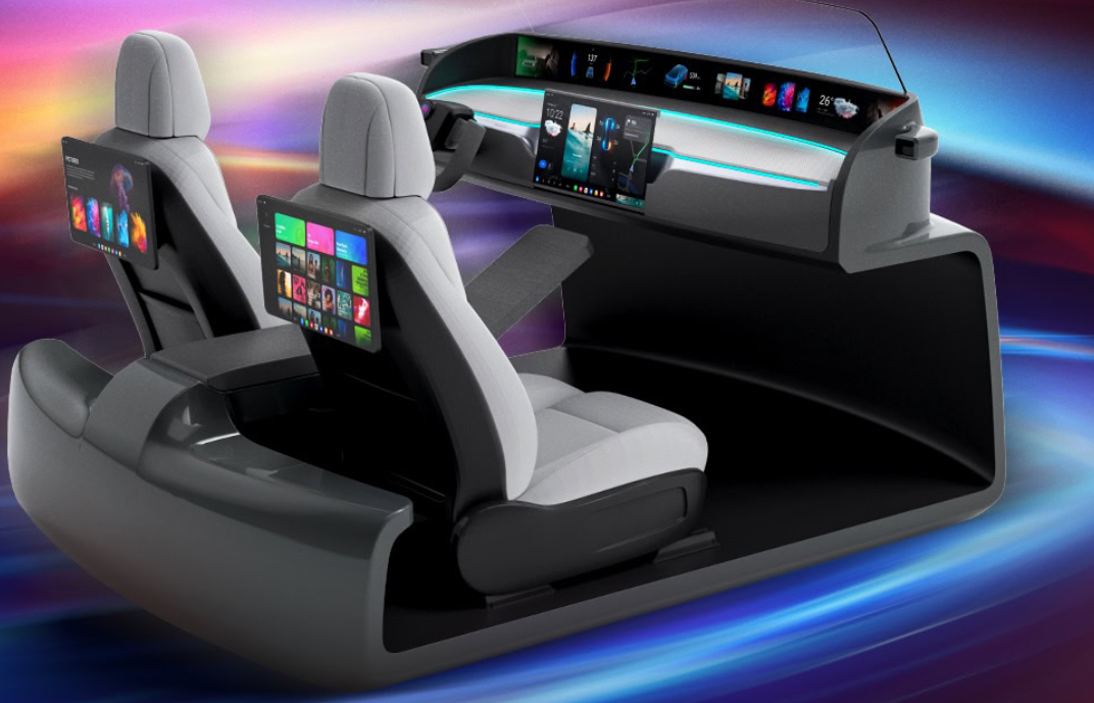
Smart Cockpit 7.0: The cockpit platform integrates a 49.6” curved ACRUS display delivering 8K resolution across a 1.25-meter viewing width alongside a dynamic slidable OLED display capable of concealed and dual-display operating modes. Tianma also demonstrated InvisiVue, a display technology capable of blending into decorative materials such as wood grain or brushed metal when inactive.
19” Transparent Splicing MicroLED: This transparent MicroLED display uses ultra-narrow-border tiled panels to create a seamless viewing surface while maintaining more than 60% transparency. The technology is designed for automotive windows, advanced cockpit concepts and transparent instrumentation applications.
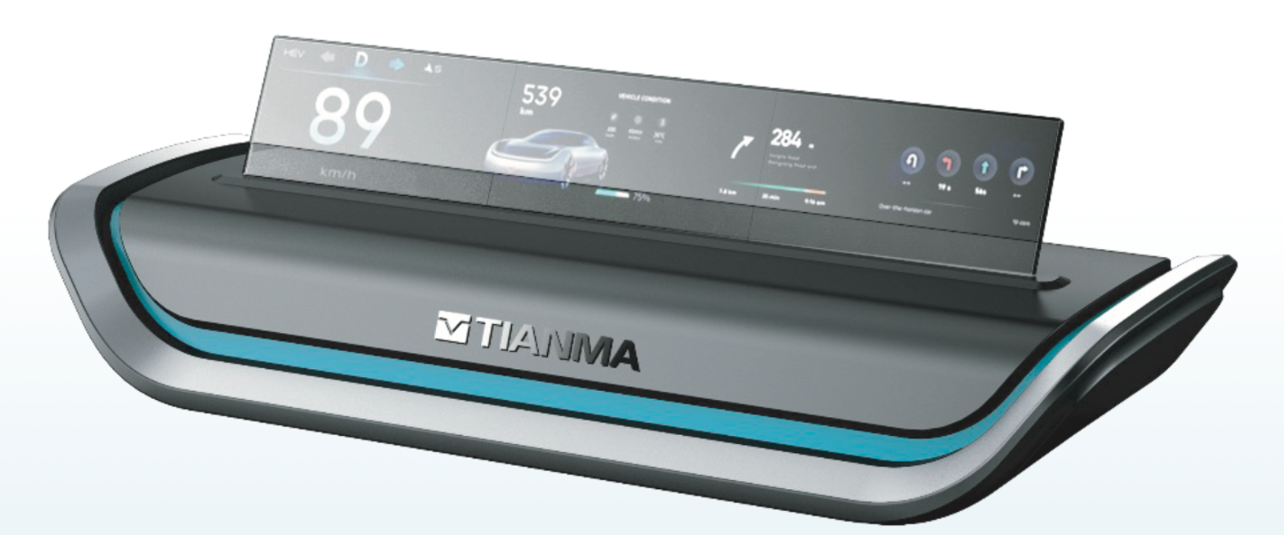
12” MicroLED IRIS HUD: Tianma demonstrated a full-color MicroLED head-up display capable of exceeding 120,000 nits peak brightness while maintaining an ultra-thin 2mm optical engine design. The transparent front-window optical structure preserves driver visibility while enabling new HUD form factors.
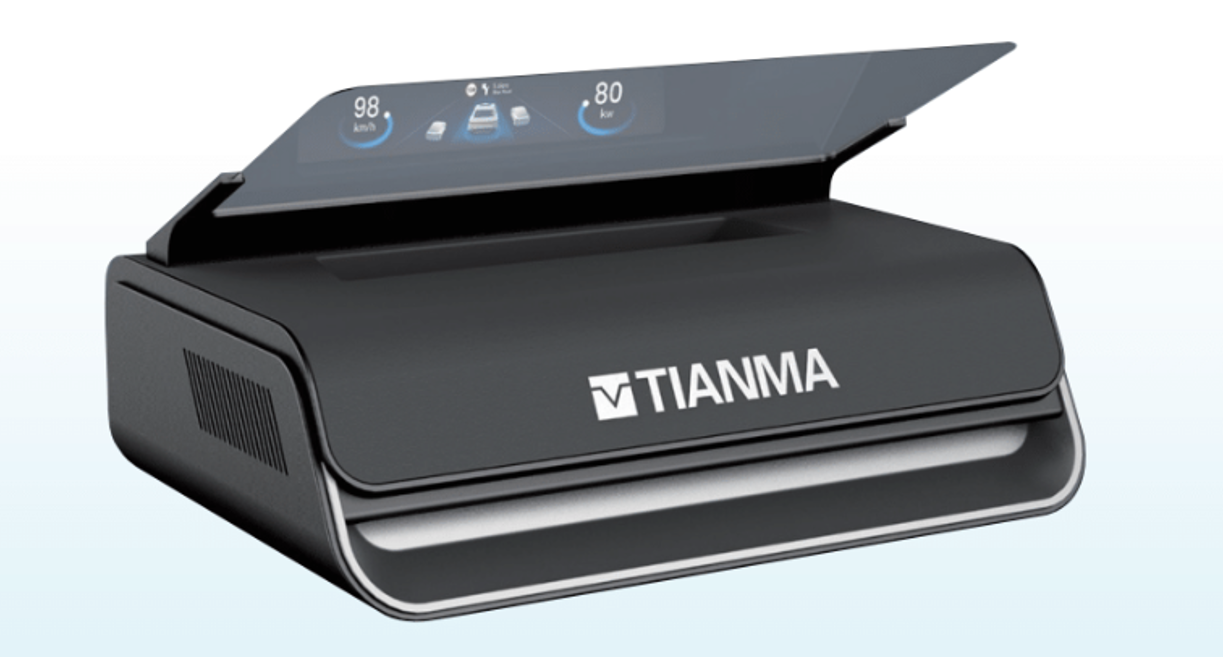
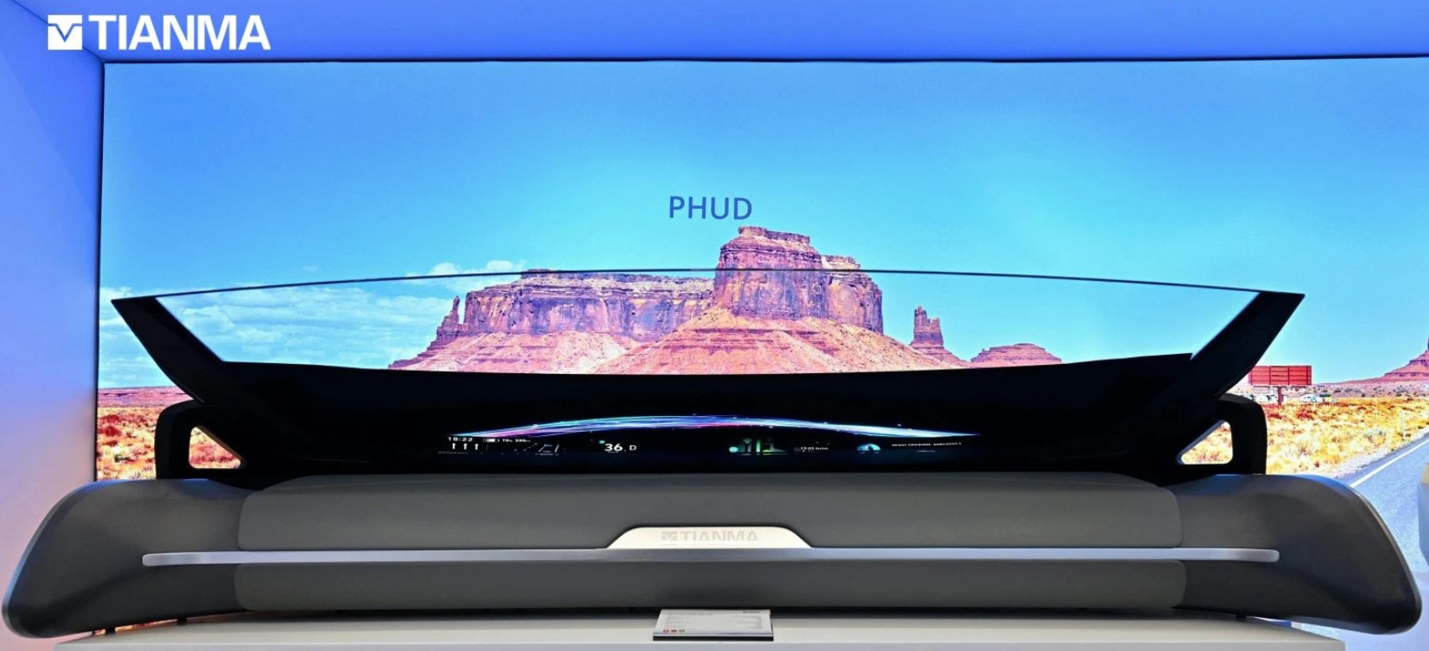
43.7” Ultra-wide IRIS HUD: This curved MiniLED HUD delivers up to 10,000 nits local peak brightness alongside 85% NTSC color gamut coverage to support high visibility and accurate color reproduction in automotive environments.
Analyst takeaway
Tianma’s Display Week 2026 exhibits highlighted the company’s continued efforts to develop high-efficiency OLED structures, new oxide backplanes and enhanced automotive display solutions. It seems like Tianma is pursuing a strategy of developing an innovative system that will include display performance, energy efficiency, and flexible form factors in various applications.
One of the main highlights was the focus on efficient OLED development through advanced material solutions, including PSF, NFB, and stacked OLED structures. Such OLED developments illustrate the general trend of achieving a balance between increased brightness and color gamut with low power consumption, especially due to the increasing popularity of AI smartphones and always-on devices.
Secondly, Tianma is continuously developing its presence in automotive applications by transitioning from display panels to full cockpit systems, transparent displays and enhanced HUD solutions. Such a strategy is quite advantageous for the company as the automotive industry shifts towards creating immersive cockpit environments and software-defined vehicles.
Bottom line
The Tianma exhibits showcased significant advances in OLED performance, oxide thin-film transistor backplanes, foldable screens and automotive dashboard displays. Tianma is further positioning itself within the high-end smartphone, IT, and automotive display markets through improvements in higher-performance architectures, power savings, and innovation in display systems.
Category
Industry
Display
Service
Standard
Report Type
Report
Time Period
Other
Receive our insightful weekly newsletter and stay ahead of the competition.
Author
David Naranjo
David Naranjo joined Counterpoint Research as part of its acquisition of DSCC, where he was Senior Director. David has more than 20 years’ experience in the consumer and commercial electronics industry. David’s professional background includes a wide range of responsibilities in product development, product planning, product management, product marketing, data analytics, and executive /operational management. Prior experience includes working in the consumer and commercial electronics industry as Director of Business Line Management at ViewSonic, Director of Product Planning at Samsung Electronics, Director of Connected Products at Kenmore, Director of Product Management at Mitsubishi Digital Electronics and Group Manager at Panasonic. David has a Bachelor of Electrical Engineering and an MBA in Finance and Marketing.