India Could Become World’s Training Ground for Physical AI
- Beyond manufacturing robots, India has the potential to become the global hub for Physical AI data collection and training services.
- India’s vast workforce, diverse environment and complex infrastructure are creating unique real-world datasets for training various robots.
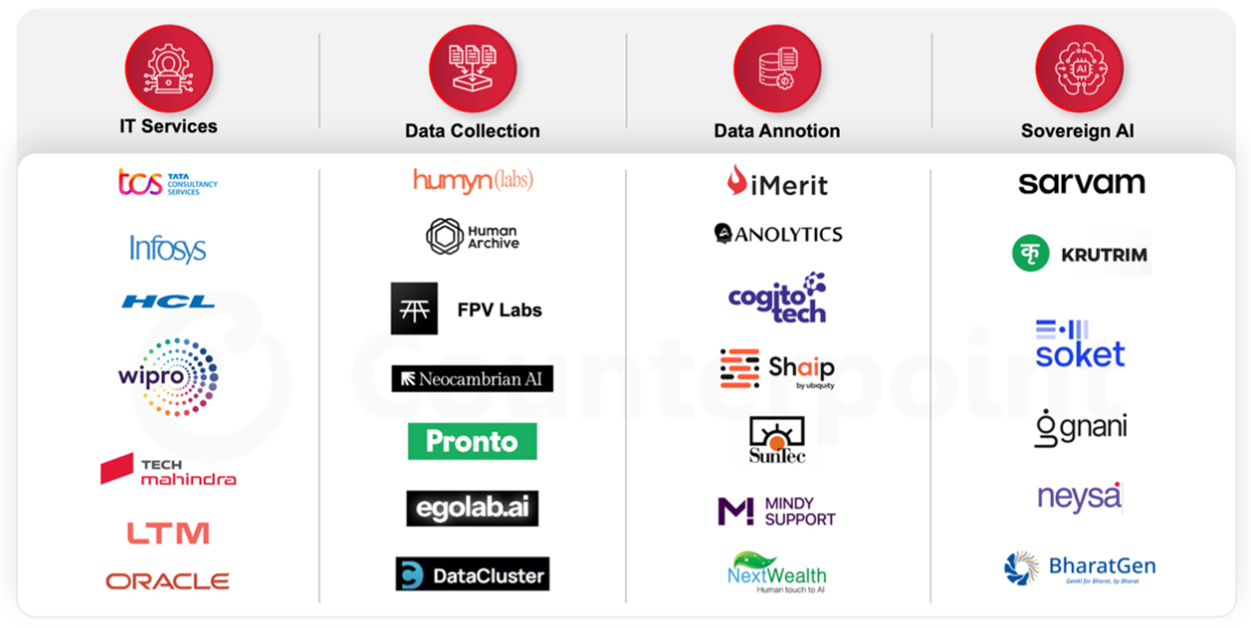
- Startups like Human Archive, Humyn, NeoCambrian, iMerit and Cogito Tech are building data collection and data annotation infrastructure.
- Sovereign AI companies, such as Sarvam AI, Krutrim and Soket AI, can leverage this potential to build unique local datasets for AI models.
- India's data collection and annotation services will create revenue opportunities worth $10 billion by 2030.
When people talk about robotics, they think about humanoid robots, industrial automation, service robots or fully autonomous workplaces where humans and robots coexist. India is slowly becoming a manufacturing hub, and there will be many opportunities in the robotics field, but the immediate opportunity is coming from robotics data training.
India is the world's most populous country, and workers in sectors such as manufacturing, clothing, hotels and restaurants, agriculture, and even homemaking are generating data that can be used to train robots to understand real-world situations. As we move from Generative AI to Agentic AI and then to Physical AI, simulation alone will not be sufficient to produce the desired results for robots. Robots need to understand how people harvest crops, fold clothes, organize shelves, clean tables, assemble products and stitch clothes. Real-world data, supported by foundation models and Vision-Language-Action (VLA) models, will help create robots that can effectively operate in the physical world. According to Counterpoint’s Physical AI Device Tracker, annual global robot shipments are expected to cross 10 million units by 2035. This will create a huge opportunity for India beyond robot manufacturing, including real-world data generation, training and data-driven services.
Key Companies Driving India’s Robotics AI Training Data and Service Ecosystem
Homemakers Finding New Income Opportunity

Homemakers are getting around $2.6 (INR 250) for recording one hour of video of household tasks. Egocentric data, or first-person videos captured through head-mounted cameras or smartphones, record everyday activities such as cooking, cleaning tables, washing dishes, folding clothes, organizing kitchens and stitching clothes.
This is creating opportunities for Indian startups that are making the process more organized and expanding opportunities beyond homemakers to factory workers, gig workers, hospitality providers and workers in the unorganized sector. Pronto, Human Archive, Humyn Labs, Egolab AI, NeoCambrian AI and NextWealth are among the startups offering services ranging from data collection to data annotation for robot training.
Factory Workers Teaching Industrial Skills to Robots
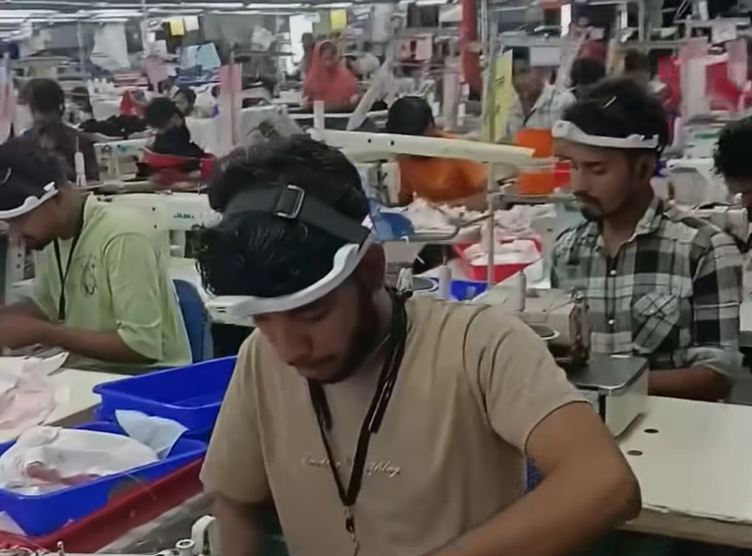
Industrial and manufacturing skills data is difficult to locate online due to its highly specialized nature. In a recent video that went viral on social media, workers at an Indian company, Karur Textile, were seen wearing head-mounted cameras and smart glasses to collect data on tasks such as picking up fabrics, operating tools, moving products and materials, and sorting products.
This has raised concerns about privacy, data usage and the future of jobs as robots become more common in factory environments. In fact, some factories have reportedly stopped data collection after protests from workers. However, robots cannot fully replace human beings in the workplace, and there will likely be an environment where humans and robots coexist and collaborate. Instead of traditional packaging, sorting, assembly-line, inspection, inventory handling and cleaning tasks, new job opportunities are expected to emerge in areas such as robot training, robot supervision, robot repairs, simulation engineering and safety auditing.
India’s Opportunity in Robot Data Training
China has become a powerhouse for robotics components and systems, the US leads in AI foundation models, and Japan and Europe lead in industrial robotics. India may take a different approach and emerge as a next-generation leader in Physical AI. India is also an attractive market for international robotics companies, which means they first need to understand the Indian people's culture, behavior, preferences and infrastructure before deploying fully autonomous robots. Motion capture or egocentric videos will be used mostly for dexterous hand manipulation. Converting such videos into two hours of useful video takes nearly eight hours of work. This process is time-consuming and requires experienced operators to improve the productivity of the training process. Therefore, an early investment in building an ecosystem around it can be a door to long-term success.
India's diverse cultures, languages and food habits across different states, combined with its nearly 500 million unorganized workforce, large talent pool, strong services DNA in IT (Information Technology) and BPM (Business Process Management), and presence of global enterprises, position it as a frontrunner for building the data layer, including audio, video, sensor and text data annotation; infrastructure layer, including data storage, compliance, quality assurance and processing; and the advanced layer, including digital twins, data simulation and synthetic data generation.
TCS, Infosys, HCLTech and Wipro have decades of experience in data engineering, global service delivery and AI development. India is also home to data annotation companies such as iMerit, Anolytics AI, Cogito Tech, Shaip, SunTec India and Mindy Support. Startups such as Humyn, Human Archive, FPV Labs and NeoCambrian are helping collect real-world data to train foundation models and Physical AI systems. At the same time, frontier model and sovereign AI companies such as Sarvam AI, Ola Krutrim, Soket AI, Gnani.ai and Neysa are building homegrown AI models for India, and these models can leverage local datasets to better support Physical AI applications.
The combination of data collection, data annotation, frontier AI labs and IT service companies could make India a global hub for robot data training in the next decade of Physical AI, much like the way India became the world's IT services hub in the past.
Analyst Takes
Sovereign AI is not only about models; it is also about a country's own datasets. India has a huge population, millions of households, vast agricultural land, extensive roads and transportation infrastructure, and diverse factory environments that can help build unique datasets for image annotation, video labelling, multimodal data processing and AI model validation. India is already home to more than 2,000 AI companies and around 250 robotics companies, although the number of deployed robots remains lower than in countries such as China, US, Japan, South Korea, Singapore and Germany.
These homegrown startups are expected to compete with the US’ OpenAI and Anthropic, as well as China's DeepSeek and Alibaba Qwen, particularly in serving India's domestic market. This trend will not only create opportunities for data and service providers, but it will also open doors for semiconductor companies and cloud providers. High-resolution video recording and multimodal datasets require massive storage and processing capabilities, creating demand across the entire AI ecosystem. India is expected to create an AI data training market worth nearly $10 billion by 2030, making it one of the fastest-growing segments in the country's AI industry.
Category
Industry
AI, Emerging technologies
Service
Premium
Report Type
Report
Time Period
Other
Receive our insightful weekly newsletter and stay ahead of the competition.
Author
Soumen Mandal


Soumen is a Senior Analyst tracking IoT, Automotive and Telecommunication ecosystem at Counterpoint Research. He is interested in IoT applications, connections, components, electric vehicles, connected cars, autonomous vehicles, semiconductors, shared mobility, services and emerging technologies. He started his career as an Energy Analyst with Manikaran Power Ltd. He has experience working with DISCOMs and SLDCs in the Indian power and energy industry. He is currently based in Gurgaon. He holds an Electrical Engineering degree and an MBA in Marketing & Finance.