Apple’s Staggered iPhone 18 Launch Strategy Prioritizes Pro Models and Its First Foldable
Apple is expected to launch the iPhone 18 Pro, iPhone 18 Pro Max and its first foldable iPhone in fall 2026, while delaying the base iPhone 18 models until spring 2027.
Panel shipments for the iPhone 18 Pro, iPhone 18 Pro Max and foldable iPhone began in July 2026, while panel production for the base models has not yet started. The staggered schedule is not unexpected given rising memory prices and higher costs for other critical components. By prioritizing premium devices, Apple can focus its initial production capacity on higher-margin models that are better positioned to absorb increased bill-of-material costs.
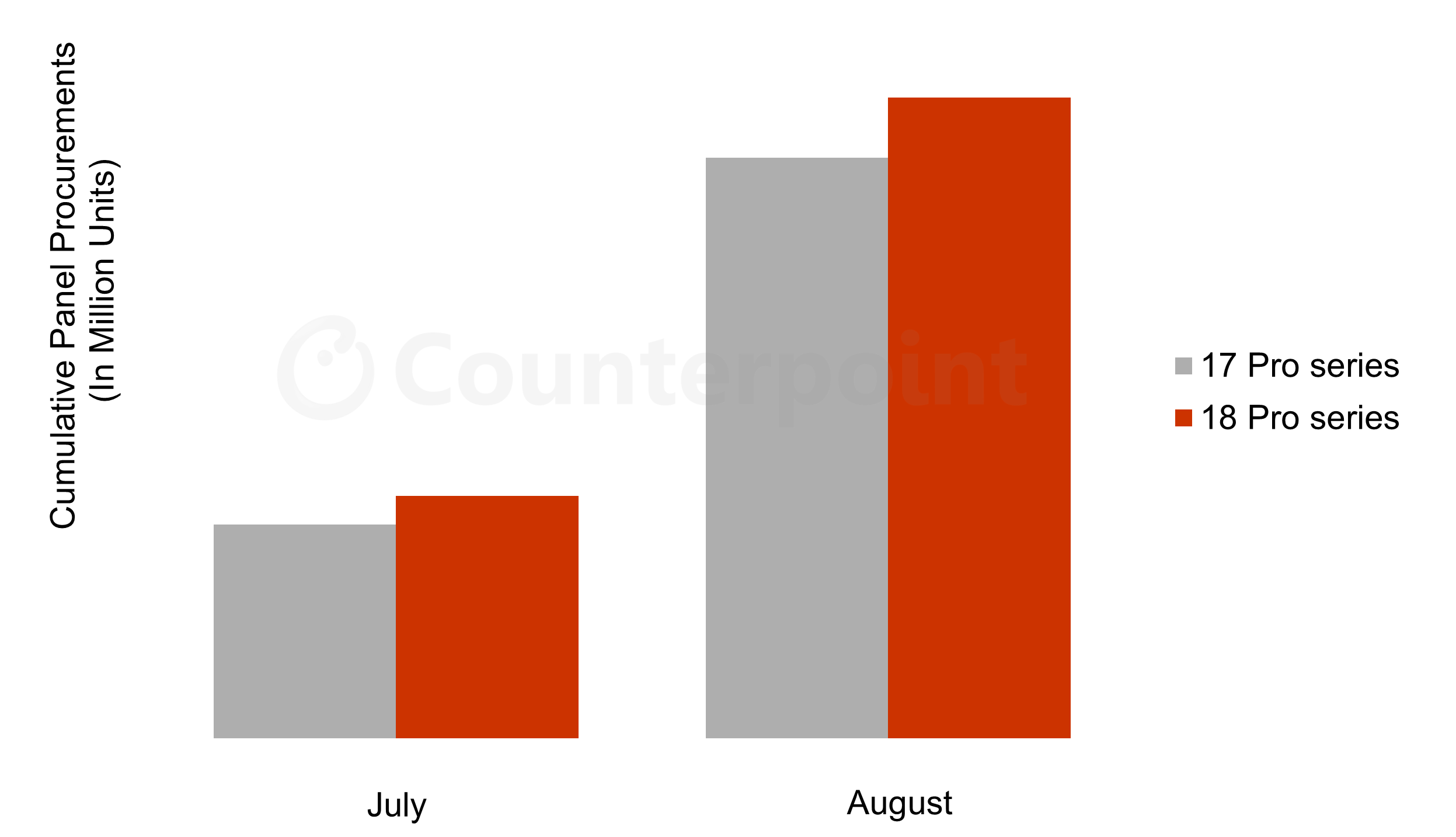
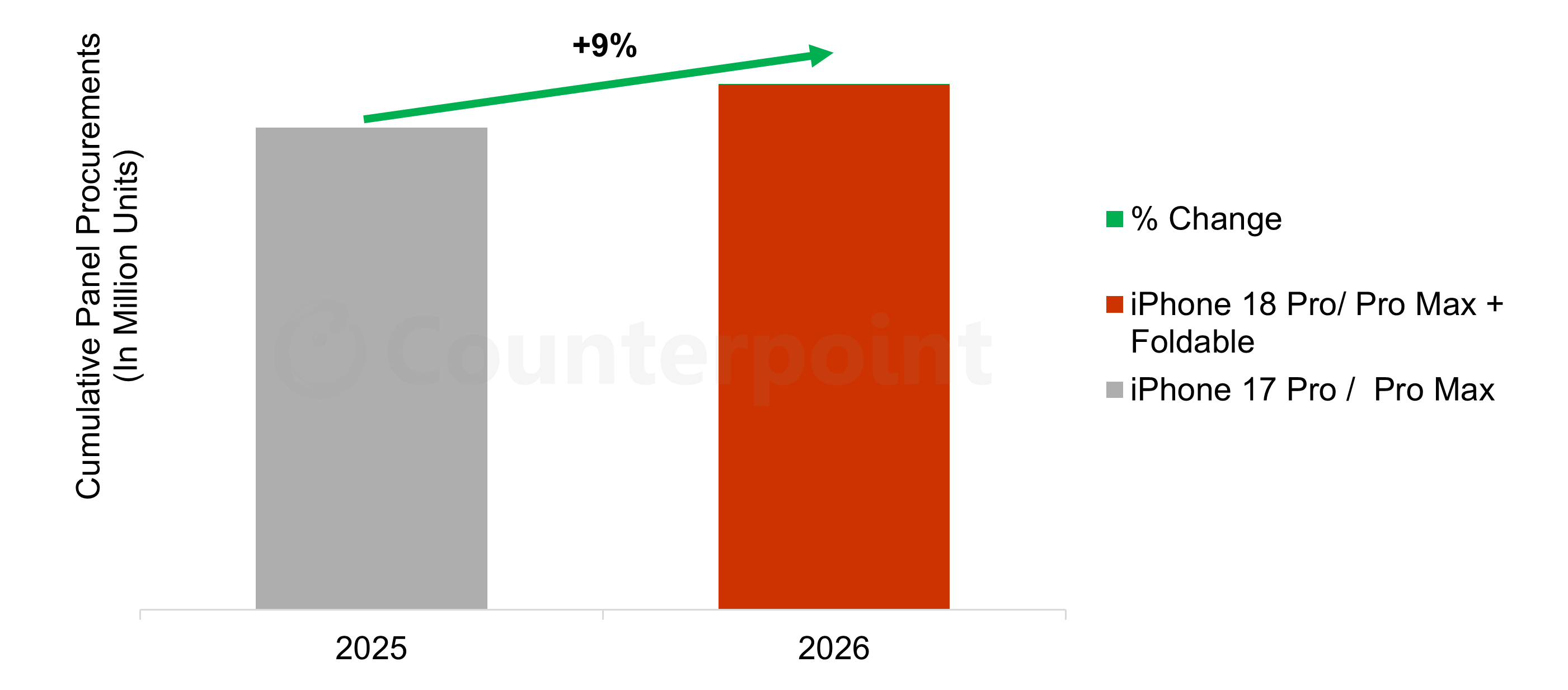
According to Counterpoint Research’s Monthly Premium OLED Smartphone Tracker, cumulative panel shipments for the iPhone 18 Pro series through August 2026 is tracking 10% higher than shipments for the iPhone 17 Pro series during the comparable period in 2025. The stronger early procurement suggests that Apple is preparing for solid demand for its next-generation premium models. When comparing panel procurements for 2025 Pro models versus 2026 Pro Models + the foldable model, panel procurements are tracking 9% higher.
Expected iPhone 18 Pro Series Upgrades
The iPhone 18 Pro and iPhone 18 Pro Max are expected to retain their respective 6.3” and 6.9” screen sizes while introducing several camera, display, battery and connectivity enhancements.
- Camera system: One of the most significant potential upgrades is a variable-aperture main camera, possibly limited to the Pro Max. The technology would provide mechanical control over light intake, helping improve portrait photography and reduce overexposure in bright environments. The front-facing camera may increase to 24MP, while a three-layer stacked image sensor could provide stronger low-light performance.
- Display and design: The devices may adopt LTPO+ display technology to improve brightness and power efficiency. The Dynamic Island is expected to become approximately 35% smaller as Apple moves additional Face ID components beneath the display. Potential new color options include Dark Cherry, Light Blue and Dark Grey.
- Battery and connectivity: Battery capacity is also expected to increase, with the Pro Max potentially featuring a battery of approximately 5,567mAh. The devices are expected to use Apple’s second-generation C2 in-house 5G modem, which could improve cellular efficiency and expand satellite connectivity capabilities.
Apple’s First Foldable iPhone
Apple’s first foldable model, which may be positioned under the iPhone Ultra name, is expected to feature a wider, passport-style form factor rather than the taller design used by many existing foldable smartphones.
- Display and design: The smartphone is expected to feature a 7.6” internal display and a 5.3” cover display from Samsung Display. The unfolded device could measure approximately 4.5mm thick and incorporate a titanium frame. Due to internal space constraints, Apple may omit Face ID and a telephoto camera, instead integrating Touch ID into the power button.
- Hardware: The foldable iPhone is expected to use Apple’s A20 Pro processor, manufactured on a 2nm process, along with the C2 cellular modem. Other anticipated specifications include 12GB of RAM and a dual-cell battery with a combined capacity of approximately 5,000mAh to 5,500mAh.
- Cameras: The device may include dual 48MP rear cameras consisting of main and ultra-wide sensors. Two front-facing cameras are also expected, including an under-display camera for the internal screen and a punch-hole camera for the cover display.
- Software: Apple is expected to optimize iOS 27 for the foldable form factor, adding iPad-like multitasking, resizable application windows and landscape-oriented features designed for the wider internal display.
Analyst takeaways
Apple’s decision to begin the iPhone 18 cycle with the Pro models and its first foldable device reflects an increasingly premium-focused product and supply-chain strategy. The 10% increase in early iPhone 18 Pro panel shipments indicates confidence in premium demand, while delaying the base models gives Apple greater flexibility to manage elevated component costs and production capacity.
The foldable iPhone will also represent more than a new form factor. It will provide Apple with an opportunity to establish a new ultra-premium tier, deepen integration between the iPhone and iPad user experiences, and potentially reset consumer expectations for foldable smartphones.
Bottom line
Apple’s 2026 iPhone launch cycle is expected to prioritize profitability, product differentiation and premium innovation. Stronger early panel procurement for the iPhone 18 Pro series and the introduction of Apple’s first foldable could support a powerful fall launch, while the delayed arrival of the base models in spring 2027 may help Apple manage costs, extend the upgrade cycle and maintain iPhone momentum across a longer period.
iPhone 17 Pro Series vs iPhone 18 Pro Panel Procurement, July - August
2025 iPhone 17 Pro Series vs 2026 iPhone 18 Pro Series + Foldable Panel Procurement
To see more of the Monthly Premium OLED Smartphone Tracker and learn more about the panel shipment trends for iPhone models and recently announced models, readers should contact [email protected].
Category
Industry
Smartphone, Display
Service
Standard
Report Type
Report
Time Period
Other
Receive our insightful weekly newsletter and stay ahead of the competition.
Author
David Naranjo
David Naranjo joined Counterpoint Research as part of its acquisition of DSCC, where he was Senior Director. David has more than 20 years’ experience in the consumer and commercial electronics industry. David’s professional background includes a wide range of responsibilities in product development, product planning, product management, product marketing, data analytics, and executive /operational management. Prior experience includes working in the consumer and commercial electronics industry as Director of Business Line Management at ViewSonic, Director of Product Planning at Samsung Electronics, Director of Connected Products at Kenmore, Director of Product Management at Mitsubishi Digital Electronics and Group Manager at Panasonic. David has a Bachelor of Electrical Engineering and an MBA in Finance and Marketing.