Google’s AI Strategy is in its own ‘Discovery Loop’
0
August 10, 2026
Headline: DeepMind shakeup, Gemini reboot, and refrain from going the IBM Way.
Structure first: Hassabis to Chairman, Kavukcuoglu to Pichai, a research lab turned into a P&L.
Then the people: Jeff Dean & co. to Discovery Loop, autonomy chosen over commercial pace, a lot to think about culture fits and fixes.
Now the real test: The gap is commercial, not technical, and Gemini 4 & Enterprise wins will be the scoreboard.
Google invented the bedrock of the AI industry, the transformer framework. Every serious AI model in the world today is a descendant of research that came out of Mountain View. And yet, in 2026, Google is seen as one of the tier-1 frontier model and infrastructure company been seen as the one playing catch-up on shipping cadence, on developer default, on enterprise reach.
Google, especially DeepMind, has snowballed into a cultural glut with mismatch and struggles to move from frontier research to commercialisation mode.
The First Shakeup: ChatGPT Moment
The OpenAI ChatGPT moment changed this, and that was the wake-up call and first-order shakeup.
•Google Brain and DeepMind spent years as two parallel empires under one roof, both world-class, both competing quietly for talent, compute, and Sundar Pichai's attention.
•The 2023 merger into Google DeepMind was supposed to end that; it was the first shakeup. However, it did not, at least culturally, as we can see from the second shakeup this week.
•Researchers kept optimising for AGI milestones and deeper academic publications, but not products that were commercial and drum up Anthropic-style skyrocketing ARR. Google needs cloud contracts, developer lock-in and enterprise adoption.
•Gemini, despite strong underlying capability, consistently launched behind schedule and underperformed expectations in public benchmarks, eroding Google's narrative as the frontier model leader.
Second Shakeup: What changed this week
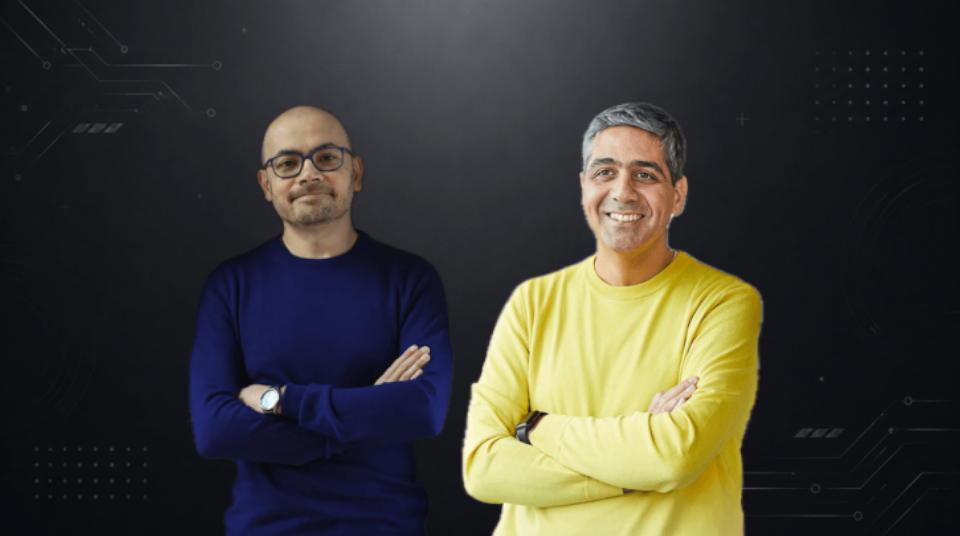
Demis Hassabis moves from CEO to Chairman of Google DeepMind and Chief Scientist of Alphabet, making him the AGI visionary and protecting his role and contribution when the industry reaches there.
Koray Kavukcuoglu (CTO earlier, now SVP) now reports directly to Sundar Pichai, bypassing DeepMind's old hierarchy entirely to put an end to being more of a research institution and start shipping the tech and products commercially.
• That is the crux, and just the research fiefdom model is seeing a transformational moment. DeepMind-driven cutting-edge AI is now a Pichai-owned P&L beyond a semi-autonomous lab with a commercial focus.
•Kavukcuoglu inherits Gemini 4 mid-cycle, building upon his tech moat from AlphaGo to deep architecture experience. Taking the reins from Demis’ big shoes to fill in from the research vision side and on the successful industry-leading commercialisation side, with pressure from Sundar. All hands and minds on deck.
The Brain Drain halt, well done by Google
Jeff Dean is leaving after 27 years. He co-founded Google Brain and built much of the compute infrastructure the company runs on. Obviously, there could be cultural and visionary clashes, but I hope constructive.
However, when there is enough pressure + clash to move out of your comfort zone “research”, you try to find “your next calling”.
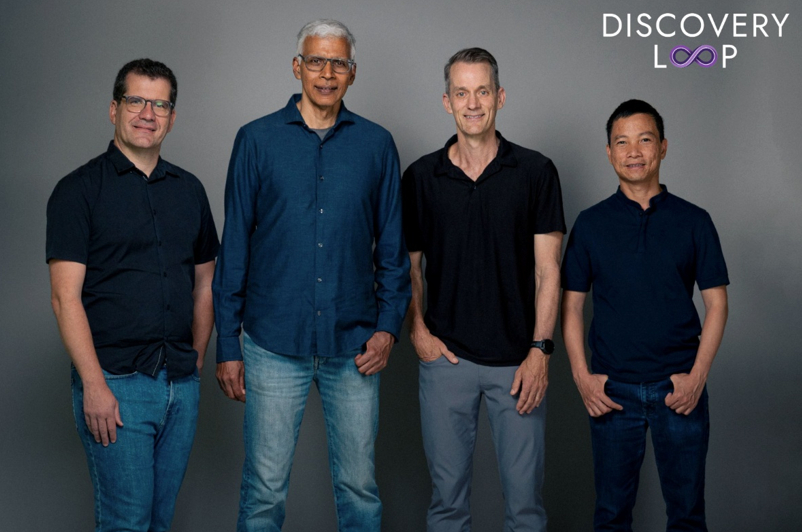
He is not going alone. Quoc Le (Google Brain Co-Founder), Oriol Vinyals (VP of Research), and Sanjay Ghemawat (Senior Fellow, 25 yrs at Google) are going with him to Discovery Loop, a public benefit corporation focused on ML-driven scientific research.
However, they are not leaving the Google family entirely, but seeking some Research-Passion autonomy and are not interested in commercialising at the current industry pace rat race. Alphabet is a founding investor, which makes the whole thing look amicable. So not to confuse the optics with the signal.
People of this calibre do not leave over compensation or title. They leave when they conclude their best work will happen somewhere else.
Adding the recent losses of Noam Shazeer to OpenAI and John Jumper to Anthropic is something Google has already been introspecting on, and this shakeup is pivotal. Though no org chart redesign fixes that in a quarter. It’s a longer game.
Where Google is genuinely losing – Enterprise
Anthropic and OpenAI are winning benchmark comparisons, but more so the speed of innovation, MVPs, fast-paced deployments, support from AWS and Microsoft, respectively, have helped them access enterprises faster and eventually win enterprise trust. This is something which is slower to build and much harder to take back.
Anthropic has positioned Claude as the safe, auditable, compliance-friendly choice and sheer usage across the spectrum of developers, researchers, organization has had a super flywheel effect to make the model better, faster from coding to reasoning.
OpenAI has Microsoft's distribution engine underneath it: Azure, Copilot, and a hundred million enterprise seats that already open every morning.
Google's Vertex AI has the architecture of a winning platform. What it has never had is the go-to-market urgency, the customer success depth, or the enterprise sales culture to match.
The uncomfortable truth is one does not win enterprise AI by having the best model. But the win is possible beyond the model: right partnerships, channels, security promise, collective learning, ease of deployment, use, faster launches, updates making it easier for CIO, CSO and CFO to sign the cheques.
And the pressure from the other direction: open models
•Llama-class models and the Chinese open alternatives keep compressing toward frontier quality, and every increment makes premium pricing on closed models harder to justify.
•These squeeze Google differently than it squeezes Anthropic or OpenAI, because Google's differentiation was never supposed to be the best model in isolation but a platform and ecosystem.
•DeepMind, Android, Search, YouTube, Maps, Workspace access to billions of users and millions of businesses using Google Ads and Cloud, which no open-source lab can replicate that data and distribution surface.
•But ecosystem advantages only convert into AI revenue if the platform layer stitching them together is coherent and genuinely pleasant for developers. That work is still incomplete to decrease the gap between research and productizing the same.
The chain that must close
•The logic is simple at least on paper: frontier research produces model capability → model capability powers Gemini → Gemini powers Vertex AI and Cloud → Cloud wins enterprise revenue.
•Every link in that chain exists at Google. What has been missing is the connective tissue with research to product urgency, discipline, strategy, focus on developer experience, and an enterprise focus built for AI thinking differently from the cloud era.
•Google has historically treated commercialisation as a downstream consequence of technical excellence. Do great science, and the market follows.
•Anthropic and OpenAI inverted that. Commercialisation was the mission from day one, with research blended well with real-time reinforced learning from the customers.
•That inversion is the entire competitive battlefield right now, and the restructuring is Google's attempt to adopt it. Late, but not too late. Investors must be patient.
What to watch over the next 12–18 months
•Gemini 4. The first real test of the new shakeup and org structure. On time and at genuine frontier quality, and the comment I made in the Bloomberg piece by Newley Purnell: “Sleeping Giant in Global AI race, Now Fully Awake”
•This is still true, but another delay and the talent-drain story can put it back into slumber. This is the nature of the AI race. You can't be a hare.
•Cloud enterprise win rate. Vertex AI against Azure OpenAI and AWS Bedrock, quarter on quarter. This is the commercial scoreboard and not just look at the benchmark scoreboards.
•Talent stability. Further senior departures from DeepMind research in the next two quarters would confirm a structural culture problem rather than a one-off reshuffle. How Google further arrests this and attracts new long-term future talent to rebuild the org.
•Discovery Loop's output. If Jeff Dean's venture starts producing meaningful science on Alphabet's money, it could confirm the culture needed fixing, and maybe the shakeup will pan out to be a prudent move in hindsight to remove the friction.
•In the end, org success is not a tech problem; it always comes down to a “people problem”. My MIT professor Loredana Padurean thesis and book hit the nail on the head: The Job is Easy, The People Are Not!
•Google's open-model posture. Google did ultimately join the Open Weights & American AI Leadership initiative (maybe a day late!). Whether it open-sources meaningful Gemini variants beyond Gemma, and how it prices against free alternatives, will define its developer ecosystem for years. Google can have a hybrid strategy!
Wrapping up: Google DeepMind 2.0 Beckons
•Google will not be displaced from AI's top tier. TPUs at scale, unmatched data moats, and three billion Android devices make that close to impossible. But "not displaced" is a long way from "winning."
•The real risk is a slow drift into the IBM scenario, which was technically respected, infrastructurally essential but commercially outmanoeuvred by rivals who were simply more focused.
•The shakeup is the right diagnosis and the right organizational fix. The execution window is narrow, and Google is entering it having just lost the people who built its foundation.
•Sundar Pichai now owns AI directly. That was the correct call. It also means there is nobody left to attribute the next miss to.
•But won't be surprised if one of the Google founding team steps in to guide Sundar and Koray!
Receive our insightful weekly newsletter and stay ahead of the competition.
Author
Neil Shah
Neil is a sought-after frequently-quoted Industry Analyst with a wide spectrum of rich multifunctional experience. He is a knowledgeable, adept, and accomplished strategist. In the last 18 years he has offered expert strategic advice that has been highly regarded across different industries especially in telecom. Prior to Counterpoint, Neil worked at Strategy Analytics as a Senior Analyst (Telecom). Neil also had an opportunity to work with Philips Electronics in multiple roles. He is also an IEEE Certified Wireless Professional with a Master of Science (Telecommunications & Business) from the University of Maryland, College Park, USA.