Artificial Intelligence (AI) is playing an increasingly important role in mobile security for smartphones. Not only are attackers getting more sophisticated with the use of AI, but platform providers, like Google and others, continue to integrate Machine Learning (ML) and advanced LLMs in their security stack to address real-time vulnerabilities and changing threat scenarios.
The shift towards AI for security, whether on-device or in the cloud, introduces new considerations regarding the efficacy of AI systems that benefit from access to vastly larger datasets. While on-device processing enhances privacy by keeping user data localized, cloud-based capabilities are critical to ensure systems can continue to learn and stay on top of changes in the threat environment. The combination of both aspects of AI implementations creates a framework capable of meaningfully impacting the user experience in a positive manner.
A recent Counterpoint consumer study across six key countries indicates that safety and security are key considerations for current smartphone owners. Users across nationalities (Brazil, Germany, India, Thailand, UK and US) and demographics indicate that they are concerned AI could be misused for fraud or scams, above other potential impacts it might have on their mobile experience and lives. However, improvements in the prevention of phishing and social engineering attacks, deep fake/image verification, data protection enhancements, and improvements in biometrics (such as fingerprints and facial recognition) are all viewed in a positive light and indicate that users recognize the value these new technologies can offer and the positive impact they can have.
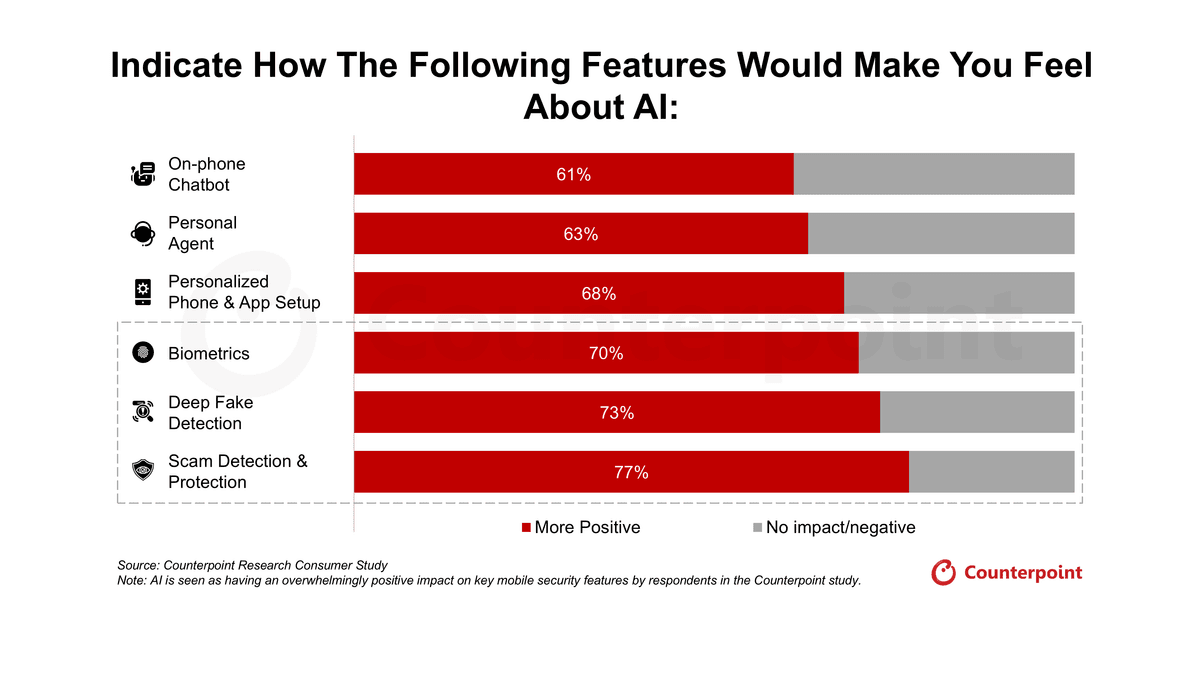
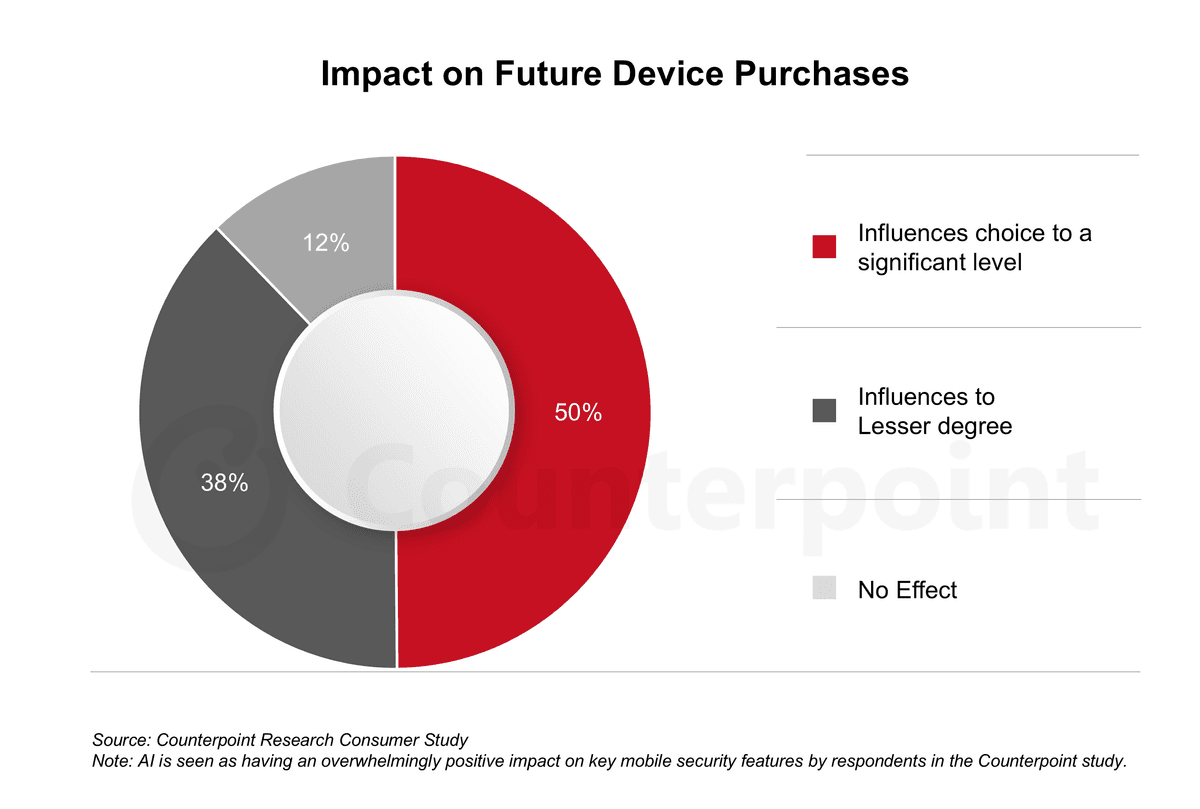
For smartphone OEMs in the Android ecosystem, these results are validation of their existing and continued efforts to utilize increasingly powerful AI tools to combat rising threats and connect with user base concerns in the right way. It also positions them well to address security as a future purchase parameter. In the same study, respondents indicated that increased confidence in AI-powered security will impact the next device choice to a significant level - highlighting the overall importance users place on mobile security.
Google, as an OS provider, has been pushing the utilization of proactive security measures in the Android platform for some time. The company is now increasingly supplementing Machine Learning-based features with LLM-based AI capabilities to further strengthen the platform and introduce new features that previously have not been possible to implement.
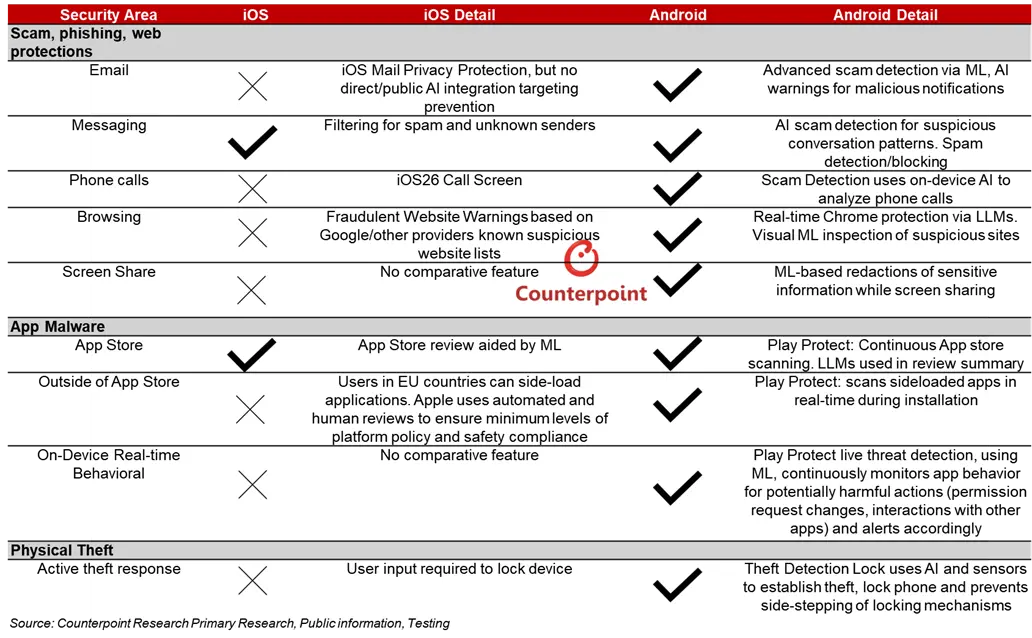
While features like real-time call screening or phone call spam detection provide increased security via the Android platform, they are not universally available yet due to the open and diverse nature of the Android platform. The openness of the platform allows OEMs to utilize the features they consider fit and develop their own solutions in addition to existing Android features to differentiate their products from the competition. Apple, on the other hand, can control the end-to-end development of hardware and software-based security features uniformly. Until WWDC25, the company had not been as publicly active in integrating advanced AI features in its security stack, but announcements at the event, including automatic spam filtering in Messages, indicate that Apple is moving in a similar direction to Google.
AI-powered Security Comparison Table: Android vs iOS
Below is a round-up of the main AI-enabled security features on default Android and the equivalent default iOS implementation. Google’s focus on proactive measures, enabled with AI, helps Android stay on even footing with potential attacks – if not ahead of them. Assessing Apple's AI security implementations relies on publicly available information, primary research and hands-on testing.