- EREVs offer electric driving with the added flexibility of a petrol engine for longer journeys. For consumers who lack reliable charging access or regularly travel long distances, EREVs offer a practical alternative.
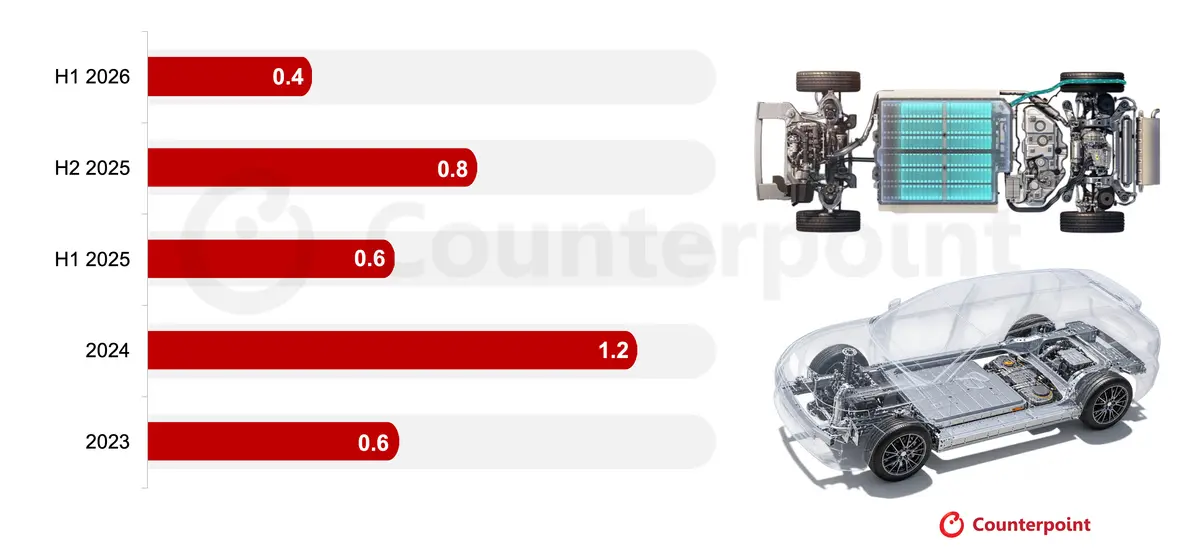
- China has become the leading market for EREVs, but sales declined by 26% YoY during H1 2026.
- Chinese automakers are starting to take EREVs to overseas markets, while automakers in the US and South Korea are also developing their own models.
- The long-term success of EREVs will depend on how quickly BEV technology improves, battery costs fall and charging networks expand.
EREVs (Extended Range Electric Vehicles) are gaining some traction in the market and are likely to remain an option for certain customers, but they are unlikely to replace BEVs. EREVs offer electric driving with added flexibility of petrol engine for longer journeys. However, this comes with extra cost and complexity.
If battery costs fall, charging gets faster and charging networks expand, BEVs will become a practical choice for more drivers. In that case, EREVs will likely serve as a bridge to fully electric vehicles. But where charging remains limited and drivers need to travel long distances, EREVs could continue to play an important role, especially in larger SUVs and pickups, and in countries where charging infrastructure remains patchy and unreliable.
China’s EREV Market: Is Growth Slowing?
China has become the leading market for EREVs, with brands such as Li Auto, Deepal and Leapmotor offering a wide range of models. These vehicles have attracted buyers who want an electric driving experience without depending entirely on charging stations.
However, according to Counterpoint Research’s latest Global Passenger Vehicle Model Sales Tracker, Q2 2026, recent sales figures show that growth is slowing. China’s EREV sales reached around 1.3 million units in 2025, up only modestly from the previous year. But the sales declined by 26% YoY during H1 2026, compared with 13% decline in overall PV sales, clearly showing that this segment is facing strong competition and changing consumer demand against the backdrop of China’s already mature BEV market and the related charging infrastructure.
However, not every market is as mature as China’s. The success of EREVs in a market will depend on charging access, driving habits, vehicle prices and regulations.
China EREV Sales Volume, 2023-H1 2026 (in Mn)