

- Apple and Samsung captured five spots each in the global top-10 best-selling smartphones list, with the iPhone 16 leading at 4% share due to higher sales in India and Japan.
- The iPhone 17 Pro Max captured the tenth spot as the series outperforms the predecessor globally, supported by replacement demand.
- All of Samsung’s five entries in the list came from the Galaxy A series, with the models registering similar sales shares while effectively targeting different consumer segments.
Apple’s iPhone 16 was the best-selling smartphone globally in Q3 2025, according to Counterpoint Research’s Global Handset Model Sales Tracker. Samsung and Apple captured five spots each in the top-10 list, which contributed 20% of the overall global smartphone volume for the quarter. 5G smartphones captured the top five spots for the first time in a Q3 as the tech becomes standard and a key consumer preference across regions.
The iPhone 16 led the market with 4% volume share, maintaining the first position for the third consecutive quarter. Thanks to a sales boost in India driven by festive promotions and sustained recovery in Japan, the iPhone 16 was able to restrict the iPhone 16 series’ seasonal decline due to the iPhone 17 series launch. The iPhone 16 Pro models, however, saw a steeper decline as the highest contributing markets, like the US, UK and China, saw more consumers opting for the iPhone 17 series over the predecessor.
Share of Global Top 10 Best-selling Smartphones, Q3 2025 vs Q3 2024
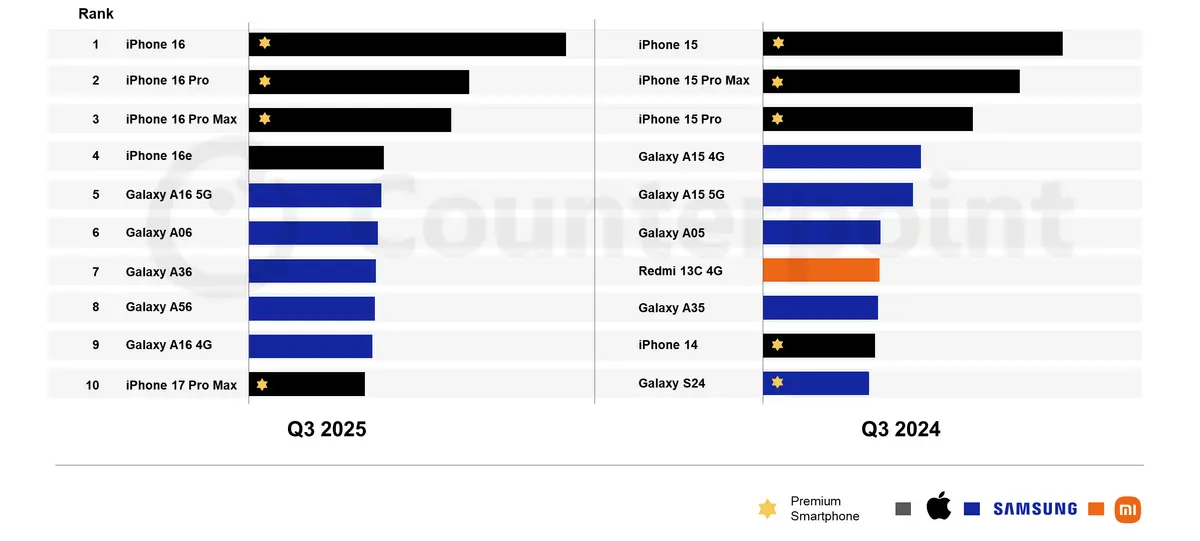
Source: Counterpoint’s Global Monthly Handset Model Sales (Sell-Through) Tracker, September 2025
Note: Smartphones with a wholesale price of $600 or above are considered premium.
The iPhone 17 Pro Max secured the tenth position in the list for the quarter and was the best-selling model in September 2025 despite limited availability towards the end of the quarter. The sales are also being pushed by COVID-era iPhone buyers looking for a smartphone replacement. The iPhone 17 Pro models introduce major camera upgrades with professional-grade 48MP sensors, advanced features like ProRes RAW and GenLock, and an 8x optical-quality telephoto zoom. Powered by the new A19 Pro chip and enhanced with vapor chamber cooling, these devices deliver high-end performance optimized for demanding creative workflows.
Samsung secured five spots on the list, all from the Galaxy A series, which registered a stronger presence than last year. The Galaxy A-series smartphones registered similar sales shares while effectively targeting different consumer segments. The Galaxy A16 5G was the best-selling Android smartphone for the quarter, moving up one position compared to its predecessor last year and overtaking the 4G variant of the series. The Galaxy A36 and A56, Samsung’s mid-segment offerings, are seeing higher sales than their predecessors due to the infusion of “Awesome Intelligence”, Samsung’s AI capabilities like “Best Face” and “Nightography”, earlier reserved for flagships. The smartphones now also bring faster charging and longer software support than their predecessors.
The Galaxy A16 4G and Galaxy A06, the only LTE smartphones in the list, continue to remain key models in emerging markets like Latin America and the Middle East and Africa (MEA), contributing over half of sales volume for each model. The earlier launch of the Galaxy A17 series smartphones capitalises on the festive promotions, but would limit the overall Galaxy A16 series as well.
The mid-price segment’s presence in the top-10 best-selling smartphones is expected to remain strong, driven by the growing integration of GenAI features. These advancements make the segment more competitive, deliver greater value to consumers, and further bridge the user experience with flagship models.


