

- AI PC adoption is moving rapidly from early adopters into the volume market. With Ryzen AI 400, AMD is targeting the mainstream notebook, desktop and mini-PC segments with a platform designed for scale.
- On-device AI is entering its execution phase. The conversation has shifted from “Can AI PCs deliver real value?” to “How fast can they replace the installed base?” across consumer, commercial, and creator sectors.
- Ecosystem momentum is building. Broad OEM participation and a maturing software stack means AMD is positioning Ryzen AI as a long-term pillar of the Windows AI PC market.
At CES 2026, AMD used Dr. Lisa Su’s opening keynote to state a clear ambition: bring “AI everywhere, for everyone.” With the introduction of the Ryzen AI 400 Series, expanded Ryzen AI Max+ offerings and the new Ryzen AI Halo developer platform, AMD framed on-device AI as the center of its next client computing cycle.
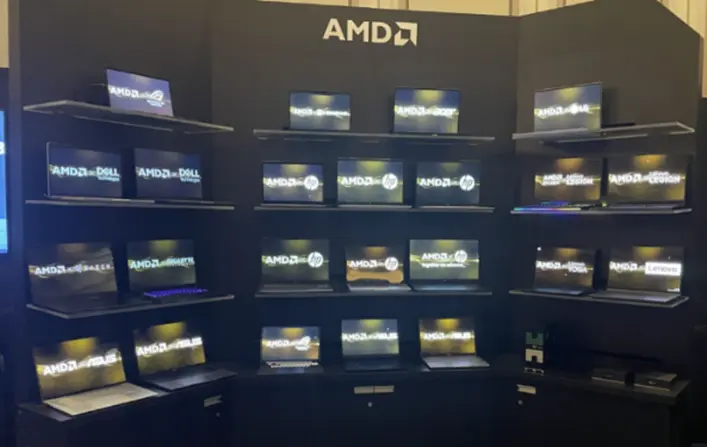
With six major OEMs (Acer, ASUS, Dell, HP, GIGABYTE, and Lenovo) confirmed to ship Ryzen AI 400 systems starting in Q1 2026, AMD is making its first credible attempt to define what a mainstream AI PC looks like.
Why Ryzen AI 400 matters
Ryzen AI 300 established AMD’s technical credibility in AI PCs. Ryzen AI 400 is about scale.
With this generation, AMD is targeting the next phase of AI PC growth by:
- Bringing up to 60 TOPS of NPU performance; well beyond Microsoft’s Copilot+ baseline.
- Integrating Zen 5 CPU cores, RDNA 3.5 graphics, and second-generation XDNA 2 NPUs into a single SoC.
- Extending AI acceleration beyond notebooks into desktops and mini-PCs, including the first Copilot+ desktop processors.
- Aggressive entry pricing starts at $499, driving volume adoption.
The AI PC market will be decided by how quickly AI capability penetrates the replacement cycle across consumer and commercial segments. Ryzen AI 400 is AMD’s answer to that challenge.
What this means for the PC ecosystem
- The AI PC category is entering its volume phase. With silicon, software, and OEM roadmaps now aligned, 2026 is shaping up to be the first real AI-driven client refresh cycle. AI PCs are moving beyond experimentation and into standard product planning.
- Unlike rivals leaning heavily into NPU-only narratives, AMD reinforced its "tri-pillar" story. By integrating Zen 5 CPU cores, RDNA 3.5 graphics, and second-generation XDNA 2 NPUs into a single SoC, they are winning in mixed workloads that matter to creators and gamers.
- Desktop AI PCs create a new upgrade cycle. Intel and Qualcomm remain mobile-focused, and AMD is positioning Copilot+ capabilities in desktop processors. This opens a new commercial and prosumer refresh opportunity for SMBs, creators, and enterprise power users.
- ROCm 7.2 has expanded to unified Windows and Linux support, with native Ryzen AI 400 integration. AMD recognizes that tooling, workflows, and developer friction will determine platform success. Competing with NVIDIA’s CUDA ecosystem, AMD is now trying to compete for local AI developers.
Analyst takeaways
- At CES 2026, AMD laid out a platform roadmap aimed squarely at defining the mainstream AI PC category.
- 2026 will be the first true AI-driven PC refresh cycle, driven by on-device AI moving into standard system configurations.
- AMD is focusing on security and local inference which could shift its business mix toward more stable corporate refresh cycles.
- Ryzen AI 400 is positioned as the efficiency leader, promising multi-day battery life and superior thermals for ultra-portables.
- The winners in the AI PC era will be determined less by peak performance and more by who can deliver AI capability at scale, across price tiers and form factors.
- With Ryzen AI 400, AMD is positioning itself as a volume platform vendor for the next generation of Windows PCs.