

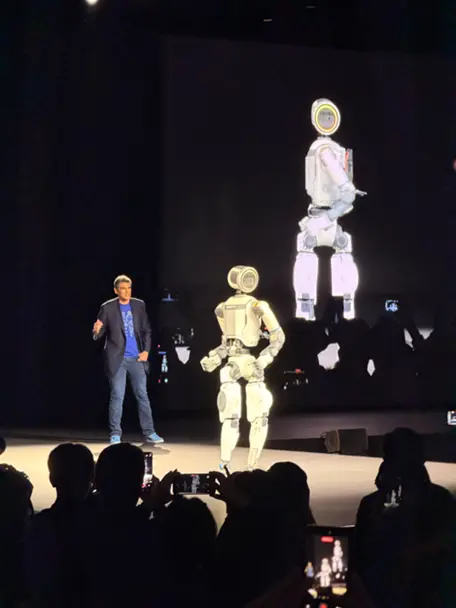
- Hyundai set the tone at CES 2026 with its subsidiary Boston Dynamics unveiling Atlas, its humanoid robot coming into production in 2026.
- Bosch and Neura announced a partnership immediately after the show to co-develop a data foundation.
- BMW has actively been working with the Figure 02 humanoid with the robot assisting 10 hours per day on the assembly of vehicles.
- Automakers are the most poised to play a central role in the development and deployment of humanoid robots for the next decade.
A clear future for humanoid robotics emerged when Hyundai unveiled the production-ready Atlas at CES 2026, developed by its subsidiary Boston Dynamics. The South Korean automotive group plans to deploy 30,000 Atlas units at its factories in 2026 to begin large scale production and integration in manufacturing. The long-awaited humanoid was finally displayed to the public for the first time at the CES 2026 press conference, where the humanoid showed off impressive dexterity, balance and the ability to replace its own batteries. From that moment on, the stage was set.
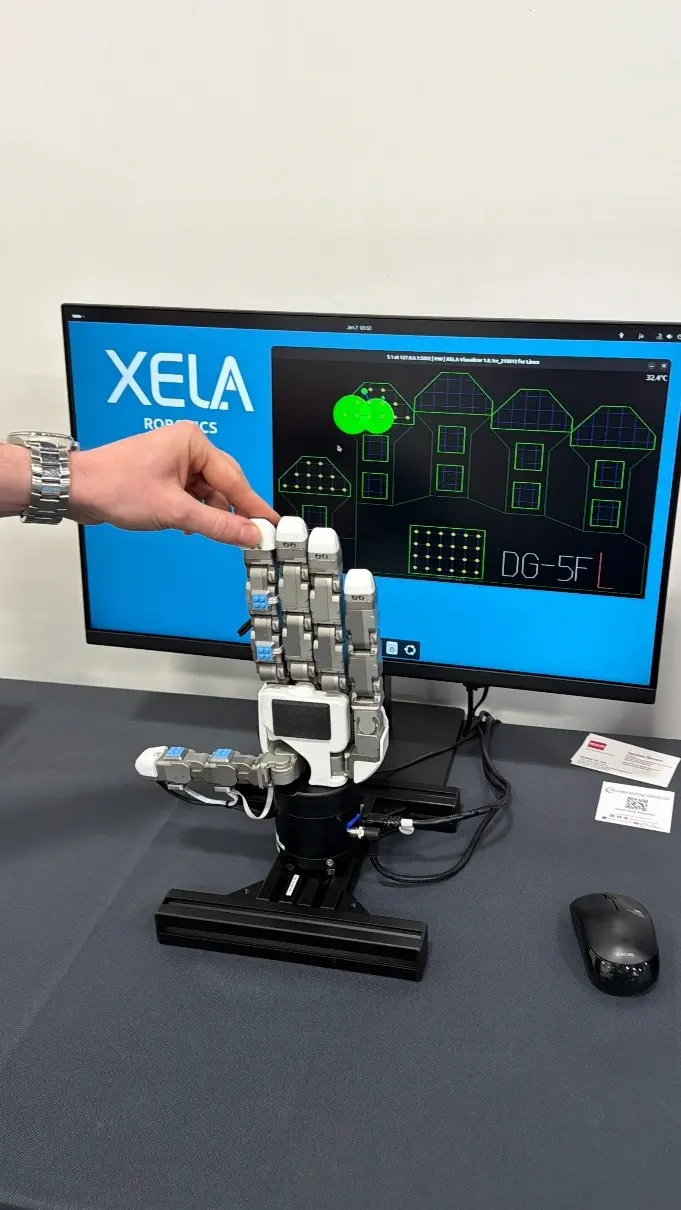
Once the doors opened at the Las Vegas Convention center the following day, all eyes were on a large group of robotics companies. Many of these companies were from China. However, the companies that hailed from China largely focused on niche use cases or components rather than full stack solutions. Many of these solution providers focused on hand functionality and have been necessary to keep humanoid progress moving. One of these companies was Xela robotics. Its solution focused primarily on an ultra-sensitive tactile 3D touch sensor. Another provider, Real Hand, brought a full stack solution for integrating its hand modules.
While many of these smaller niche providers aid the ecosystem, a few main robotics companies stood out as growth and scale ready. Neura was a prime example of a company that showcased its preparedness for the future of humanoid and general robotics integration into manufacturing and eventually domestic use cases. The company has worked for a while to develop a wide encompassing portfolio of different robotics form factors to scale up or down according to use case and environmental complexity. Its humanoid form factors also come with natural language models that can quickly communicate with humans. It hosts a suite of accompanying sensors to integrate into operating environments and improve performance and safety.
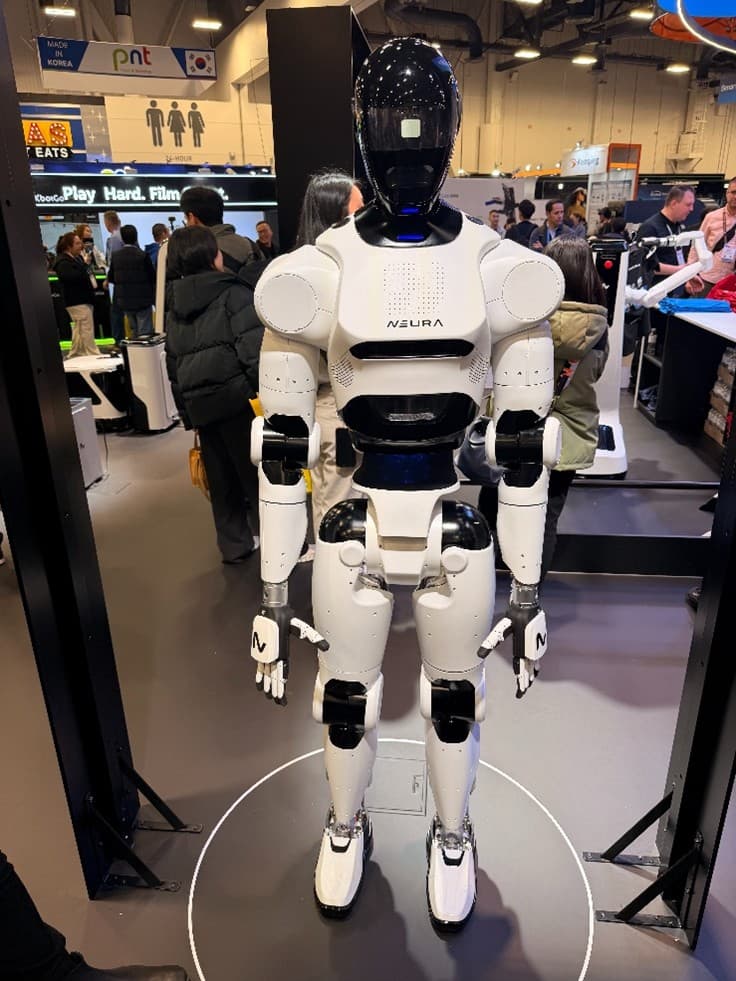
While this wholistic portfolio helps, what really separates Neura from smaller startups is the Neuraverse. The Neuraverse includes not just the company’s AI-driven operating system, but also a platform to build, simulate, and deploy new features with digital twin technology. A community of developers has been built on this platform as well to integrate new devices, apps, AI models and knowledge that users can contribute to or adopt from. This leads to an ecosystem that allows customers to grab and go with modular tools and apps. A major benefit for the Neuraverse is the ability to use the entire platform or integrate portions of it into existing enterprise fleet management solutions. This is a critical component for the automotive industry. Automotive OEMs are not good at developing software and often have legacy systems running their operations. They are unable or unwilling to pivot quickly. Modular to full stack solutions are necessary to win contracts with automotive Tier-1s or OEMs themselves. Neura’s proficiency in this regard was quickly recognized by Bosch. Bosch and Neura announced a new partnership to co-develop a robotics data foundation across their suites of sensors and collaborate closely moving forward.
Hyundai and Bosch are not the only automotive OEMs sensing opportunities in the robotics space. Naturally, many ADAS, hypervisors, sensor fusion and vehicle architectures can be quickly repurposed into humanoid robotics. Many principles are the same, and for some mixed-criticality scenarios, there is less risk involved. Due to lower inherent risks as compared to autonomous driving, deployment and testing can occur more rapidly than on the road. Therefore, auto OEMs possess many of the technologies, manufacturing capabilities, capital resources, and distribution channels to grow and scale the humanoid robotics industry. BMW is another OEM that has been actively testing deploying humanoids in collaboration with California-based startup Figure. BMW has been employing Figure 02 robots for 10 hour shifts a day over the last year assembling vehicles. Companies like Neura or Figure will play a central role for automotive OEMs that do not have wholly owned robotics companies. They will act as robotics enablers in a Tier-1 role or will partner with traditional automotive Tier-1s to license or white label robotics solutions.
VinGroup has been slightly behind in humanoid development and adoption, but its startup subsidiary VinMotion is an excellent example of AI-enabled development acceleration. VinMotion was at CES with Qualcomm to show off a real-life implementation of Qualcomm’s new Dragonwing IQ-10 series chips, purpose-built for advanced robotics applications. VinMotion brought its Motion 2 humanoid from concept to production reality in a span of seven months. The spin-out subsidiary was only founded in early 2025. Fast forward to CES 2026, the Motion 2 is ready and already impressing show goers.